
 Cart
 Orders

 Not available here
Product Overview
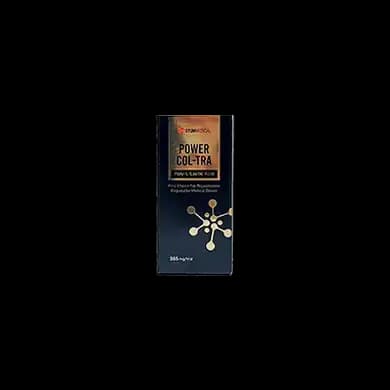
POWER COL-TRA is a South Korean Poly-L-Lactic Acid (PLLA) collagen biostimulator associated with STUN MEDICAL. Supplied in a 365 mg vial presentation, POWER COL-TRA is a biodegradable, particulate aesthetic product commercially positioned for facial volume restoration, wrinkle correction, and collagen-related skin rejuvenation. Its distinguishing features include spherical PLLA particles and STUN MEDICAL's Non-Solvent Manufacturing Technology (NST), developed to support consistent particle characteristics.
Unlike conventional hyaluronic acid fillers, which primarily provide immediate physical volume through a hydrated gel, PLLA-based biostimulators are associated with gradual tissue remodeling and collagen formation.
POWER COL-TRA uses Poly-L-Lactic Acid, a biodegradable synthetic polymer investigated for its ability to stimulate collagen-associated tissue responses. As PLLA particles gradually degrade, changes in the surrounding extracellular matrix may contribute to the appearance of improved facial volume and skin firmness.
STUN MEDICAL describes its proprietary NST manufacturing process as a distinguishing technology for producing PLLA microspheres with controlled particle characteristics. Manufacturer materials identify a particle-size range of approximately 20–80 μm.
POWER COL-TRA is available in a 365 mg per vial presentation, with one vial per standard commercial box. The manufacturer's published labeling identifies the product as a disposable medical device containing Poly-L-Lactic Acid.
This TEOSQUARE product page provides professional buyers with information about POWER COL-TRA's composition, PLLA particle characteristics, manufacturing technology, packaging, storage considerations, and regulatory requirements.
Key Features
- PLLA Collagen Biostimulator: Contains Poly-L-Lactic Acid, a biodegradable synthetic polymer associated with collagen formation and gradual extracellular matrix remodeling.
- 365 mg Vial Presentation: Supplied in a manufacturer-documented 365 mg per vial format, with one vial per commercial box.
- Non-Solvent Manufacturing Technology (NST): STUN MEDICAL's proprietary manufacturing approach is designed to support PLLA particle formation while reducing reliance on certain organic-solvent processing methods.
- Spherical PLLA Microspheres: Manufacturer materials describe rounded particles with a reported size range of approximately 20–80 μm.
- South Korean Product: Developed within the STUN MEDICAL product portfolio and identified as a South Korean aesthetic medical device.
Composition & Specifications
POWER COL-TRA is based on Poly-L-Lactic Acid (PLLA), a biodegradable synthetic polymer used in collagen biostimulation applications.
The manufacturer's materials identify a 365 mg per vial presentation. However, the available primary documentation does not provide a sufficiently detailed quantitative breakdown to confirm whether the full labeled weight represents PLLA alone or includes additional formulation components.
Accordingly, the 365 mg designation should be treated as the documented vial specification rather than an independently verified PLLA-only quantity.
| Specification | Details |
|---|---|
| Product Name | POWER COL-TRA |
| Alternative Name | Power Coltra / Power Col-Tra |
| Product Category | PLLA Collagen Biostimulator |
| Material Type | Biodegradable Synthetic Polymer |
| Principal Ingredient | Poly-L-Lactic Acid (PLLA) |
| Labeled Vial Specification | 365 mg/Vial |
| PLLA-Only Content | Not Independently Verified |
| Complete Excipient Composition | Confirm Against Original Manufacturer Documentation |
| PLLA Structure | Poly-L-Lactic Acid |
| Particle Morphology | Spherical / Microspherical |
| Reported Particle Size | Approximately 20–80 μm |
| Manufacturing Technology | Non-Solvent Manufacturing Technology (NST) |
| Product Form | Dry Particulate Preparation for Professional Use |
| Container Type | Glass Vial |
| Standard Packaging | 1 Vial/Box |
| Associated Brand Company | STUN MEDICAL |
| Country of Origin | South Korea |
| Product Classification | Injectable Aesthetic Medical Device; Market-Specific Authorization Applies |
| Storage Conditions | Follow Original Manufacturer Labeling |
| Intended Users | Qualified Healthcare Professionals |
Poly-L-Lactic Acid (PLLA)
Poly-L-Lactic Acid is a biodegradable synthetic polymer belonging to the polylactic acid family.
PLLA consists of repeating units derived from L-lactic acid. It has been investigated and used in various biomedical applications, including biodegradable medical materials, implants, and injectable collagen biostimulators.
In aesthetic applications, PLLA is associated with a gradual tissue response involving fibroblasts and extracellular matrix remodeling.
Unlike conventional hyaluronic acid fillers, which provide volume primarily through the physical presence of a hydrated gel, PLLA-based products are associated with changes in the surrounding connective tissue over time.
PLLA undergoes hydrolytic degradation, during which its polymer chains gradually break down into smaller molecules.
These degradation products are subsequently processed through biological metabolic pathways.
The biodegradable nature of PLLA distinguishes it from permanent synthetic filling materials.
However, PLLA biodegradation does not establish that every formulation has the same clinical durability or tissue response.
PLLA Microspheres — 20–80 μm
POWER COL-TRA is manufactured using PLLA particles described by STUN MEDICAL as having a predominantly spherical morphology.
The manufacturer's technical presentation identifies a particle-size range of approximately 20–80 micrometers.
Particle size, shape, and surface characteristics are relevant to the physical behavior of biodegradable particulate materials.
These characteristics can influence suspension properties, material distribution, and interactions between particles and surrounding biological tissues.
STUN MEDICAL identifies consistent particle morphology as one of the objectives of its manufacturing technology.
However, spherical particle morphology does not independently establish improved clinical safety, eliminate the possibility of nodules, or demonstrate superiority over other PLLA products.
365 mg Vial Specification
POWER COL-TRA is commercially supplied in a 365 mg vial presentation.
The 365 mg designation appears in the manufacturer's product presentation and on documented commercial packaging.
Some distributor descriptions refer to this value as the PLLA content. However, a complete manufacturer-controlled quantitative composition identifying every formulation component has not been independently verified.
The labeled 365 mg value should therefore not automatically be interpreted as the amount of pure PLLA.
This distinction is important when comparing POWER COL-TRA with other collagen biostimulators whose package weight may include stabilizers, suspension-supporting ingredients, or other excipients.
Poly-L-Lactic Acid is the confirmed principal ingredient. The product's complete quantitative composition should be verified against the original manufacturer-issued specification before assigning an exact PLLA-only amount or additional excipient concentrations.
How POWER COL-TRA Works
POWER COL-TRA is based on PLLA, a biodegradable polymer associated with gradual collagen formation and soft-tissue remodeling.
The product's collagen-biostimulation concept differs from the primarily physical volume replacement provided by conventional cross-linked hyaluronic acid fillers.
PLLA and the Local Tissue Response
Following implantation, PLLA particles can interact with surrounding tissues and initiate a localized biological response.
This response involves immune cells, including macrophages, and can influence fibroblast-associated extracellular matrix remodeling.
Fibroblasts are connective tissue cells involved in producing collagen and other structural components of the extracellular matrix.
Research involving PLLA-based biomaterials has demonstrated collagen formation associated with these tissue responses.
Collagen Formation and Extracellular Matrix Remodeling
Collagen is an important structural protein contributing to the mechanical properties of skin and connective tissue.
In PLLA-based aesthetic products, collagen-related tissue remodeling provides a scientific rationale for gradual improvement in the appearance of soft-tissue volume and wrinkles.
The response develops over time and differs from the immediate physical presence of a conventional volumizing gel.
However, the magnitude of collagen formation and the resulting clinical improvement depend on the specific finished product and individual patient characteristics.
Gradual Soft-Tissue Restoration
STUN MEDICAL positions POWER COL-TRA as a collagen biostimulator for gradual facial volume restoration and improvement in the appearance of wrinkles and folds.
The manufacturer describes a progressive response associated with collagen formation rather than immediate, permanent physical volume augmentation.
The company's commercial materials describe an expected duration of approximately 18–24 months.
This is a manufacturer-reported performance expectation, not a guaranteed duration established for every patient.
Biodegradation of PLLA
PLLA gradually breaks down through hydrolysis.
Its polymer structure is converted into smaller degradation products that can enter normal biological metabolic pathways.
This process distinguishes PLLA from permanent synthetic fillers that are not designed to undergo comparable biodegradation.
The mechanism described above is supported by general PLLA research. It does not independently establish a specific amount of collagen formation, clinical effectiveness, or treatment duration for the finished POWER COL-TRA formulation.
Non-Solvent Manufacturing Technology (NST)
POWER COL-TRA is associated with STUN MEDICAL's Non-Solvent Manufacturing Technology, commonly abbreviated as NST.
The manufacturer describes NST as a proprietary process developed to address certain limitations associated with conventional polymer-particle manufacturing methods.
Conventional Polymer Particle Manufacturing
Some manufacturing processes for biodegradable polymer microspheres involve organic solvents during particle formation.
These processes require appropriate quality controls to manage residual solvent levels and other manufacturing-related characteristics.
Residual solvents are a recognized consideration in the development and quality assessment of medical and pharmaceutical materials.
NST Manufacturing Approach
STUN MEDICAL describes its NST technology as a method intended to reduce reliance on certain organic-solvent processing steps.
The company's technical presentation emphasizes particle morphology, manufacturing consistency, and control of potential residual process materials.
The manufacturer also associates this technology with the formation of spherical PLLA microspheres.
These characteristics represent the manufacturer's stated technological objectives.
However, an NST designation does not independently establish that the finished product contains zero residual solvents or that every manufacturing-related impurity has been eliminated.
Spherical Particle Characteristics
The manufacturer's product materials describe POWER COL-TRA as containing predominantly spherical PLLA particles.
Uniform particle characteristics are relevant to the reproducibility and physical behavior of particulate medical materials.
Particle morphology and size distribution can influence the characteristics of a prepared suspension.
However, particle shape alone does not establish predictable clinical results or eliminate injection-related complications.
NST is a manufacturer-described production technology. Claims concerning residual solvent levels, manufacturing purity, particle uniformity, or comparative clinical superiority require appropriate analytical and product-specific evidence.
POWER COL-TRA 365 mg Product Presentation
POWER COL-TRA is commercially documented in a 365 mg per vial presentation.
The manufacturer's product materials and international supplier catalogues identify one vial per standard box.
| Packaging Specification | Details |
|---|---|
| Product | POWER COL-TRA 365 mg |
| Principal Ingredient | Poly-L-Lactic Acid (PLLA) |
| Labeled Weight | 365 mg/Vial |
| Container Type | Glass Vial |
| Standard Commercial Packaging | 1 Vial/Box |
| Product Form | Dry Particulate Preparation |
| Reported Particle Size | 20–80 μm |
| Manufacturing Technology | NST |
| Associated Brand Company | STUN MEDICAL |
| Country of Origin | South Korea |
365 mg Individual Vial
POWER COL-TRA is supplied in a glass vial containing the manufacturer's designated 365 mg product presentation.
The product is supplied in dry form rather than as a ready-to-use, pre-filled liquid syringe.
The labeled weight represents the original vial specification and must not be confused with a prepared suspension volume.
One-Vial Commercial Box
The standard documented package contains one 365 mg vial per box.
Professional distributors may offer multiple boxes or larger purchasing quantities, but these commercial offers should not be confused with the original manufacturer packaging.
Buyers should verify the original product label, lot number, expiration date, manufacturer information, and applicable regulatory documentation before procurement.
The verified commercial presentation is 365 mg per vial, with one vial per box. The exact PLLA-only mass and complete excipient breakdown require additional manufacturer-controlled documentation.
Professional Aesthetic Positioning
POWER COL-TRA is commercially positioned as a PLLA collagen biostimulator for facial rejuvenation and gradual soft-tissue restoration.
Its manufacturer and professional distributors describe applications involving facial volume loss, wrinkles, and changes in skin firmness.
Facial Volume Restoration
Loss of facial soft-tissue volume can contribute to changes in facial contours and the appearance of aging.
PLLA-based biostimulation is associated with gradual collagen-related tissue remodeling.
This provides the material-level rationale for POWER COL-TRA's commercial positioning in facial volume restoration.
Wrinkles and Facial Folds
Collagen and other extracellular matrix components contribute to skin structure and mechanical support.
Changes in these components can influence the appearance of wrinkles and facial folds.
STUN MEDICAL markets POWER COL-TRA for improving the appearance of facial wrinkles through a collagen-biostimulation approach.
The precise indications permitted for the finished product must be determined from its current regulatory authorization.
Skin Firmness and Elasticity
The dermal extracellular matrix contains structural proteins, including collagen, that contribute to skin firmness.
PLLA-related tissue remodeling provides a scientific rationale for investigating improvements in skin quality.
However, the presence of PLLA does not guarantee a measurable improvement in elasticity or a specific degree of skin tightening following treatment.
These applications describe POWER COL-TRA's commercial positioning. They do not establish approval for every anatomical region or for body augmentation procedures. The original instructions for use and applicable national regulations determine the permitted indications.
Storage & Handling
POWER COL-TRA is supplied as a dry PLLA-based preparation intended for professional handling.
Commercial distributors publish differing temperature recommendations, including storage below 30°C and storage within narrower room-temperature ranges.
A definitive manufacturer-issued storage temperature has not been independently established from the available primary product documentation.
- Storage Temperature: Follow the validated temperature range stated on the original manufacturer-issued product label.
- Light Protection: Protect unopened products from direct sunlight and inappropriate environmental exposure.
- Original Packaging: Maintain the product in its original manufacturer-labeled container.
- Container Integrity: Inspect the vial and packaging for visible damage or evidence of compromised integrity.
- Product Traceability: Confirm the product name, batch number, expiration date, manufacturer, and applicable regulatory labeling.
- Professional Preparation: Follow the original manufacturer's validated instructions for product preparation, handling, and disposal.
Shelf Life
Certain South Korean commercial supplier materials report a shelf life of approximately 24 months for POWER COL-TRA.
However, the definitive shelf life of the supplied product should be confirmed using the original manufacturer's labeling.
The stability of an unopened dry preparation may differ from that of a prepared suspension.
The manufacturer's original label and instructions for use take precedence over third-party storage recommendations. Do not assume that POWER COL-TRA has the same storage requirements as another PLLA collagen biostimulator.
Safety & Regulatory Considerations
POWER COL-TRA is commercially positioned as an injectable PLLA-based medical aesthetic product. Its professional use requires appropriate evaluation of patient suitability, material characteristics, contraindications, and potential complications.
Potential Adverse Reactions
Adverse reactions associated with injectable PLLA products may include localized pain, redness, swelling, bruising, tenderness, and inflammation.
Additional complications can include persistent papules, subcutaneous nodules, granulomatous inflammation, hypersensitivity reactions, and infection.
Some inflammatory reactions may develop after a delay rather than immediately following treatment.
The specific frequency of adverse events associated with POWER COL-TRA has not been independently established from comprehensive product-specific clinical safety data.
Vascular Complications
Injectable soft-tissue materials can cause serious complications when introduced into blood vessels.
Vascular obstruction may compromise tissue perfusion and lead to ischemia, tissue necrosis, or other severe injuries.
Depending on the anatomical region, serious vascular complications may include visual impairment, blindness, or stroke.
The biodegradable properties of PLLA and the manufacturer's particle-production technology do not eliminate these risks.
PLLA and Hyaluronic Acid Are Different Materials
POWER COL-TRA is identified as a PLLA-based collagen biostimulator.
PLLA differs chemically and biologically from hyaluronic acid, which is widely used in conventional dermal fillers.
Hyaluronidase can degrade hyaluronic acid under appropriate medical circumstances, but it does not directly dissolve PLLA particles.
Therefore, management of complications associated with PLLA-based products may differ from that of conventional HA fillers.
Contraindications and Precautions
Known hypersensitivity to the product's components and active infection or inflammation affecting a proposed treatment area are important considerations.
Patients with relevant medical conditions, abnormal scarring tendencies, or a history of significant inflammatory reactions may require additional clinical assessment.
Product-specific safety in pregnancy, breastfeeding, and pediatric populations must be determined from the current manufacturer-issued instructions for use.
Clinical Evidence Limitations
PLLA is a well-studied biodegradable polymer used in multiple biomedical applications.
Clinical evidence involving other PLLA-based products cannot automatically establish the safety, durability, or clinical effectiveness of POWER COL-TRA.
STUN MEDICAL's commercial materials describe gradual aesthetic improvement and effects that may persist for approximately 18–24 months.
However, these manufacturer-reported expectations should not be interpreted as guaranteed outcomes or independently established comparative advantages.
Claims of zero side effects, superior safety, or permanent collagen restoration should not be made without appropriate product-specific clinical evidence.
Manufacturer and Regulatory Authorization
POWER COL-TRA is part of the STUN MEDICAL aesthetic product portfolio in South Korea.
The manufacturer's materials describe Korean regulatory licensing associated with product manufacturing and distribution.
However, the exact current finished-product registration, legal manufacturing facility, and approved indications should be confirmed using official regulatory records and original product documentation.
US FDA approval for POWER COL-TRA has not been independently established.
The FDA authorization of another PLLA-containing medical device or the use of an FDA-authorized raw material does not automatically establish approval of the finished POWER COL-TRA product.
Professional buyers should verify product-specific registration, approved intended use, import eligibility, and lawful distribution requirements in their destination country.
This information is intended for professional product identification and commercial evaluation. It does not provide preparation instructions, injection techniques, patient-specific treatment recommendations, or authorization for use outside applicable medical device regulations.
Frequently Asked Questions
What is POWER COL-TRA?
POWER COL-TRA is a South Korean PLLA collagen biostimulator associated with STUN MEDICAL. It is commercially positioned for gradual facial volume restoration and improvement in the appearance of wrinkles through collagen-related tissue remodeling.
What is the main ingredient in POWER COL-TRA?
The confirmed principal ingredient is Poly-L-Lactic Acid (PLLA), a biodegradable synthetic polymer associated with collagen biostimulation. The complete quantitative composition should be confirmed against the original manufacturer's ingredient specifications.
Does POWER COL-TRA contain 365 mg of pure PLLA?
POWER COL-TRA is supplied in a labeled 365 mg per vial presentation. Although some commercial descriptions identify this figure as the PLLA content, an independently verified complete quantitative formulation has not been established. The 365 mg specification should not automatically be interpreted as the pure PLLA quantity.
What is NST Technology?
NST stands for Non-Solvent Manufacturing Technology. STUN MEDICAL describes it as a proprietary manufacturing approach designed to reduce reliance on certain organic-solvent processing methods while supporting the formation of consistent PLLA microspheres.
What is the particle size of POWER COL-TRA?
STUN MEDICAL's technical presentation identifies a particle-size range of approximately 20–80 μm. The particles are described as having a predominantly spherical morphology.
How does POWER COL-TRA differ from hyaluronic acid fillers?
POWER COL-TRA is based on PLLA, a biodegradable polymer associated with gradual collagen-related tissue remodeling. Conventional cross-linked HA fillers primarily provide volume through a hydrated gel. These materials have different mechanisms and degradation characteristics.
How long do POWER COL-TRA results last?
STUN MEDICAL's commercial materials describe effects lasting approximately 18–24 months. This is a manufacturer-reported expectation rather than a guaranteed duration. Individual results depend on multiple clinical and physiological factors.
How many vials are included in one box?
The standard documented commercial presentation contains one 365 mg vial per box. Larger purchasing quantities offered by distributors should not be confused with the original packaging configuration.
Who manufactures POWER COL-TRA?
POWER COL-TRA is associated with STUN MEDICAL, a South Korean medical aesthetics company. The manufacturer's technical materials also identify Regen Biocham in connection with production and distribution. The precise legal manufacturing entity should be confirmed from the original product documentation.
How should POWER COL-TRA be stored?
Commercial distributors publish different room-temperature storage recommendations. Because a definitive manufacturer-validated temperature range has not been independently established, buyers should follow the original product label and instructions for use.
Is POWER COL-TRA FDA approved?
US FDA approval for POWER COL-TRA has not been independently established. Regulatory authorization granted to another PLLA product or raw material does not automatically apply to POWER COL-TRA. Buyers should verify the finished product's current authorization and lawful distribution requirements in their destination market.