
 Cart
 Orders

 Not available here
Product Overview
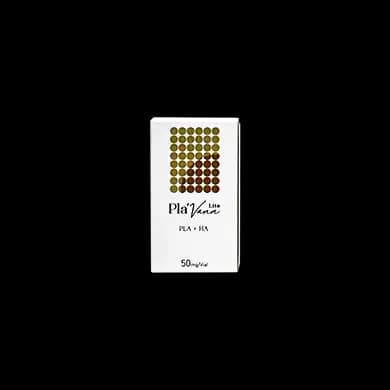
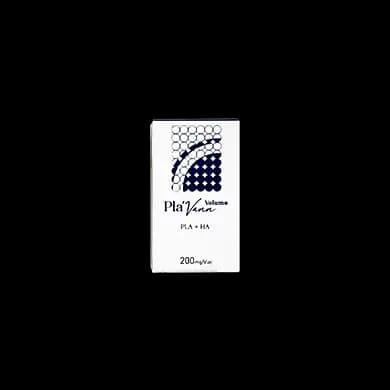
PlaVann is a South Korean hybrid collagen biostimulator combining Poly-L-Lactic Acid (PLLA) and Hyaluronic Acid (HA). Available in two formulations, PlaVann Lite 50mg and PlaVann Volume 200mg, the product range combines the collagen-stimulating properties of biodegradable PLLA microspheres with the moisture-binding characteristics of hyaluronic acid. PlaVann Lite contains 42.5mg PLLA and 7.5mg HA, while PlaVann Volume contains 170mg PLLA and 30mg HA per vial.
PlaVann is commercially positioned as a hybrid aesthetic product designed for gradual collagen-related tissue improvement and skin quality enhancement. Its formulation differs from conventional hyaluronic acid fillers, which primarily provide physical volume through a hydrated gel.
The product combines two materials with distinct functions. PLLA is a biodegradable synthetic polymer associated with collagen biostimulation, while hyaluronic acid is a naturally occurring glycosaminoglycan that contributes to hydration and extracellular matrix properties.
PlaVann Lite is the lower-content formulation, commercially positioned for fine wrinkles, skin texture, and hydration-oriented aesthetic applications. PlaVann Volume contains four times the total PLLA and HA quantities of Lite and is positioned for more pronounced soft-tissue volume concerns.
Both products contain PLLA and HA in an 85:15 weight ratio. Their primary difference is the total quantity of these materials per vial rather than their relative proportions.
PlaVann is supplied in a vial presentation requiring professional preparation according to the applicable manufacturer's instructions for use.
This TEOSQUARE product page provides professional buyers with a comprehensive overview of PlaVann Lite and Volume, including their composition, formulation differences, material characteristics, packaging, storage considerations, and regulatory requirements.
Key Features
- Hybrid PLLA + HA Formulation: Combines biodegradable Poly-L-Lactic Acid microspheres with hyaluronic acid in a single aesthetic product.
- Two Product Strengths: Available as PlaVann Lite 50mg and PlaVann Volume 200mg, offering different quantities of PLLA and HA for distinct commercial applications.
- 85% PLLA Content: PLLA represents 85% of the declared combined PLLA and HA weight in both formulations.
- 15% Hyaluronic Acid Content: HA represents 15% of the declared combined material weight, contributing moisture-binding properties to the hybrid formulation.
- Collagen Biostimulation: PLLA is associated with a gradual tissue response involving fibroblasts and extracellular matrix remodeling.
- PLLA Microsphere Technology: Commercial materials describe relatively uniform PLLA particles, with a reported particle-size distribution of approximately 30–50 μm.
- Skin Quality and Volume Options: Lite emphasizes skin quality and fine wrinkles, while Volume is positioned for more pronounced soft-tissue volume restoration.
- South Korean Origin: Both formulations are identified as products of South Korea in Korean export supplier documentation.
Composition & Specifications
PlaVann contains two principal ingredients: Poly-L-Lactic Acid (PLLA) and Hyaluronic Acid (HA).
The formulations contain these materials in an 85:15 weight ratio. PlaVann Lite provides 50mg of combined PLLA and HA, while PlaVann Volume provides 200mg.
The product names refer to the combined ingredient quantities rather than the PLLA content alone.
| Specification | Details |
|---|---|
| Brand | PlaVann / PLA'VANN |
| Product Category | PLLA + HA Hybrid Collagen Biostimulator |
| Principal Ingredients | Poly-L-Lactic Acid (PLLA), Hyaluronic Acid (HA) |
| PLLA Type | Biodegradable Synthetic Polymer |
| HA Type | Non-Crosslinked Hyaluronic Acid / Sodium Hyaluronate |
| PLLA Weight Proportion | 85% of Declared PLLA + HA Content |
| HA Weight Proportion | 15% of Declared PLLA + HA Content |
| Available Variants | PlaVann Lite 50mg / PlaVann Volume 200mg |
| PLLA Content | 42.5mg/Vial (Lite), 170mg/Vial (Volume) |
| HA Content | 7.5mg/Vial (Lite), 30mg/Vial (Volume) |
| Combined PLLA + HA Content | 50mg/Vial (Lite), 200mg/Vial (Volume) |
| Reported PLLA Particle Size | Approximately 30–50 μm (Commercially Reported) |
| Dosage Form | Dry Preparation Requiring Reconstitution |
| Container Type | Vial |
| Commercial Presentation | Individual Vial; Multi-Vial Supply Configurations Also Reported |
| Country of Origin | South Korea |
| Legal Manufacturing Facility | Confirm Against Original Manufacturer Documentation |
| Storage Requirements | Follow Original Manufacturer Labeling |
| Intended Users | Qualified Healthcare Professionals |
Poly-L-Lactic Acid (PLLA)
Poly-L-Lactic Acid is a biodegradable synthetic polymer belonging to the polylactic acid family.
PLLA has been investigated and used in various biomedical applications, including biodegradable medical materials and injectable collagen biostimulators.
In aesthetic medicine, PLLA microspheres are associated with a gradual tissue response involving collagen formation and extracellular matrix remodeling.
When PLLA particles interact with surrounding tissues, they can initiate a localized biological response involving macrophages, fibroblasts, and connective tissue components.
This response provides the scientific basis for the use of PLLA as a collagen-stimulating biomaterial.
PlaVann contains two different PLLA quantities:
- PlaVann Lite: 42.5mg Poly-L-Lactic Acid per vial.
- PlaVann Volume: 170mg Poly-L-Lactic Acid per vial.
PLLA undergoes gradual hydrolytic degradation in biological environments. The resulting smaller molecules are eventually processed through normal metabolic pathways.
The biodegradability of PLLA distinguishes it from permanent synthetic filler materials.
However, the presence of PLLA does not independently establish a particular amount of collagen production, a fixed treatment duration, or equivalent clinical outcomes between different PLLA products.
Hyaluronic Acid (HA)
Hyaluronic acid is a naturally occurring glycosaminoglycan found in connective tissues, including the skin.
It is a major component of the extracellular matrix and contributes to tissue hydration, viscoelasticity, and the physicochemical environment surrounding cells.
HA is highly hydrophilic, meaning that its molecular structure interacts strongly with water.
This property supports its widespread use in medical aesthetic products developed for hydration and soft-tissue applications.
PlaVann combines PLLA with non-crosslinked hyaluronic acid, commercially described as sodium hyaluronate.
The documented HA quantities are:
- PlaVann Lite: 7.5mg Hyaluronic Acid per vial.
- PlaVann Volume: 30mg Hyaluronic Acid per vial.
Unlike chemically cross-linked HA fillers, non-crosslinked HA does not form the same stabilized gel network commonly associated with structural facial augmentation.
Its contribution to PlaVann is primarily associated with the moisture-binding characteristics of hyaluronic acid and the formulation's hybrid material concept.
The presence of HA does not independently establish immediate facial volume augmentation or a particular degree of skin hydration following use of the finished product.
PLLA and HA — 85:15 Hybrid Composition
Both PlaVann formulations contain PLLA and HA in the same 85:15 weight ratio.
In PlaVann Lite, 42.5mg PLLA and 7.5mg HA combine to provide 50mg of the two principal ingredients.
In PlaVann Volume, 170mg PLLA and 30mg HA combine to provide 200mg.
This combination brings together two different material characteristics: the collagen-stimulation potential associated with PLLA and the hydrophilic properties of HA.
Their combined presence supports the product's hybrid positioning, but it does not independently establish a synergistic clinical effect without appropriate finished-product studies.
The 50mg and 200mg product designations represent the combined declared quantities of PLLA and HA. They are not PLLA-only weights, final injectable concentrations, or recommended administration amounts.
How PlaVann PLLA + HA Works
PlaVann combines two materials with distinct biological and physicochemical characteristics.
PLLA is associated with gradual collagen-related tissue remodeling, while hyaluronic acid contributes water-binding and hydration-related properties.
PLLA and Collagen Biostimulation
Collagen is a major structural protein in the skin's extracellular matrix.
Fibroblasts are connective tissue cells involved in the production and maintenance of collagen and other extracellular matrix components.
Following implantation, biodegradable PLLA particles can produce a localized tissue response that involves immune cells and fibroblast activity.
Research involving PLLA-based aesthetic materials has demonstrated collagen formation associated with this response.
These findings support the scientific rationale for positioning PLLA as a collagen biostimulator.
However, findings from other PLLA products cannot automatically establish the magnitude of collagen formation produced by PlaVann Lite or Volume.
Hyaluronic Acid and Moisture Retention
Hyaluronic acid is capable of interacting with water molecules through its hydrophilic chemical structure.
In human skin, HA contributes to hydration and the viscoelastic properties of the extracellular matrix.
PlaVann incorporates HA to complement its PLLA-based formulation.
The HA component supports the product's hydration-oriented design, particularly in the Lite formulation.
The degree and duration of hydration-related changes depend on the finished formulation and its clinical application.
Gradual Extracellular Matrix Remodeling
PLLA biostimulation is associated with progressive tissue remodeling rather than purely immediate physical volume replacement.
The response involves interactions between biodegradable particles, inflammatory signaling, connective tissue cells, and extracellular matrix constituents.
As these biological processes develop, collagen-related changes may contribute to improvements in the appearance of soft-tissue volume and skin quality.
Individual responses can vary according to biological characteristics, the specific formulation, and other clinical factors.
Biodegradation
PLLA gradually undergoes hydrolysis, breaking down into smaller molecular components.
These degradation products are processed through normal biological metabolic pathways.
Hyaluronic acid is also biodegradable and undergoes enzymatic and non-enzymatic breakdown.
The degradation characteristics of PLLA and HA differ, contributing to their distinct roles within the hybrid formulation.
The mechanisms described above are based on established material-level research involving PLLA and HA. They do not guarantee a particular onset of improvement, treatment duration, or degree of collagen regeneration with PlaVann.
Available PlaVann Variants
PlaVann is available in two formulations: PlaVann Lite 50mg and PlaVann Volume 200mg.
Both contain PLLA and HA in the same relative proportions, but Volume provides four times the total quantity of each ingredient.
| Specification | PlaVann Lite | PlaVann Volume |
|---|---|---|
| Product Name | PlaVann Lite 50mg | PlaVann Volume 200mg |
| Poly-L-Lactic Acid | 42.5mg/Vial | 170mg/Vial |
| Hyaluronic Acid | 7.5mg/Vial | 30mg/Vial |
| Combined PLLA + HA | 50mg/Vial | 200mg/Vial |
| PLLA Proportion | 85% | 85% |
| HA Proportion | 15% | 15% |
| Material Type | PLLA + HA Hybrid | PLLA + HA Hybrid |
| Commercial Positioning | Skin Quality and Fine Wrinkles | Volume Restoration and Deeper Wrinkles |
| Container | Vial | Vial |
| Country of Origin | South Korea | South Korea |
PlaVann Lite 50mg
PlaVann Lite is the lower-content formulation within the PlaVann family.
Each vial contains 42.5mg Poly-L-Lactic Acid and 7.5mg Hyaluronic Acid, providing 50mg of combined principal ingredients.
Lite is commercially positioned as a collagen-stimulating skin booster for applications involving skin texture, superficial wrinkles, and the appearance of age-related skin changes.
The formulation is also associated with hydration-oriented aesthetic positioning through its hyaluronic acid component.
Korean supplier documentation identifies Lite as the formulation intended for relatively subtle skin quality improvement rather than substantial structural volume augmentation.
Its lower total PLLA content distinguishes it from the more volume-oriented PlaVann Volume formulation.
However, the lower material quantity does not independently establish suitability for more superficial anatomical placement or a lower risk of adverse reactions.
PlaVann Volume 200mg
PlaVann Volume is the higher-content formulation within the product range.
Each vial contains 170mg Poly-L-Lactic Acid and 30mg Hyaluronic Acid, providing 200mg of combined principal ingredients.
Volume contains four times the PLLA and HA quantities of PlaVann Lite while maintaining the same 85:15 ingredient ratio.
It is commercially positioned for soft-tissue volume restoration and the appearance of more pronounced facial wrinkles and contour deficits.
The larger PLLA quantity supports its positioning as a volume-oriented collagen biostimulator.
Its hyaluronic acid component contributes the same material-level moisture-binding properties found in Lite, but in a greater total quantity.
The higher ingredient content should not be interpreted as evidence of four times the clinical effectiveness, four times the collagen production, or a proportionally longer duration of effect.
PlaVann Lite 50mg and Volume 200mg differ in their total ingredient quantities and commercial positioning. The numbers 50mg and 200mg identify combined PLLA and HA content, not PLLA alone.
PLLA Particle Characteristics & Formulation Technology
The physical characteristics of PLLA microspheres are relevant to their behavior within injectable collagen biostimulator formulations.
Particle size, shape, surface characteristics, and dispersion behavior can influence interactions between the particles and surrounding tissue.
PLLA Microspheres
PlaVann is commercially described as containing relatively uniform PLLA microspheres.
Supplier materials report particle sizes of approximately 30–50 μm, particularly in descriptions of the Lite formulation.
Particle size is an important quality characteristic for biodegradable particulate materials.
However, the reported size range has not been independently confirmed against a manufacturer-controlled particle-size distribution report for every PlaVann variant.
Particle Shape and Surface Characteristics
Commercial product materials describe PlaVann PLLA particles as having a relatively rounded shape and smooth surface.
These properties are presented as part of the product's material-engineering approach.
The characteristics of biodegradable particles can influence their physical behavior, but smooth or rounded particles do not eliminate the possibility of inflammatory reactions, granulomas, or nodules.
Dispersion Characteristics
The distribution of PLLA particles within a prepared suspension is an important consideration for particulate aesthetic products.
Commercial descriptions of PlaVann refer to processing technology intended to support dispersion and preparation characteristics.
However, a specific validated preparation time, dispersion rate, or comparative clinical advantage has not been independently established from manufacturer-controlled testing.
Material-engineering characteristics do not establish superior safety or clinical effectiveness without appropriate comparative evidence. Product preparation and administration must follow the original manufacturer's instructions for use.
Professional Aesthetic Positioning
PlaVann is commercially positioned for professional aesthetic applications involving skin quality and soft-tissue volume concerns.
The marketed applications differ between the lower-content Lite formulation and the higher-content Volume formulation.
Skin Texture and Fine Wrinkles
PlaVann Lite is marketed for improving the appearance of fine wrinkles, uneven skin texture, and age-related skin changes.
Its PLLA component provides the scientific rationale for collagen-related tissue remodeling, while HA contributes moisture-binding properties.
These applications reflect commercial positioning and should not automatically be interpreted as approved medical indications.
Soft-Tissue Volume Restoration
PlaVann Volume is commercially associated with more pronounced facial volume concerns and deeper wrinkles.
Its higher PLLA content distinguishes it from the skin-quality-oriented Lite formulation.
Gradual collagen-related tissue remodeling provides the material-level rationale for this positioning.
The extent of volume restoration achievable with the finished product requires appropriate clinical evidence.
Skin Firmness and Elasticity
Collagen is an important structural component of the dermal extracellular matrix.
Changes in collagen organization and connective tissue characteristics can influence the appearance of skin firmness and elasticity.
The collagen-stimulating properties associated with PLLA provide a scientific rationale for investigating these outcomes.
However, the presence of PLLA does not establish a guaranteed increase in skin firmness or elasticity after PlaVann treatment.
Acne Scars and Other Skin Concerns
Some commercial descriptions associate PlaVann with the appearance of depressed acne scars, enlarged pores, and other texture-related concerns.
These applications require product-specific clinical and regulatory evaluation.
They should not automatically be considered authorized indications for PlaVann Lite or Volume.
Commercial positioning is not equivalent to regulatory approval. The precise intended use, treatment areas, and patient eligibility must be determined from the current manufacturer-issued instructions for use and applicable national regulations.
Packaging & Product Presentation
PlaVann Lite and Volume are supplied in vial presentations containing different quantities of PLLA and hyaluronic acid.
Individual-vial selling units are documented in professional supplier listings. Larger commercial packaging configurations containing multiple vials are also reported.
| Packaging Specification | PlaVann Lite | PlaVann Volume |
|---|---|---|
| Product Strength | 50mg | 200mg |
| PLLA Content | 42.5mg/Vial | 170mg/Vial |
| HA Content | 7.5mg/Vial | 30mg/Vial |
| Combined Material Content | 50mg/Vial | 200mg/Vial |
| Container Type | Vial | Vial |
| Individual Commercial Unit | 1 Vial | 1 Vial |
| Additional Commercial Packaging | Multi-Vial Supply Configurations Reported | 10-Vial Carton Reported |
| Country of Origin | South Korea | South Korea |
PlaVann Lite 50mg
The Lite formulation contains a combined 50mg of PLLA and HA per vial.
Individual-vial presentations are documented by Korean and international suppliers.
PlaVann Volume 200mg
The Volume formulation contains a combined 200mg of PLLA and HA per vial.
Korean export supplier information documents individual-vial sales as well as a ten-vial commercial carton configuration.
Buyers should verify whether the selected purchasing unit represents one individual vial, one retail package, or a larger distributor carton.
The original product packaging should also be checked for ingredient content, batch number, expiration date, responsible manufacturer, and regulatory markings.
The 50mg and 200mg values represent the combined mass of the declared PLLA and HA ingredients, not an injectable solution volume. Packaging configuration should be confirmed before ordering.
Storage & Handling
PlaVann is supplied as a preparation requiring professional handling according to the original manufacturer's instructions.
Commercial suppliers generally describe storage in a cool, dry environment away from direct sunlight.
However, published temperature recommendations differ between sellers, and a definitive manufacturer-controlled storage specification has not been independently established for both formulations.
- Validated Storage Conditions: Follow the temperature and environmental requirements stated on the original manufacturer's packaging.
- Light Protection: Protect unopened products from direct sunlight.
- Original Packaging: Keep the product in its original manufacturer-labeled container until required for authorized professional use.
- Container Integrity: Do not use products with damaged packaging or evidence of compromised sterility.
- Product Traceability: Verify the exact formulation, ingredient quantities, lot number, expiration date, and manufacturer information.
- Professional Preparation: Follow the product-specific manufacturer's instructions for preparation, handling, and disposal.
Shelf Life
Commercial sellers report different shelf-life and stability specifications for PlaVann.
A definitive shelf life should therefore be confirmed from the original manufacturer-issued labeling for the supplied product.
Stability requirements after preparation may differ from those applicable to an unopened vial.
A verified manufacturer-issued storage temperature and shelf life have not been established for both formulations. Do not substitute third-party handling recommendations for the original instructions for use.
Safety & Regulatory Considerations
PlaVann is commercially marketed as an injectable aesthetic product containing PLLA and HA.
Professional evaluation should consider the safety characteristics of both materials, the formulation's particle properties, the intended anatomical application, and the applicable regulatory authorization.
Potential Adverse Reactions
Injectable PLLA and HA products may be associated with localized pain, redness, swelling, bruising, tenderness, and inflammation.
Other potential complications include infection, hypersensitivity reactions, delayed inflammatory responses, and persistent subcutaneous nodules.
PLLA-based products can also be associated with papules and granulomatous inflammatory reactions.
Such reactions may develop after a delay rather than immediately following administration.
The specific incidence of these complications for PlaVann Lite and Volume has not been independently established from adequately characterized clinical safety data.
Vascular Complications
Injectable soft-tissue filling materials can cause serious complications if introduced into blood vessels.
Vascular obstruction may compromise tissue perfusion and result in ischemia, necrosis, or other severe injuries.
Depending on the anatomical region, vascular complications may include visual impairment, blindness, or stroke.
The presence of biodegradable PLLA or hyaluronic acid does not eliminate these risks.
PLLA and HA Have Different Reversibility Characteristics
Hyaluronic acid and PLLA are distinct biomaterials with different degradation characteristics.
Hyaluronidase is used in certain medical circumstances to degrade hyaluronic acid.
However, hyaluronidase does not directly dissolve PLLA particles.
Consequently, a hybrid PLLA + HA product should not be assumed fully reversible through methods used for conventional HA fillers.
Contraindications and Precautions
Patients with known hypersensitivity to relevant formulation components may have contraindications to treatment.
Active infection or inflammation affecting a proposed treatment area is an important safety consideration.
Patients with a history of significant inflammatory responses, abnormal scarring, or other relevant medical conditions may require additional assessment.
The safety of PlaVann during pregnancy, breastfeeding, and in pediatric patients has not been independently established.
Clinical Evidence Limitations
PLLA and hyaluronic acid are well-studied biomaterials used in multiple aesthetic and medical applications.
However, evidence concerning these materials or other commercial products cannot automatically establish the safety and effectiveness of PlaVann.
Certain PlaVann supplier materials describe extended treatment durability and favorable collagen-stimulation results.
Independently verified, product-specific clinical evidence supporting a precise duration of effect or comparative superiority has not been established from the available documentation.
Claims of guaranteed results, superior collagen production, absence of nodules, or a fixed duration of effect should therefore be avoided without appropriate clinical evidence.
Manufacturer and Product Identification
PlaVann is distributed internationally through South Korean aesthetic medicine suppliers, including Quiver Medic.
However, a product distributor or exporting company should not automatically be identified as the legal manufacturer of the finished medical device.
The precise legal manufacturing facility should be confirmed using original manufacturer-issued documentation and product-specific regulatory records.
Regulatory Authorization
PlaVann is commercially supplied as a South Korean injectable PLLA and HA aesthetic product.
However, product-specific South Korean medical device registration details and current European regulatory certification have not been independently verified for both Lite and Volume.
US FDA approval for PlaVann Lite or PlaVann Volume has not been established.
The regulatory approval of another PLLA or hyaluronic acid injectable product does not automatically extend to PlaVann.
Buyers should verify the legal manufacturer, product-specific registration, approved intended use, import eligibility, and distribution requirements applicable to their destination country.
This information is intended for professional product identification and commercial evaluation. It does not provide preparation instructions, injection protocols, or patient-specific treatment recommendations. Professional use and distribution must comply with the original product labeling and applicable regulations.
Frequently Asked Questions
What is PlaVann?
PlaVann is a South Korean hybrid collagen biostimulator combining Poly-L-Lactic Acid (PLLA) and Hyaluronic Acid (HA). It is available in two formulations: PlaVann Lite 50mg and PlaVann Volume 200mg.
What are the main ingredients in PlaVann?
The two principal ingredients are Poly-L-Lactic Acid (PLLA) and Hyaluronic Acid (HA). Both formulations contain these materials in an 85:15 weight ratio. Lite contains 42.5mg PLLA and 7.5mg HA, while Volume contains 170mg PLLA and 30mg HA per vial.
What is the difference between PlaVann Lite and Volume?
PlaVann Lite contains 50mg of combined PLLA and HA and is commercially positioned for skin quality and fine wrinkles. PlaVann Volume contains 200mg of combined ingredients and is positioned for more pronounced soft-tissue volume concerns. Volume contains four times the PLLA and HA quantities of Lite.
Does PlaVann Lite contain 50mg of PLLA?
No. PlaVann Lite contains 42.5mg PLLA and 7.5mg HA. The 50mg designation represents the combined weight of these two ingredients.
Does PlaVann Volume contain 200mg of PLLA?
No. PlaVann Volume contains 170mg PLLA and 30mg HA. The combined ingredient content is 200mg per vial.
What is the PLLA-to-HA ratio in PlaVann?
Both PlaVann Lite and Volume contain PLLA and HA in an 85:15 weight ratio. PLLA accounts for 85% and HA for 15% of the declared combined ingredient mass.
How does PLLA work in PlaVann?
PLLA is a biodegradable synthetic polymer associated with collagen biostimulation. Research involving PLLA materials has demonstrated gradual tissue responses involving fibroblasts and extracellular matrix remodeling. The degree of clinical improvement with the finished PlaVann formulation requires product-specific evidence.
What is the role of hyaluronic acid in PlaVann?
Hyaluronic acid is a naturally occurring glycosaminoglycan with strong moisture-binding properties. Its inclusion contributes to PlaVann's hybrid formulation concept and hydration-oriented positioning.
Is PlaVann a conventional hyaluronic acid filler?
No. PlaVann is a hybrid PLLA and HA formulation. It combines a biodegradable collagen-stimulating polymer with hyaluronic acid rather than relying exclusively on a cross-linked HA gel for physical volume restoration.
Does PlaVann contain lidocaine?
Lidocaine is not identified among the two declared principal ingredients of PlaVann Lite or Volume. The complete ingredient composition and any additional excipients should be verified against the original manufacturer-issued labeling.
What is the reported PLLA particle size?
Commercial product materials describe PLLA microspheres with a reported particle-size range of approximately 30–50 μm. The exact particle-size distribution should be confirmed from manufacturer-controlled technical documentation for the selected formulation.
How is PlaVann packaged?
PlaVann Lite and Volume are supplied in vial presentations. Individual-vial selling units are documented, while some distributors also offer multi-vial packaging. The original manufacturer packaging and exact selling quantity should be confirmed before ordering.
Where is PlaVann manufactured?
PlaVann Lite and Volume are identified as South Korean products in Korean export supplier documentation. The exact legal manufacturing facility should be verified using the original product labeling and regulatory records.
How should PlaVann be stored?
Commercial suppliers generally recommend protection from direct sunlight and unsuitable storage conditions. Because definitive manufacturer-validated storage specifications have not been independently established for both formulations, buyers should follow the original product labeling.
Is PlaVann FDA approved?
US FDA approval for PlaVann Lite or PlaVann Volume has not been established. Regulatory approval of another PLLA or HA injectable product does not extend to PlaVann. Buyers should verify product-specific authorization and lawful distribution requirements in their destination market.