
 Cart
 Orders

 Not available here
Product Overview
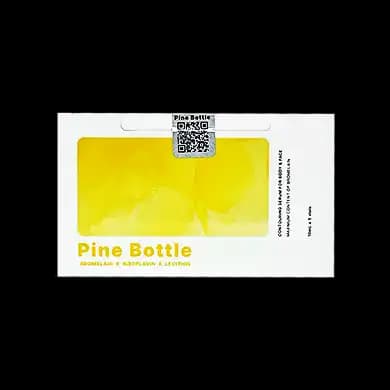
PINE BOTTLE is a South Korean lipolysis-oriented aesthetic solution formulated with three principal ingredients: Lecithin, Bromelain, and Riboflavin (Vitamin B2). Commercially positioned for professional facial and body contouring applications, PINE BOTTLE combines a phospholipid-based ingredient, a pineapple-derived proteolytic enzyme complex, and an essential vitamin involved in cellular energy metabolism. The standard commercial presentation contains five 10 mL vials per box, providing a total nominal volume of 50 mL.
PINE BOTTLE belongs to the category of aesthetic products marketed for localized fat reduction and body contouring. Its formulation concept differs from conventional deoxycholic acid-based lipolytic medicines, which act through a documented detergent-mediated mechanism of adipocyte membrane disruption.
The three principal ingredients are associated with different biochemical properties. Lecithin is a mixture of naturally occurring phospholipids with emulsifying characteristics. Bromelain is a group of protein-degrading enzymes derived from pineapple plants. Riboflavin is an essential vitamin involved in cellular energy production and lipid metabolism.
These ingredient characteristics provide the scientific background for the product's commercial positioning. However, the presence of these ingredients does not independently demonstrate that the finished PINE BOTTLE formulation destroys adipocytes, produces clinically significant fat reduction, or improves skin elasticity.
PINE BOTTLE is associated with South Korean aesthetic product suppliers, including BS Pharm Korea and Maypharm. Its precise legal manufacturing facility should be verified using the original product labeling and batch-specific documentation.
This TEOSQUARE product page provides professional buyers with information about PINE BOTTLE's composition, ingredient characteristics, packaging, proposed formulation concept, storage considerations, and regulatory status.
Key Features
- Three-Ingredient Formulation Concept: Combines Lecithin, Bromelain, and Riboflavin (Vitamin B2), the principal ingredients consistently identified in Korean commercial product documentation.
- Lecithin-Based Composition: Incorporates lecithin, a naturally occurring phospholipid mixture known for its amphiphilic and emulsifying properties.
- Pineapple-Derived Bromelain: Contains bromelain, a mixture of proteolytic enzymes derived from pineapple plants.
- Riboflavin (Vitamin B2): Includes a water-soluble vitamin involved in biological oxidation-reduction reactions and cellular energy metabolism.
- Face and Body Contouring Positioning: Commercially marketed for professional aesthetic applications involving localized facial and body contour concerns, subject to product-specific regulatory authorization.
- Liquid Vial Presentation: Supplied as a liquid solution in 10 mL vials.
- Five-Vial Packaging: The commonly documented commercial package contains five 10 mL vials, providing 50 mL per box.
Composition & Specifications
PINE BOTTLE is commercially described as a lipolysis-oriented solution containing Lecithin, Bromelain, and Riboflavin.
These three ingredients are consistently identified by multiple South Korean professional suppliers and product catalogues.
However, the complete quantitative formulation has not been independently established from manufacturer-controlled ingredient specifications. The concentrations of individual ingredients should therefore not be inferred from the product's total vial volume or from formulations sold under other brand names.
| Specification | Details |
|---|---|
| Product Name | PINE BOTTLE |
| Alternative Name | Pine Bottle / Pinebottle |
| Product Category | Lipolysis-Oriented Aesthetic Solution |
| Commercial Positioning | Professional Facial and Body Contouring |
| Principal Ingredients | Lecithin, Bromelain, Riboflavin (Vitamin B2) |
| Phospholipid Ingredient | Lecithin |
| Enzyme Ingredient | Bromelain |
| Vitamin Ingredient | Riboflavin (Vitamin B2) |
| Ingredient Concentrations | Not Independently Verified |
| Complete Ingredient Declaration | Requires Original Manufacturer Documentation |
| Dosage Form | Liquid Solution |
| Container Type | Vial |
| Volume per Vial | 10 mL |
| Standard Commercial Packaging | 5 × 10 mL Vials |
| Total Nominal Volume | 50 mL |
| Associated Commercial Companies | BS Pharm Korea / Maypharm |
| Legal Manufacturing Facility | Not Independently Verified |
| Country of Origin | South Korea |
| Storage Requirements | Confirm Against Original Manufacturer Labeling |
| Regulatory Classification | Market-Specific; Injectable Use Requires Applicable Authorization |
Lecithin
Lecithin is a naturally occurring mixture of phospholipids and other lipid-associated compounds.
It is commonly obtained from biological sources such as soybeans and egg yolks, although the exact source of lecithin used in PINE BOTTLE has not been independently verified.
Lecithin contains amphiphilic molecules, meaning that portions of their molecular structures interact with water while other portions interact with lipids.
These characteristics allow lecithin to function as an emulsifying ingredient in various pharmaceutical, food, and cosmetic formulations.
Lecithin commonly contains several phospholipids, including phosphatidylcholine, phosphatidylethanolamine, and phosphatidylinositol.
The exact proportions of these components depend on the lecithin source and manufacturing process.
Lecithin is included in PINE BOTTLE's commercially documented ingredient combination because of its lipid-associated physicochemical properties.
However, the emulsifying properties of lecithin do not independently demonstrate that the finished product dissolves human adipocytes or produces clinically meaningful localized fat reduction.
Lecithin and purified phosphatidylcholine are not interchangeable ingredient names. Because lecithin may naturally contain phosphatidylcholine, claims that a formulation is entirely phosphatidylcholine-free require specific compositional verification.
Bromelain
Bromelain is a group of proteolytic enzymes derived from the stem and fruit of the pineapple plant, Ananas comosus.
Proteolytic enzymes catalyze the breakdown of proteins into smaller peptide fragments.
Bromelain has been investigated for various biological properties, including effects on inflammatory signaling and tissue responses.
Some studies involving bromelain have examined its relationship with inflammation, swelling, and other biological processes.
However, evidence obtained from oral or topical bromelain preparations cannot automatically establish equivalent effects when the enzyme is incorporated into an injectable aesthetic formulation.
Bromelain is a protease rather than a lipase. Its established biochemical activity primarily involves proteins, not the direct enzymatic hydrolysis of triglycerides stored inside fat cells.
Consequently, the presence of bromelain does not independently establish an adipocyte-dissolving mechanism for PINE BOTTLE.
The exact bromelain concentration, enzymatic activity, and stability within the finished PINE BOTTLE formulation have not been independently verified.
Riboflavin (Vitamin B2)
Riboflavin, also known as vitamin B2, is an essential water-soluble vitamin involved in numerous biochemical reactions.
It serves as a precursor of two important coenzymes: flavin mononucleotide (FMN) and flavin adenine dinucleotide (FAD).
These coenzymes participate in oxidation-reduction reactions associated with cellular energy metabolism.
Riboflavin-dependent enzymes are involved in the metabolism of carbohydrates, proteins, and lipids.
In particular, FAD participates in biochemical pathways associated with fatty acid oxidation and mitochondrial energy production.
PINE BOTTLE incorporates riboflavin as part of its metabolism-oriented ingredient combination.
However, the physiological importance of riboflavin in energy metabolism does not demonstrate that locally administered riboflavin increases fat burning or selectively reduces subcutaneous fat deposits.
Its exact concentration and finished-product contribution to clinical outcomes have not been independently established.
Additional Ingredient Information
Some commercial descriptions of PINE BOTTLE mention additional substances, including pineapple fruit extract, ascorbic acid, cyanocobalamin, and L-carnitine.
However, these substances are not consistently identified across the available product descriptions.
Their presence, chemical form, and quantitative concentration should be verified using the original manufacturer-issued ingredient declaration before being included in a definitive product specification.
Likewise, claims concerning the absence of phosphatidylcholine or deoxycholic acid require verification against the complete formula.
The three principal ingredients consistently documented for PINE BOTTLE are Lecithin, Bromelain, and Riboflavin. No reliable product-specific concentration has been established for these ingredients, so quantitative values should not be added without original formulation documentation.
How PINE BOTTLE Is Formulated to Work
PINE BOTTLE is commercially developed around a combination of phospholipid, enzyme, and vitamin ingredients.
These components have distinct biochemical characteristics that contribute to the product's formulation concept.
Their individual properties should be distinguished from clinically demonstrated effects of the finished solution.
Lipid-Associated Properties of Lecithin
Lecithin contains phospholipids with both hydrophilic and lipophilic molecular regions.
This amphiphilic structure allows lecithin to interact with water and lipid-containing environments.
In formulation science, these properties are relevant to emulsification, dispersion, and the organization of lipid-containing mixtures.
However, emulsification of lipids in a formulated mixture is different from the biological destruction of living fat cells.
PINE BOTTLE's lecithin content should therefore not be interpreted as proof of direct adipocyte membrane disruption.
Proteolytic Activity of Bromelain
Bromelain is a mixture of enzymes that catalyze the breakdown of proteins.
Its biochemical properties have been investigated in relation to inflammatory processes and tissue responses.
These properties provide ingredient-level context for the inclusion of bromelain in certain aesthetic formulations.
However, bromelain's proteolytic activity does not establish selective fat-cell destruction, and its effects in the finished PINE BOTTLE formulation remain insufficiently characterized through independently verified clinical studies.
Riboflavin and Cellular Energy Metabolism
Riboflavin is necessary for the formation of FMN and FAD, two coenzymes involved in numerous metabolic reactions.
These reactions include processes associated with mitochondrial energy production and fatty acid metabolism.
This relationship explains the use of riboflavin in PINE BOTTLE's metabolism-oriented commercial positioning.
Nevertheless, the involvement of vitamin B2 in normal lipid metabolism is not evidence that the finished solution causes targeted fat loss when administered locally.
Multi-Ingredient Formulation Concept
PINE BOTTLE combines three ingredients associated with different biological and physicochemical properties.
- Lecithin: A phospholipid mixture associated with emulsifying and lipid-interaction properties.
- Bromelain: A pineapple-derived proteolytic enzyme complex investigated for protein-degrading activity and selected biological effects.
- Riboflavin: An essential vitamin involved in cellular energy metabolism through FMN- and FAD-dependent biochemical pathways.
The combined presence of these ingredients forms the basis of PINE BOTTLE's commercial identity.
However, ingredient-level biochemical mechanisms cannot establish product-specific synergy, adipocyte destruction, measurable circumference reduction, or long-term contouring effectiveness.
Adequate finished-product clinical evidence is required to establish whether PINE BOTTLE achieves its marketed lipolysis and body-contouring objectives. The mechanisms described above should not be presented as proof of clinically demonstrated fat reduction.
Professional Aesthetic Positioning
PINE BOTTLE is commercially marketed within the professional lipolysis and body-contouring category.
Distributor materials commonly associate the product with localized contour concerns involving selected facial and body areas.
Facial Contouring
Commercial descriptions frequently mention the submental region, lower face, jawline, and cheeks.
These references describe the product's marketing positioning rather than independently verified or universally approved indications.
The safety and effectiveness of PINE BOTTLE for reducing submental fat or altering facial contours have not been established through independently verified product-specific clinical evidence.
Body Contouring
PINE BOTTLE is also marketed in connection with localized body-contouring concerns involving the abdomen, upper arms, thighs, and flanks.
Different anatomical regions have different vascular, neurological, and soft-tissue characteristics.
Consequently, the commercial promotion of a product for multiple body areas does not establish that its administration is safe, effective, or legally authorized in those locations.
Skin Firmness and Elasticity
Some suppliers also associate PINE BOTTLE with improvements in skin firmness, elasticity, and the appearance of wrinkles.
However, these outcomes require adequate clinical evidence involving the finished formulation.
The presence of bromelain, lecithin, or riboflavin does not independently establish collagen regeneration, skin tightening, or clinically meaningful wrinkle reduction.
Facial contouring, body contouring, and skin-firmness descriptions reflect commercial product positioning. They should not be interpreted as verified medical indications or guaranteed clinical outcomes.
PINE BOTTLE Formulation Identification
PINE BOTTLE is frequently listed alongside other aesthetic products marketed for lipolysis.
However, products within this commercial category may contain different active ingredients and may operate through fundamentally different biological mechanisms.
PINE BOTTLE and Deoxycholic Acid Products
Deoxycholic acid is a bile acid with detergent properties capable of disrupting cellular membranes under specific conditions.
Certain deoxycholic acid formulations have been developed as prescription medicines for localized fat reduction.
PINE BOTTLE's consistently documented principal ingredients are lecithin, bromelain, and riboflavin.
The product should therefore not be described as a deoxycholic acid formulation without appropriate manufacturer documentation confirming that ingredient.
PINE BOTTLE and Phosphatidylcholine Products
Phosphatidylcholine is a phospholipid found in biological cell membranes and is also one of the components commonly present in lecithin mixtures.
Some commercial lipolysis products contain specifically formulated or purified phosphatidylcholine.
PINE BOTTLE is consistently described using the broader ingredient name lecithin.
These names should not be treated as identical quantitative declarations.
The precise phosphatidylcholine content of PINE BOTTLE has not been independently verified.
PINE BOTTLE and PINE BOTTLE OMNI
PINE BOTTLE OMNI is a separately marketed product associated with the Maypharm portfolio.
Its published formulation descriptions differ from those of the standard lecithin, bromelain, and riboflavin-based PINE BOTTLE solution.
PINE BOTTLE OMNI should not be treated as an alternative name, package size, or automatically equivalent formulation of the standard PINE BOTTLE product.
This page describes the standard PINE BOTTLE solution supplied in 10 mL vials. It does not describe PINE BOTTLE OMNI or another similarly named product.
Packaging & Product Presentation
PINE BOTTLE is commonly supplied as a liquid solution in individual 10 mL vials.
The standard commercial package contains five vials, providing a total nominal volume of 50 mL.
| Packaging Component | Specification |
|---|---|
| Product Name | PINE BOTTLE |
| Product Form | Liquid Solution |
| Container | Vial |
| Volume per Vial | 10 mL |
| Vials per Box | 5 |
| Total Nominal Volume | 50 mL |
| Principal Ingredients | Lecithin, Bromelain, Riboflavin |
| Country of Origin | South Korea |
10 mL Individual Vial
Each vial contains a nominal volume of 10 mL.
Commercial suppliers may offer individual vials separately from complete five-vial boxes.
Buyers should verify whether the selected selling unit corresponds to one vial or one complete manufacturer package.
5 × 10 mL Box
The standard documented commercial presentation contains five 10 mL vials.
The combined nominal volume is 50 mL per box.
The original packaging should be inspected to confirm the product identity, complete ingredient declaration, lot number, expiration date, and responsible manufacturing entity.
Vial volume is a packaging specification, not a recommended administration quantity. The original product label and relevant regulatory documents should be verified before professional procurement.
Storage & Handling
Published professional distributor information describes room-temperature storage for PINE BOTTLE, with some suppliers identifying a range of 2°C to 30°C.
However, a definitive manufacturer-controlled storage specification for the finished commercial product has not been independently verified.
The original manufacturer-issued label should therefore be used to determine validated storage conditions.
- Temperature Conditions: Follow the validated storage temperature stated on the original manufacturer-issued labeling.
- Light Protection: Protect the product from direct sunlight and conditions that may compromise formulation stability.
- Original Container: Maintain the product in its original sealed vial and packaging.
- Product Integrity: Inspect the container for visible damage, leakage, or signs of compromised packaging integrity.
- Product Traceability: Confirm the original product name, batch number, expiration date, and responsible manufacturer.
- Handling After Opening: Follow the original manufacturer's instructions rather than assuming that unused contents can be safely retained for later use.
Shelf Life
Published commercial information includes differing shelf-life claims for PINE BOTTLE.
Some suppliers report 24 months, while others report 36 months.
A single verified shelf-life specification cannot be assigned without the original manufacturer's product documentation.
Storage temperature, shelf life, and handling after opening must be confirmed against the exact supplied product. Third-party commercial descriptions are not substitutes for validated manufacturer instructions.
Safety & Regulatory Considerations
PINE BOTTLE is commercially marketed for professional lipolysis and contouring applications. However, its legal classification, permitted administration routes, and approved indications must be established through product-specific regulatory documentation.
The product should not be assumed safe or authorized for injection solely because it is sold in vials and promoted by medical aesthetics suppliers.
Ingredient-Related Precautions
Bromelain is derived from pineapple and may be associated with hypersensitivity reactions in susceptible individuals.
Lecithin can be obtained from sources including soybeans and eggs, although the specific raw-material source used in PINE BOTTLE has not been independently established.
The original ingredient declaration should be reviewed to identify potential allergens and other relevant formulation components.
The concentrations of lecithin, bromelain, and riboflavin are not conclusively verified, limiting the ability to assess ingredient-specific exposure from the publicly available commercial information.
Potential Injection-Related Complications
Injectable lipolysis products may be associated with localized pain, swelling, redness, bruising, inflammation, and hypersensitivity reactions.
More serious complications associated with unapproved fat-dissolving injections can include infection, persistent nodules, tissue damage, scarring, and skin deformities.
Such risks are particularly important when the sterility, complete composition, intended administration route, and clinical safety of a product have not been adequately established.
Clinical Evidence Limitations
Lecithin, bromelain, and riboflavin have established biochemical properties and have been studied individually in different scientific contexts.
However, the available ingredient-level evidence does not establish that PINE BOTTLE causes clinically significant localized fat reduction.
Independently verified, adequately controlled clinical studies establishing the safety and effectiveness of the finished PINE BOTTLE formulation for injectable fat reduction have not been identified.
Claims of permanent fat-cell destruction, guaranteed contour improvement, clinically proven skin tightening, or superior safety compared with other lipolytic products therefore require additional product-specific evidence.
United States FDA Regulatory Status
PINE BOTTLE is not an FDA-approved fat-dissolving injectable medicine.
In March 2025, the US FDA issued a warning letter addressing the sale of unapproved injectable lipolysis products, explicitly identifying PineBottle among the products offered by a US-based online seller.
The FDA determined that the identified PineBottle offering was an unapproved new drug and that no approved application was in effect for the product.
Therefore, the commercial availability of PINE BOTTLE through international suppliers does not establish that the product may be legally imported, distributed, or administered in the United States.
Distinction from FDA-Approved Fat Reduction Treatments
The US FDA has approved a specific prescription deoxycholic acid injection for reducing moderate to severe submental fat in adults.
This authorization is specific to the approved deoxycholic acid product and its labeled indication.
It does not extend to PINE BOTTLE or other similarly marketed lipolysis solutions.
International Regulatory Considerations
The regulatory classification of lipolysis-oriented products may differ between countries according to their composition, intended use, administration route, and applicable legislation.
A product marketed as a cosmetic or professional aesthetic solution in one country should not automatically be considered authorized for injection in another.
Buyers should verify the responsible manufacturer, complete formulation, appropriate quality documentation, lawful product classification, approved administration route, and import eligibility before procurement.
This information is intended for professional product identification and commercial evaluation. It does not establish an approved injectable indication, provide injection instructions, or demonstrate that PINE BOTTLE is safe and effective for fat reduction. Use and distribution must comply with applicable national regulations.
Frequently Asked Questions
What is PINE BOTTLE?
PINE BOTTLE is a South Korean aesthetic solution commercially marketed for professional lipolysis and contouring applications. Its three consistently documented principal ingredients are Lecithin, Bromelain, and Riboflavin (Vitamin B2). The standard package contains five 10 mL vials.
What are the main ingredients in PINE BOTTLE?
The principal ingredients are Lecithin, Bromelain, and Riboflavin. Lecithin is a phospholipid mixture, bromelain is a pineapple-derived proteolytic enzyme complex, and riboflavin is vitamin B2. Their exact concentrations have not been independently verified from manufacturer-controlled specifications.
Does PINE BOTTLE contain phosphatidylcholine?
Lecithin is consistently identified as a principal ingredient. Lecithin naturally contains several phospholipids, which commonly include phosphatidylcholine. However, the exact phosphatidylcholine content of PINE BOTTLE has not been independently verified, and lecithin should not be described as an identical substitute for purified phosphatidylcholine.
Does PINE BOTTLE contain deoxycholic acid?
Deoxycholic acid is not identified among the three principal ingredients consistently documented for standard PINE BOTTLE. However, a complete manufacturer-controlled ingredient declaration has not been independently established, so its absolute absence should not be asserted without original formulation documentation.
What is the role of bromelain in PINE BOTTLE?
Bromelain is a pineapple-derived group of proteolytic enzymes that primarily break down proteins. Its biological properties have been investigated in several research settings, but these findings do not independently establish that PINE BOTTLE destroys fat cells or achieves clinically significant fat reduction.
What is the role of riboflavin in PINE BOTTLE?
Riboflavin, or vitamin B2, is involved in cellular energy metabolism through the coenzymes FMN and FAD. Although these coenzymes participate in lipid metabolism, this does not demonstrate that the finished PINE BOTTLE formulation produces targeted fat reduction.
Is PINE BOTTLE clinically proven to dissolve fat?
Adequate independent clinical evidence demonstrating fat reduction from the finished PINE BOTTLE formulation has not been established. Its commercial positioning should be distinguished from clinically verified treatment effects.
What is the difference between PINE BOTTLE and PINE BOTTLE OMNI?
PINE BOTTLE OMNI is a separately marketed product with a different published formulation description. Standard PINE BOTTLE is principally identified by its lecithin, bromelain, and riboflavin combination and its 10 mL vial presentation. The two products should not be treated as interchangeable.
How many vials are included in one box of PINE BOTTLE?
The standard commercial package contains five 10 mL vials, providing a total nominal volume of 50 mL. Individual-vial selling options may also be available through professional suppliers.
Where is PINE BOTTLE made?
PINE BOTTLE is identified as a product of South Korean origin. It is commercially associated with Korean aesthetic suppliers including BS Pharm Korea and Maypharm. The exact legal manufacturing facility should be confirmed using the original product labeling and batch documentation.
How should PINE BOTTLE be stored?
Several commercial suppliers describe room-temperature storage, with some specifying 2°C to 30°C. However, definitive manufacturer-validated storage conditions have not been independently established. Buyers should follow the original manufacturer-issued labeling for the supplied product.
Is PINE BOTTLE FDA approved?
No. PINE BOTTLE is not an FDA-approved fat-dissolving injectable medicine. In March 2025, the US FDA explicitly identified PineBottle in a warning letter concerning the sale of unapproved injectable lipolysis products. Regulatory authorization and lawful distribution must be verified separately for every destination market.