
 Cart
 Orders

 Not available here
Product Overview
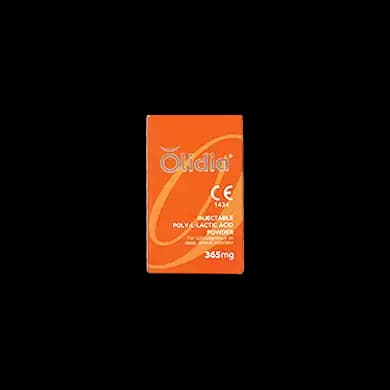
Olidia is a South Korean poly-L-lactic acid (PLLA) collagen biostimulator and injectable tissue-restoration medical device manufactured by PRP Science Co., Ltd. The product range includes Olidia 120, Olidia 240, and Olidia 365, offering three formulation strengths with 50 mg, 100 mg, and 150 mg of PLLA per vial, respectively. Each formulation combines biodegradable PLLA particles with sodium carboxymethylcellulose (CMC) and mannitol. Olidia is intended for the temporary correction of moderate to severe nasolabial folds in adults through physical soft-tissue restoration.
Unlike conventional hyaluronic acid fillers that primarily provide volume through a hydrated gel, PLLA-based products are associated with a gradual tissue response involving collagen formation. Olidia is supplied as a sterile, dry powder intended for professional use according to its approved instructions for use.
The three formulations share the same principal ingredients but differ in the quantity of PLLA, CMC, and mannitol contained in each vial. Their respective total powder weights are 121.7 mg, 243.4 mg, and 365 mg.
Key Features
- Biodegradable PLLA Collagen Biostimulator: Contains poly-L-lactic acid, a biodegradable synthetic polymer associated with gradual collagen formation and soft-tissue restoration.
- Three Formulation Strengths: Available as Olidia 120, Olidia 240, and Olidia 365, containing 50 mg, 100 mg, and 150 mg of PLLA per vial, respectively.
- PLLA + CMC + Mannitol: Combines PLLA microspheres with sodium carboxymethylcellulose and mannitol in a dry-powder formulation.
- Proprietary Particle Technology: PRP Science describes its manufacturing approach as incorporating controlled particle sizing, particle uniformity, and dispersion-oriented processing.
- South Korean Medical Device: Manufactured by PRP Science and registered as a tissue-restoration medical device in South Korea.
Composition & Specifications
Olidia contains three principal ingredients: poly-L-lactic acid (PLLA), sodium carboxymethylcellulose (CMC), and mannitol.
PLLA is the principal biodegradable polymer, while CMC and mannitol serve supporting formulation functions.
The manufacturer offers three formulations containing different amounts of these ingredients while maintaining the same approximate compositional proportions.
| Specification | Details |
|---|---|
| Brand | Olidia |
| Product Category | PLLA Collagen Biostimulator / Injectable Tissue-Restoration Medical Device |
| Principal Active Material | Poly-L-Lactic Acid (PLLA) |
| Supporting Ingredients | Sodium Carboxymethylcellulose (CMC), Mannitol |
| Material Type | Biodegradable Synthetic Polymer |
| Formulation | Sterile Dry Powder for Suspension |
| Available Variants | Olidia 120, Olidia 240, Olidia 365 |
| PLLA Content | 50 mg / 100 mg / 150 mg per Vial |
| Total Powder Weight | 121.7 mg / 243.4 mg / 365 mg per Vial |
| Lidocaine | Not Included in the Declared Formulation |
| Hyaluronic Acid | Not Included in the Declared Formulation |
| Container | Glass Vial |
| Standard Packaging | 1 Vial per Box |
| Manufacturer | PRP Science Co., Ltd. |
| Country of Manufacture | South Korea |
| South Korean Classification | Tissue-Restoration Medical Device |
| Intended Users | Qualified Healthcare Professionals |
Poly-L-Lactic Acid (PLLA)
Poly-L-lactic acid is a biodegradable synthetic polymer belonging to the polylactic acid family.
PLLA consists of repeating units derived from L-lactic acid and is widely investigated for biomedical applications involving biodegradable implants, medical devices, and tissue-restoration materials.
In aesthetic medicine, PLLA microspheres are used in injectable biostimulatory formulations associated with gradual collagen formation.
The presence of PLLA particles can initiate a controlled local tissue response involving immune cells and fibroblast-associated extracellular matrix remodeling.
Olidia contains three different PLLA quantities:
- Olidia 120: 50 mg PLLA per vial.
- Olidia 240: 100 mg PLLA per vial.
- Olidia 365: 150 mg PLLA per vial.
PLLA undergoes gradual hydrolytic degradation. The resulting degradation products are processed through biological metabolic pathways.
However, the biodegradation of PLLA and its ability to stimulate collagen-associated responses do not independently establish a specific treatment duration or identical clinical effectiveness across all three Olidia formulations.
Sodium Carboxymethylcellulose (CMC)
Sodium carboxymethylcellulose is a water-soluble cellulose derivative used in pharmaceutical and medical device formulations.
CMC functions as a viscosity-modifying and suspension-supporting ingredient, helping influence the physical characteristics of the formulation after preparation.
In PLLA-based products, CMC contributes to the distribution of polymer particles within the suspension.
Olidia contains 30 mg, 60 mg, or 90 mg of CMC per vial, depending on the selected formulation.
CMC is a supporting formulation component rather than the principal collagen-stimulating polymer.
Mannitol
Mannitol is a sugar alcohol widely used as an excipient in pharmaceutical and biomedical formulations.
It is commonly incorporated into dry pharmaceutical preparations because of its physicochemical properties and its ability to support formulation stability.
Olidia contains mannitol as one of its three principal formulation components.
The documented amounts are 41.7 mg in Olidia 120, 83.4 mg in Olidia 240, and 125 mg in Olidia 365.
Mannitol is not the principal collagen biostimulator in Olidia. Its role should be distinguished from that of PLLA.
The product designations 120, 240, and 365 must not be confused with the quantity of PLLA alone. These names correspond approximately to the total dry formulation weight, which includes PLLA, CMC, and mannitol.
How Olidia PLLA Collagen Biostimulator Works
Olidia is based on poly-L-lactic acid, a biodegradable polymer associated with collagen biostimulation and gradual soft-tissue restoration.
Unlike conventional hyaluronic acid fillers, which primarily provide physical volume through a hydrated gel, PLLA formulations are associated with a gradual biological response involving connective tissue remodeling.
PLLA Particles and the Tissue Response
PLLA is a biocompatible synthetic polymer that undergoes gradual degradation in biological environments.
Following implantation, PLLA particles can interact with surrounding tissues and participate in a local foreign-body response.
This response involves immune cells, including macrophages, and can influence fibroblast-associated collagen production.
Fibroblast Activity and Collagen Formation
Fibroblasts are connective tissue cells responsible for producing collagen and other components of the extracellular matrix.
Scientific studies involving PLLA-based materials have demonstrated collagen formation associated with local tissue remodeling.
The resulting extracellular matrix response provides the scientific basis for the use of PLLA as a collagen biostimulator.
However, findings involving PLLA materials in general cannot automatically establish a specific amount of collagen production from the finished Olidia formulation.
Gradual Soft-Tissue Restoration
The effects of PLLA biostimulation generally develop progressively rather than appearing entirely through immediate gel-based volume augmentation.
As tissue remodeling occurs, changes in collagen-related extracellular matrix characteristics may contribute to gradual improvement in soft-tissue volume and wrinkle appearance.
The degree and duration of improvement depend on individual physiological factors, the specific product, and the circumstances of authorized clinical use.
Biodegradation of PLLA
PLLA undergoes gradual hydrolysis, during which its polymer chains break down into smaller components.
These degradation products are subsequently processed through biological metabolic pathways.
The biodegradability of PLLA distinguishes it from permanent synthetic filling materials.
The mechanisms described above are supported by general research involving PLLA. They do not guarantee a particular clinical response, a fixed duration of effect, or permanent collagen restoration with Olidia.
Available Olidia Variants
Olidia is available in three formulations: Olidia 120, Olidia 240, and the standard Olidia formulation, commonly identified as Olidia 365.
All three contain PLLA, sodium carboxymethylcellulose, and mannitol. Their principal difference is the total amount of each ingredient per vial.
| Specification | Olidia 120 | Olidia 240 | Olidia 365 |
|---|---|---|---|
| PLLA | 50 mg | 100 mg | 150 mg |
| Sodium CMC | 30 mg | 60 mg | 90 mg |
| Mannitol | 41.7 mg | 83.4 mg | 125 mg |
| Total Powder Weight | 121.7 mg | 243.4 mg | 365 mg |
| Formulation | Dry Powder | Dry Powder | Dry Powder |
| Lidocaine | Not Included | Not Included | Not Included |
| Packaging | 1 Vial/Box | 1 Vial/Box | 1 Vial/Box |
| Manufacturer | PRP Science | PRP Science | PRP Science |
| Country of Origin | South Korea | South Korea | South Korea |
Olidia 120
Olidia 120 is the lowest-PLLA-content formulation within the three-product range.
Each vial contains 50 mg poly-L-lactic acid, 30 mg sodium carboxymethylcellulose, and 41.7 mg mannitol.
The total dry formulation weight is 121.7 mg.
Olidia 120 is commercially distinguished by its lower total PLLA quantity compared with Olidia 240 and Olidia 365.
The lower PLLA content does not independently establish suitability for a specific anatomical area or reduced risk of complications.
Olidia 240
Olidia 240 is the intermediate-strength formulation.
Each vial contains 100 mg poly-L-lactic acid, 60 mg sodium carboxymethylcellulose, and 83.4 mg mannitol.
The total dry formulation weight is 243.4 mg.
This formulation contains twice the PLLA quantity of Olidia 120 while maintaining the same approximate ingredient proportions.
Differences in material quantity do not independently establish a proportional increase in clinical effects.
Olidia 365
Olidia 365 is the standard Olidia formulation and contains the highest PLLA quantity within the three-product range.
Each vial contains 150 mg poly-L-lactic acid, 90 mg sodium carboxymethylcellulose, and 125 mg mannitol.
The total dry formulation weight is 365 mg.
Olidia 365 is commonly marketed simply as Olidia and is documented in the manufacturer's international product information.
The 365 mg designation represents the combined weight of the three formulation ingredients, not the quantity of PLLA alone.
All three formulations belong to the same PLLA product family. Their differing ingredient quantities must not be interpreted as direct dosing recommendations or evidence of proportional clinical effectiveness. Product selection must follow the applicable instructions for use and professional clinical assessment.
Particle Technology & Formulation Characteristics
PRP Science describes several technologies associated with the development and manufacturing of Olidia.
These technologies focus on PLLA particle characteristics, material uniformity, and dispersion behavior.
PLLA Particle Engineering
The physical characteristics of PLLA particles are relevant to the behavior of injectable biostimulatory materials.
Particle size, shape, and distribution can influence suspension properties and the interaction between implanted particles and surrounding tissue.
PRP Science describes its manufacturing technology as incorporating controlled particle processing and particle-size uniformity.
These are manufacturer-described material characteristics and should not be interpreted as independent proof of superior clinical effectiveness.
Dispersion-Oriented Formulation
Olidia is supplied as a dry-powder formulation containing PLLA particles, CMC, and mannitol.
CMC contributes suspension-related properties, while mannitol supports the formulation's physicochemical characteristics.
PRP Science describes its particle and formulation technologies as intended to support uniform dispersion after preparation.
Proper professional handling remains essential because a manufacturer's dispersion-related design does not eliminate the possibility of particle aggregation or injection-related complications.
PSPCM Formulation Concept
PRP Science uses the term PSPCM in its Olidia commercial materials to describe the product's ingredient combination.
The abbreviation refers to the three principal formulation components: PLLA, CMC, and mannitol.
This designation identifies the formulation concept rather than a separate fourth active ingredient.
Manufacturer-reported particle technologies and formulation characteristics do not establish a guaranteed collagen response, faster treatment results, or reduced complication rates compared with other PLLA products.
Intended Aesthetic Applications
Olidia is registered in South Korea as a tissue-restoration medical device.
Its documented intended purpose is the temporary improvement of moderate to severe nasolabial folds in adults through physical soft-tissue restoration using a PLLA suspension.
Moderate to Severe Nasolabial Folds
Nasolabial folds are facial creases extending from the sides of the nose toward the corners of the mouth.
Their appearance is influenced by multiple factors, including facial anatomy, changes in soft-tissue volume, skin elasticity, and the aging process.
Olidia is intended for temporary improvement of moderate to severe nasolabial folds within its documented medical device indication.
Collagen Biostimulation and Soft-Tissue Quality
PLLA-based products are associated with gradual collagen formation and extracellular matrix remodeling.
These biological responses provide the scientific basis for the commercial positioning of Olidia as a collagen biostimulator.
However, broader applications involving skin tightening, pore reduction, acne scars, body contouring, or treatment of other facial areas should not automatically be considered approved indications for every Olidia formulation.
The approved intended purpose may vary by country and product registration. Any application beyond the applicable product labeling requires separate regulatory and clinical consideration.
Packaging & Product Presentation
Olidia is supplied as sterile dry powder in individual glass vials.
The manufacturer's documented packaging configuration is one vial per box for each of the three formulations.
| Product | PLLA Content | Total Powder Weight | Standard Packaging |
|---|---|---|---|
| Olidia 120 | 50 mg/Vial | 121.7 mg/Vial | 1 Vial/Box |
| Olidia 240 | 100 mg/Vial | 243.4 mg/Vial | 1 Vial/Box |
| Olidia 365 | 150 mg/Vial | 365 mg/Vial | 1 Vial/Box |
The contents are supplied in dry form rather than as a pre-filled liquid syringe.
The original package should identify the model name, total powder weight, manufacturer, batch number, expiration date, and applicable regulatory information.
Buyers should distinguish the total powder weight from the PLLA content when comparing Olidia with other collagen biostimulators.
The documented contents refer to the original dry-powder formulation. The total powder weight is not an injection volume or administration quantity.
Storage & Handling
Manufacturer-associated export documentation describes room-temperature storage below 30°C for unopened Olidia vials and advises protection from freezing.
The original manufacturer labeling should be followed to confirm the validated storage requirements of the specific supplied formulation.
- Room-Temperature Storage: Historical product documentation specifies storage below 30°C.
- Freezing Protection: Protect the product from freezing.
- Original Packaging: Keep unopened vials in their original manufacturer packaging.
- Sterile Container Integrity: Verify that the vial and its packaging have not been damaged or compromised.
- Single-Use Handling: Follow the manufacturer's requirements for single-patient, single-use handling.
- Product Traceability: Confirm the exact variant, batch number, expiration date, and manufacturer information.
Published export materials describe a shelf life of 36 months from manufacture for the standard Olidia formulation.
The applicable shelf life and storage conditions for each supplied variant should be confirmed from its current manufacturer-issued labeling.
Storage requirements for the unopened dry powder must not be confused with handling requirements after preparation. The original instructions for use determine appropriate professional handling and disposal.
Safety & Regulatory Considerations
Olidia is an injectable medical device intended for use by appropriately qualified healthcare professionals.
Its clinical use requires consideration of the patient's medical history, tissue characteristics, contraindications, and potential complications associated with PLLA-based injectable materials.
Potential Adverse Reactions
Potential adverse reactions associated with PLLA injectable products include redness, swelling, pain, bruising, tenderness, and localized inflammation.
Additional complications may include persistent papules, subcutaneous nodules, granulomatous reactions, infection, and inflammatory responses.
Some nodules or inflammatory reactions may develop after a delay rather than immediately following treatment.
The frequency and severity of complications depend on multiple factors, including individual patient characteristics and the circumstances of administration.
Vascular Complications
Accidental intravascular introduction of injectable filling materials can obstruct blood vessels and compromise tissue perfusion.
Serious complications may include tissue ischemia, necrosis, visual impairment, and blindness.
PRP Science's product safety information warns against use in the vermilion region of the lips and notes that the safety and effectiveness of Olidia for lip augmentation have not been established.
The manufacturer also highlights concerns involving anatomically sensitive regions with thin skin and an increased risk of vascular complications.
Contraindications and Precautions
Olidia should not be used in patients with active infection or inflammation affecting the intended treatment area until the condition has been appropriately resolved.
Patients with known hypersensitivity to PLLA or other formulation components may have contraindications to treatment.
The manufacturer's safety information also identifies precautions involving patients susceptible to keloids, hypertrophic scarring, or hyperpigmentation.
The safety of treatment during pregnancy, breastfeeding, and in patients younger than 18 years has not been established in the manufacturer's patient information.
Patients with relevant bleeding disorders, anticoagulant exposure, or a history of herpetic eruptions may require additional medical assessment.
PLLA and Hyaluronic Acid Are Different Materials
Olidia contains PLLA rather than hyaluronic acid.
PLLA is a biodegradable synthetic polymer associated with tissue biostimulation, while conventional HA fillers primarily provide physical volume through a hydrated hyaluronic acid gel.
Hyaluronidase, an enzyme used in certain clinical situations involving HA fillers, should not be assumed to dissolve PLLA particles.
The management of complications associated with PLLA may differ from that of conventional HA-based fillers.
Regulatory Authorization
Olidia is manufactured by PRP Science Co., Ltd. in South Korea.
The product family is registered in South Korea as a tissue-restoration medical device. Manufacturer materials also report European CE certification and regulatory authorizations in selected international markets.
Regulatory certification or authorization in one country does not automatically establish legal marketing authorization in another country.
US FDA approval for Olidia has not been established.
Although certain PLLA-containing medical devices have received FDA approval, authorization is product-specific and does not automatically extend to Olidia.
Professional buyers should verify the current legal classification, model-specific registration, import eligibility, approved indications, and distribution requirements applicable to their destination country.
This information is intended for professional product identification and commercial evaluation. It does not provide preparation instructions, injection techniques, patient-specific treatment recommendations, or authorization for use outside applicable medical device regulations.
Frequently Asked Questions
What is Olidia?
Olidia is a South Korean PLLA collagen biostimulator and injectable tissue-restoration medical device manufactured by PRP Science. It contains poly-L-lactic acid, sodium carboxymethylcellulose, and mannitol and is available in three formulation strengths.
What are the main ingredients in Olidia?
Olidia contains three principal ingredients: poly-L-lactic acid (PLLA), sodium carboxymethylcellulose (CMC), and mannitol. PLLA is the principal biodegradable polymer, while CMC and mannitol serve supporting formulation functions.
What is the difference between Olidia 120, 240, and 365?
The three formulations differ in their ingredient quantities. Olidia 120 contains 50 mg PLLA, Olidia 240 contains 100 mg PLLA, and Olidia 365 contains 150 mg PLLA. Their total powder weights are 121.7 mg, 243.4 mg, and 365 mg, respectively.
Does Olidia 365 contain 365 mg of PLLA?
No. Olidia 365 contains 150 mg PLLA, 90 mg sodium carboxymethylcellulose, and 125 mg mannitol. The combined weight of these three ingredients is 365 mg per vial.
What is the role of PLLA in Olidia?
PLLA is a biodegradable polymer associated with gradual collagen formation and soft-tissue remodeling. This biological response provides the scientific basis for Olidia's positioning as a collagen biostimulator. Individual clinical results vary.
Does Olidia contain hyaluronic acid?
No. The declared Olidia formulation contains PLLA, CMC, and mannitol. It is a PLLA-based collagen biostimulator rather than a conventional hyaluronic acid filler.
Does Olidia contain lidocaine?
No. Lidocaine is not included in the manufacturer's declared composition of Olidia 120, Olidia 240, or Olidia 365.
Who manufactures Olidia?
Olidia is manufactured by PRP Science Co., Ltd., a South Korean medical device manufacturer specializing in PLLA-based tissue-restoration materials.
How many vials are included in one box of Olidia?
The manufacturer's documented packaging configuration contains one vial per box. Each vial contains a different total powder weight depending on whether the product is Olidia 120, Olidia 240, or Olidia 365.
Is Olidia a ready-to-use liquid filler?
No. Olidia is supplied as a sterile dry powder intended for preparation as a PLLA suspension by qualified healthcare professionals according to its approved instructions for use.
How should Olidia be stored?
Manufacturer-associated export documentation specifies room-temperature storage below 30°C and protection from freezing. The current original manufacturer labeling should be consulted for definitive storage and shelf-life requirements.
Is Olidia approved in South Korea?
Yes. Olidia is registered in South Korea as a tissue-restoration medical device. Its documented intended purpose includes temporary improvement of moderate to severe nasolabial folds in adults. The applicable registration and permitted indications should be verified for each destination market.
Is Olidia FDA approved?
US FDA approval for Olidia has not been established. FDA approval of another PLLA-containing medical device does not automatically extend to Olidia. Buyers should verify the exact product's regulatory authorization and lawful distribution status before procurement.