
 Cart
 Orders

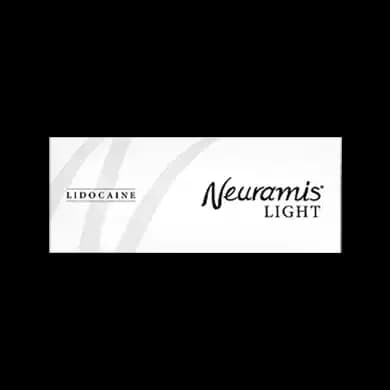
 Not available here
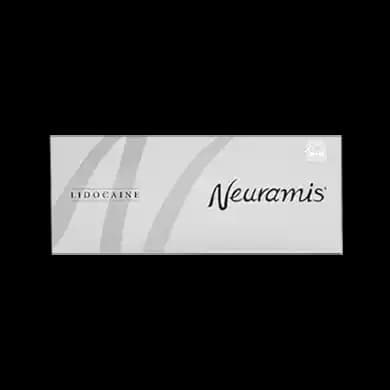
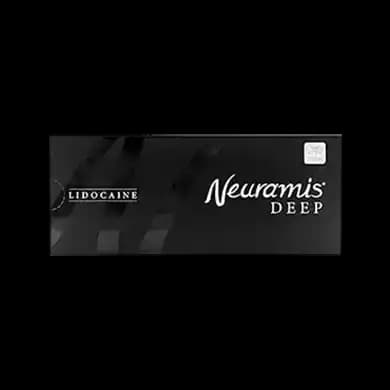
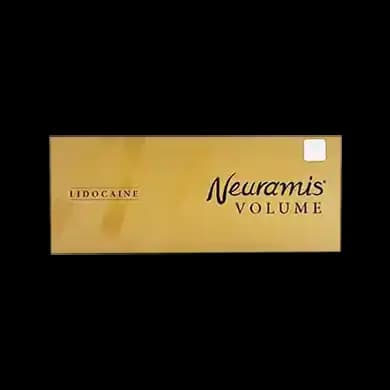
Product Overview
NEURAMIS is a South Korean hyaluronic acid (HA) dermal filler and skin enhancement product range developed and manufactured by Medytox Inc. The portfolio includes LIGHT, CLASSIC, DEEP, VOLUME, HEART, SKIN ENHANCER, and selected non-lidocaine formulations. Developed using Medytox's proprietary SHAPE™ Technology, the range combines hyaluronic acid at 20 mg/mL with formulation-specific gel characteristics designed for professional facial wrinkle correction, soft-tissue volume restoration, and skin quality enhancement.
NEURAMIS was introduced in 2013 and has become an established South Korean medical aesthetics brand distributed in multiple international markets. The product family includes cross-linked HA fillers with different gel characteristics, as well as the historically documented non-crosslinked NEURAMIS MESO formulation.
The principal NEURAMIS filler formulations contain 20 mg/mL hyaluronic acid. Lidocaine-containing products incorporate 0.3% lidocaine, a local anesthetic included to help reduce discomfort associated with professional filler procedures.
In May 2025, Medytox expanded the NEURAMIS portfolio with two additional products: NEURAMIS HEART and NEURAMIS SKIN ENHANCER. These products joined the established LIGHT LIDOCAINE, CLASSIC LIDOCAINE, DEEP LIDOCAINE, and VOLUME LIDOCAINE formulations.
The broader NEURAMIS product history also includes NEURAMIS DEEP without lidocaine and NEURAMIS MESO, a non-crosslinked hyaluronic acid formulation containing mannitol.
This TEOSQUARE product page provides professional buyers with a comprehensive overview of the NEURAMIS family, including composition, formulation differences, lidocaine and non-lidocaine options, packaging, manufacturing technology, storage, and regulatory considerations.
Key Features
- Hyaluronic Acid 20 mg/mL: The documented NEURAMIS formulations contain 20 mg/mL hyaluronic acid, with different cross-linking characteristics according to the product type.
- SHAPE™ Technology: Manufactured using Medytox's proprietary Stabilized Hyaluronic Acid and Purification Enhancement technology, incorporating controlled cross-linking and purification processes.
- Multiple Gel Characteristics: The LIGHT, CLASSIC, DEEP, and VOLUME formulations feature different cross-linking and rheological characteristics to address different aesthetic correction requirements.
- Lidocaine and Non-Lidocaine Options: The portfolio includes formulations containing 0.3% lidocaine and historically documented products without added lidocaine.
- Expanded Product Portfolio: HEART and SKIN ENHANCER extend the range with products commercially positioned for midface volume restoration and skin quality enhancement, respectively.
- South Korean Manufacturing: Developed and manufactured by Medytox Inc., a South Korean biopharmaceutical and medical aesthetics company.
Composition & Specifications
The principal functional ingredient in the NEURAMIS product family is hyaluronic acid. Most filler formulations contain cross-linked HA, while NEURAMIS MESO is a distinct non-crosslinked HA formulation.
Lidocaine-containing products additionally contain 0.3% lidocaine. The historically documented NEURAMIS MESO formulation includes 0.9% mannitol instead of lidocaine.
| Specification | Details |
|---|---|
| Brand | NEURAMIS |
| Manufacturer | Medytox Inc. |
| Country of Manufacture | South Korea |
| Product Category | Hyaluronic Acid Dermal Fillers and Skin Enhancement Products |
| Principal Ingredient | Hyaluronic Acid (HA) |
| HA Concentration | 20 mg/mL |
| HA Formulation | Cross-Linked HA in Dermal Filler Variants; Non-Crosslinked HA in MESO |
| Lidocaine Concentration | 0.3% in Lidocaine-Containing Variants |
| Mannitol | 0.9% in NEURAMIS MESO |
| Cross-Linking Technology | SHAPE™ Technology |
| Cross-Linking Agent | BDDE (1,4-Butanediol Diglycidyl Ether) |
| HA Origin | Non-Animal-Origin Hyaluronic Acid |
| Common Syringe Volume | 1.0 mL |
| Container Type | Sterile Pre-Filled Syringe |
| Documented Storage Temperature | 2–25°C |
| Documented Shelf Life | 24 Months for the Current Manufacturer-Documented Range |
| Medical Device Classification | Injectable Tissue-Restoration Medical Device |
| Intended Users | Qualified Healthcare Professionals |
Hyaluronic Acid — 20 mg/mL
Hyaluronic acid is a naturally occurring glycosaminoglycan found in the extracellular matrix of connective tissues, including the skin.
Its molecular structure has a strong affinity for water, allowing it to contribute to tissue hydration and viscoelasticity.
NEURAMIS filler formulations contain 20 mg/mL hyaluronic acid, corresponding to 20 mg of HA in a 1.0 mL syringe.
In cross-linked dermal fillers, hyaluronic acid forms a stabilized gel network capable of providing temporary physical volume within soft tissue.
Different cross-linking characteristics influence the physical behavior of the HA gel, including its resistance to deformation, cohesivity, and ability to maintain temporary structural support.
These properties are important in distinguishing formulations intended for relatively superficial skin correction from those designed for more pronounced volume restoration.
Cross-Linked Hyaluronic Acid
Cross-linked HA contains chemical connections between hyaluronic acid polymer chains.
These connections create a stabilized gel structure with different mechanical and degradation characteristics from non-crosslinked HA.
The principal NEURAMIS dermal filler formulations use cross-linked HA produced through Medytox's SHAPE™ Technology.
The LIGHT, CLASSIC, DEEP, VOLUME, HEART, and SKIN ENHANCER formulations differ in their intended gel characteristics and degree of cross-linking.
The manufacturer's comparative product materials show a progression from relatively softer formulations toward more structurally supportive gels.
However, cross-linking level alone does not determine a product's complete rheological profile, clinical durability, or suitability for a specific patient.
Non-Crosslinked Hyaluronic Acid
Non-crosslinked hyaluronic acid does not contain the same chemically stabilized polymer network used in conventional volumizing HA fillers.
It is commonly investigated in skin hydration and skin-conditioning formulations rather than products intended for substantial structural augmentation.
The historically documented NEURAMIS MESO formulation contains 20 mg/mL non-crosslinked HA.
This distinction is important because NEURAMIS MESO should not be assumed to have the same physical behavior, indications, or duration of effect as cross-linked NEURAMIS fillers.
Lidocaine — 0.3%
Lidocaine is an amide-type local anesthetic that temporarily inhibits sensory nerve conduction.
It acts by blocking voltage-gated sodium channels in nerve cell membranes, reducing the propagation of electrical signals associated with pain.
The lidocaine-containing NEURAMIS formulations include 0.3% lidocaine, equivalent to 3 mg/mL.
The manufacturer identifies lidocaine as a formulation component intended to help reduce discomfort associated with professional filler administration.
The presence of lidocaine does not eliminate procedural pain or prevent complications associated with injectable hyaluronic acid products.
Mannitol — 0.9% in NEURAMIS MESO
Mannitol is a sugar alcohol used in pharmaceutical and biomedical formulations.
It has established osmotic properties and is also investigated for its ability to interact with reactive oxygen species under certain experimental conditions.
NEURAMIS MESO is documented as containing 20 mg/mL non-crosslinked HA with 0.9% mannitol.
Mannitol is a distinguishing ingredient of this formulation and should not be automatically attributed to the other NEURAMIS products.
The active ingredient composition differs by product type. Lidocaine is not present in every NEURAMIS formulation, and the 0.9% mannitol specification applies specifically to NEURAMIS MESO.
BDDE Cross-Linking
BDDE, or 1,4-butanediol diglycidyl ether, is a cross-linking agent used in the manufacturing of certain stabilized hyaluronic acid fillers.
It forms chemical connections between HA polymer chains, contributing to the gel's structural and mechanical characteristics.
Medytox describes its SHAPE™ Technology as incorporating controlled cross-linking and enhanced purification to minimize residual cross-linking agent.
Residual BDDE is a manufacturing quality-control consideration rather than an intended therapeutic active ingredient.
The manufacturer's purification claims do not establish that the finished product is free from adverse reactions or that all NEURAMIS formulations have identical safety profiles.
How NEURAMIS Hyaluronic Acid Fillers Work
NEURAMIS products use the hydrophilic and viscoelastic characteristics of hyaluronic acid to support temporary physical tissue restoration.
The resulting material properties depend on the HA formulation, degree of cross-linking, gel structure, and associated ingredients.
Physical Volume Restoration
Cross-linked hyaluronic acid forms a hydrated gel capable of occupying space within soft tissue.
When used within an authorized indication, this physical property can temporarily improve the appearance of selected facial wrinkles, folds, and volume deficits.
NEURAMIS formulations intended for facial correction differ in their mechanical characteristics, allowing the product family to address different levels of tissue support.
Gel Viscoelasticity
Viscoelasticity describes how a material responds to mechanical forces through a combination of elastic and viscous behavior.
Elasticity contributes to a gel's ability to resist deformation, while viscosity describes its resistance to flow.
These characteristics influence the physical behavior of dermal fillers within soft tissue.
NEURAMIS LIGHT, CLASSIC, DEEP, and VOLUME are differentiated by gel characteristics associated with their intended aesthetic purposes.
However, a product's commercial description as softer or firmer does not establish a particular numerical elasticity, lifting capacity, or clinical duration.
Hyaluronic Acid and Tissue Hydration
Hyaluronic acid interacts with water through its hydrophilic molecular structure.
This property contributes to the hydration characteristics of HA-based formulations.
The NEURAMIS range includes products commercially positioned for skin quality and hydration-oriented applications, particularly LIGHT, SKIN ENHANCER, and the historically documented MESO formulation.
The magnitude and duration of any clinical improvement depend on the specific finished product and its authorized use.
Temporary Biodegradation
Hyaluronic acid is biodegradable and gradually undergoes enzymatic and non-enzymatic breakdown.
Chemical cross-linking generally increases the resistance of HA gels to degradation compared with non-crosslinked HA.
The persistence of a filler depends on its formulation, tissue environment, and individual patient factors.
The mechanisms described above are based on established properties of hyaluronic acid and the manufacturer's formulation technology. They do not guarantee a specific treatment duration, permanent volume restoration, or identical clinical performance across all NEURAMIS variants.
Available NEURAMIS Variants
The NEURAMIS portfolio includes several formulations with different gel characteristics and intended aesthetic purposes.
Medytox's updated 2025 domestic portfolio contains six lidocaine-containing products: LIGHT LIDOCAINE, CLASSIC LIDOCAINE, DEEP LIDOCAINE, VOLUME LIDOCAINE, HEART, and SKIN ENHANCER.
Earlier manufacturer documentation also identifies NEURAMIS DEEP without lidocaine and NEURAMIS MESO. These additional formulations are included for comprehensive product-family identification, although current market availability may differ.
| Product | HA Concentration | Lidocaine | Formulation Characteristics | Commercial Positioning |
|---|---|---|---|---|
| NEURAMIS LIGHT LIDOCAINE | 20 mg/mL | 0.3% | Cross-Linked HA; Softer Gel | Skin Quality and Fine Wrinkle Correction |
| NEURAMIS CLASSIC LIDOCAINE | 20 mg/mL | 0.3% | Cross-Linked HA; Intermediate Gel Characteristics | Facial Wrinkles and Folds |
| NEURAMIS DEEP LIDOCAINE | 20 mg/mL | 0.3% | Cross-Linked HA; Greater Structural Support | Moderate to Severe Facial Wrinkles and Folds |
| NEURAMIS VOLUME LIDOCAINE | 20 mg/mL | 0.3% | Cross-Linked HA; Volume-Oriented Gel | Facial Contouring and Midface Volume Restoration |
| NEURAMIS HEART | 20 mg/mL | 0.3% | Cross-Linked HA; Volume-Oriented Formulation | Midface Volume Restoration |
| NEURAMIS SKIN ENHANCER | 20 mg/mL | 0.3% | Cross-Linked HA; Skin Enhancement Formulation | Skin Quality Improvement and Fine Wrinkles |
| NEURAMIS DEEP | 20 mg/mL | None | Cross-Linked HA; Non-Lidocaine Formulation | Moderate to Severe Facial Wrinkles and Folds |
| NEURAMIS MESO | 20 mg/mL | None | Non-Crosslinked HA + Mannitol 0.9% | Skin Hydration and Skin Quality Conditioning |
NEURAMIS LIGHT LIDOCAINE
NEURAMIS LIGHT LIDOCAINE is a softer cross-linked hyaluronic acid formulation containing 20 mg/mL HA and 0.3% lidocaine.
It is commercially positioned for relatively subtle facial wrinkle correction and skin quality applications.
The manufacturer's comparative product materials identify LIGHT as the softest formulation among the four established lidocaine-containing filler grades.
Its documented presentation includes a 1.0 mL pre-filled syringe.
NEURAMIS CLASSIC LIDOCAINE
NEURAMIS CLASSIC LIDOCAINE contains 20 mg/mL cross-linked HA and 0.3% lidocaine.
It is positioned between LIGHT and DEEP in the manufacturer's established formulation range.
The product is commercially associated with temporary correction of facial wrinkles and folds.
Earlier international materials identify a formulation named NEURAMIS LIDOCAINE without the CLASSIC designation. The updated 2025 domestic portfolio uses the CLASSIC LIDOCAINE name.
Professional buyers should verify the exact labeling and market-specific product reference rather than assuming that all historical presentations are identical.
NEURAMIS DEEP LIDOCAINE
NEURAMIS DEEP LIDOCAINE contains 20 mg/mL cross-linked hyaluronic acid and 0.3% lidocaine.
It is commercially positioned for the temporary improvement of moderate to severe facial wrinkles and folds, including nasolabial folds.
Compared with LIGHT and CLASSIC, the DEEP formulation is designed with gel characteristics intended to provide relatively greater structural support.
NEURAMIS DEEP LIDOCAINE has been investigated in clinical research involving the correction of nasolabial folds.
Clinical results from this formulation should not automatically be attributed to other products in the NEURAMIS range.
NEURAMIS VOLUME LIDOCAINE
NEURAMIS VOLUME LIDOCAINE is a cross-linked HA filler containing 20 mg/mL hyaluronic acid and 0.3% lidocaine.
It is commercially positioned for facial volume restoration and contour correction.
The manufacturer's product materials identify VOLUME as the most structurally supportive formulation among the four established LIGHT, CLASSIC, DEEP, and VOLUME grades.
Its documented aesthetic applications include selected facial volume deficits and contouring requirements, subject to the approved indications of the destination market.
In September 2026, Medytox announced Chinese regulatory authorization for NEURAMIS VOLUME LIDOCAINE, following the earlier authorization of NEURAMIS DEEP LIDOCAINE.
These authorizations are specific to the approved products and the Chinese market.
NEURAMIS HEART
NEURAMIS HEART is a newer formulation introduced by Medytox in May 2025.
It contains 20 mg/mL cross-linked hyaluronic acid and 0.3% lidocaine.
HEART is specifically positioned for midface volume restoration and temporary improvement of selected facial volume deficits.
The manufacturer describes its improved SHAPE™ Technology as contributing to uniform gel characteristics and controlled mechanical behavior.
Medytox's published product materials identify a 23G, 50 mm nano-cannula among the accessories associated with the HEART presentation.
The presence of a cannula accessory does not establish approval for every anatomical application or replace the current instructions for use.
NEURAMIS SKIN ENHANCER
NEURAMIS SKIN ENHANCER was introduced in May 2025 as part of Medytox's expanded HA product portfolio.
The formulation contains 20 mg/mL hyaluronic acid and 0.3% lidocaine.
It is commercially positioned for skin quality enhancement, including the appearance of superficial wrinkles.
Compared with volume-oriented fillers, SKIN ENHANCER emphasizes skin quality rather than substantial structural facial augmentation.
The manufacturer documents a 32G, 2 mm meso needle as an accessory associated with this product.
NEURAMIS SKIN ENHANCER should not be confused with NEURAMIS MESO, which is a separately documented non-crosslinked HA formulation containing mannitol.
NEURAMIS DEEP — WITHOUT LIDOCAINE
NEURAMIS DEEP is a cross-linked hyaluronic acid dermal filler containing 20 mg/mL HA without added lidocaine.
It is the historically established non-lidocaine counterpart within the DEEP product category.
The product is commercially positioned for temporary correction of moderate to severe facial wrinkles and folds.
Earlier manufacturer materials identify the formulation under the name NEURAMIS DEEP, without a LIDOCAINE designation.
Its original commercial presentation is documented as a 1.0 mL pre-filled syringe.
The absence of lidocaine distinguishes this formulation from NEURAMIS DEEP LIDOCAINE but does not eliminate the possibility of adverse reactions to other formulation components.
NEURAMIS MESO — NON-CROSSLINKED HA
NEURAMIS MESO is a historically documented skin-conditioning formulation containing 20 mg/mL non-crosslinked hyaluronic acid and 0.9% mannitol.
Unlike the conventional cross-linked NEURAMIS fillers, MESO does not use the same stabilized gel structure for substantial physical volume augmentation.
It is commercially positioned for skin hydration, elasticity, and texture-related applications.
The combination of non-crosslinked HA and mannitol differentiates MESO from NEURAMIS LIGHT LIDOCAINE and the newer NEURAMIS SKIN ENHANCER.
NEURAMIS MESO is documented in earlier manufacturer product-range materials. Current availability and market-specific authorization should be confirmed before procurement.
Not every NEURAMIS grade has a verified lidocaine-free counterpart. NEURAMIS DEEP and NEURAMIS MESO are established non-lidocaine formulations, while the current domestic LIGHT, CLASSIC, DEEP, VOLUME, HEART, and SKIN ENHANCER products are documented with lidocaine. Product names and available variants may differ between historical catalogues and current export markets.
SHAPE™ Technology & Gel Characteristics
NEURAMIS is developed using Medytox's proprietary SHAPE™ Technology, which stands for Stabilized Hyaluronic Acid and Purification Enhancement.
The technology combines controlled HA cross-linking with purification processes intended to support consistent gel characteristics and reduce residual manufacturing-related substances.
Controlled HA Cross-Linking
Cross-linking influences the physical characteristics of a hyaluronic acid gel.
The manufacturer's comparative product materials distinguish NEURAMIS formulations according to their relative cross-linking characteristics.
LIGHT is positioned as a softer formulation, while CLASSIC, DEEP, and VOLUME provide progressively different gel characteristics.
These differences are relevant to professional product selection, but they do not independently establish a universal ranking of clinical durability or safety.
Enhanced Purification
Medytox describes enhanced purification as a defining feature of SHAPE™ Technology.
The manufacturing process is intended to reduce residual BDDE and other unwanted process-related substances.
Residual cross-linking agent is a relevant quality-control consideration for chemically cross-linked HA fillers.
However, reduced residual BDDE does not mean that an injectable filler is free from hypersensitivity, inflammatory reactions, vascular complications, or other adverse events.
Improved SHAPE™ Technology
Medytox associates the newer HEART and SKIN ENHANCER formulations with improvements to its SHAPE™ Technology.
The company's technical materials emphasize gel uniformity, predictable material behavior, and appropriate rheological characteristics for the intended product category.
These features are manufacturer-reported material characteristics. They should not be interpreted as proof of clinical superiority over other HA fillers without corresponding comparative evidence.
Packaging & Product Presentation
NEURAMIS products are commonly supplied in sterile 1.0 mL pre-filled syringes.
The manufacturer and professional distributors document different needle and accessory configurations according to the formulation and destination market.
| Product | Syringe Volume | Documented Accessory |
|---|---|---|
| NEURAMIS LIGHT LIDOCAINE | 1.0 mL | 30G Ultra-Thin-Wall Needle |
| NEURAMIS CLASSIC LIDOCAINE | 1.0 mL | 30G Ultra-Thin-Wall Needle |
| NEURAMIS DEEP LIDOCAINE | 1.0 mL | 27G Ultra-Thin-Wall Needle |
| NEURAMIS VOLUME LIDOCAINE | 1.0 mL | 27G Ultra-Thin-Wall Needle |
| NEURAMIS HEART | 1.0 mL | 23G, 50 mm Nano-Cannula |
| NEURAMIS SKIN ENHANCER | 1.0 mL | 32G, 2 mm Meso Needle |
| NEURAMIS DEEP | 1.0 mL | 27G Needle |
| NEURAMIS MESO | 1.0 mL | 30G Ultra-Thin-Wall Needle |
The standard commercial presentation is generally one pre-filled syringe per package.
Accessory quantities and packaging configurations may vary between product generations and destination markets.
The manufacturer documents different accessory specifications for its newer HEART and SKIN ENHANCER products.
Professional buyers should verify the original product name, syringe volume, lidocaine status, accessory contents, batch number, expiration date, and manufacturer information before procurement.
Needle and cannula specifications are provided for product identification and packaging comparison only. They do not constitute instructions for injection technique or anatomical placement.
Storage & Handling
Medytox specifies storage between 2°C and 25°C for its current NEURAMIS hyaluronic acid filler products.
The manufacturer also recommends protecting the products from direct sunlight, freezing, excessive heat, and physical pressure.
- Storage Temperature: Store at 2°C to 25°C according to the current manufacturer's product information.
- Freezing Protection: Do not freeze the product.
- Heat and Light Protection: Avoid excessive heat and direct sunlight.
- Original Packaging: Keep the syringe in its original manufacturer packaging until required for authorized professional use.
- Sterile Barrier Integrity: Inspect the syringe and packaging for damage or evidence of compromised sterility.
- Single-Use Handling: Follow the manufacturer's single-use requirements and applicable disposal instructions.
- Product Traceability: Confirm the exact product formulation, batch number, expiration date, and applicable regulatory documentation.
Current manufacturer materials identify a shelf life of 24 months from manufacture for the documented NEURAMIS product range.
Historical presentations and export-market products should be checked individually because packaging, labeling, and regulatory requirements may differ.
The original product labeling and instructions for use take precedence over general storage recommendations. Do not assume that all historical or market-specific NEURAMIS formulations have identical expiration periods.
Safety & Regulatory Considerations
NEURAMIS injectable products are medical devices intended for use by appropriately qualified healthcare professionals.
Professional use requires consideration of patient-specific conditions, relevant anatomy, product characteristics, contraindications, and the risks associated with injectable soft-tissue materials.
Potential Adverse Reactions
Adverse reactions associated with injectable hyaluronic acid products may include pain, redness, swelling, bruising, tenderness, itching, and localized inflammation.
Other possible complications include infection, delayed inflammatory reactions, persistent nodules, granulomatous inflammation, and product migration.
The incidence and severity of adverse reactions depend on the specific formulation, patient characteristics, and circumstances of administration.
Vascular Complications
Accidental introduction of dermal filler into a blood vessel can result in vascular occlusion and impaired tissue perfusion.
Serious complications can include tissue ischemia, necrosis, visual impairment, blindness, and stroke.
These risks are not eliminated by the manufacturer's purification technology, the presence of lidocaine, or the use of non-animal-origin hyaluronic acid.
Lidocaine-Related Precautions
NEURAMIS formulations containing 0.3% lidocaine require consideration of known hypersensitivity to lidocaine or other relevant formulation components.
Patients with conditions or medications relevant to local anesthetic exposure may require additional medical assessment.
Non-lidocaine formulations should not be assumed free from other contraindications or injection-related risks.
Hyaluronic Acid Biodegradation
Hyaluronic acid is biodegradable, and certain complications involving HA fillers may be managed using hyaluronidase under appropriate medical supervision.
However, the potential use of hyaluronidase does not guarantee complete reversal of every complication or prevention of serious tissue injury.
Regulatory Authorization
NEURAMIS is a South Korean medical device product family with a history of domestic registration and international distribution.
Medytox obtained its initial South Korean authorization for NEURAMIS DEEP in 2013 and subsequently expanded its registered filler portfolio.
Selected NEURAMIS formulations have obtained regulatory certifications or approvals in international markets.
In September 2026, Medytox announced that NEURAMIS VOLUME LIDOCAINE had obtained authorization from China's National Medical Products Administration, following NEURAMIS DEEP LIDOCAINE.
These approvals do not establish authorization for every NEURAMIS variant or every intended aesthetic application.
US FDA approval for the NEURAMIS formulations described on this page has not been established.
Professional buyers should verify the current legal classification, product-specific registration, approved indications, import eligibility, and distribution requirements applicable to the destination market.
This information is intended for professional product identification and commercial evaluation. It does not provide injection instructions, establish individual patient suitability, or authorize use beyond applicable regulatory requirements.
Frequently Asked Questions
What is NEURAMIS?
NEURAMIS is a South Korean hyaluronic acid dermal filler and skin enhancement product range manufactured by Medytox. It includes several formulations containing 20 mg/mL HA with different gel characteristics, lidocaine options, and intended aesthetic applications.
What are the differences between NEURAMIS LIGHT, CLASSIC, DEEP, and VOLUME?
The four established filler grades differ in their relative cross-linking and gel characteristics. LIGHT is positioned for softer correction and skin quality applications, CLASSIC for facial wrinkles and folds, DEEP for more pronounced wrinkles and folds, and VOLUME for facial contouring and volume restoration. Their current lidocaine formulations contain 20 mg/mL HA and 0.3% lidocaine.
Does every NEURAMIS product contain lidocaine?
No. The current LIGHT, CLASSIC, DEEP, VOLUME, HEART, and SKIN ENHANCER formulations documented in Medytox's updated 2025 domestic portfolio contain 0.3% lidocaine. Earlier product materials also identify NEURAMIS DEEP without lidocaine and NEURAMIS MESO, which contains non-crosslinked HA and mannitol without added lidocaine.
What is the difference between NEURAMIS DEEP and NEURAMIS DEEP LIDOCAINE?
NEURAMIS DEEP is a cross-linked HA filler documented without added lidocaine. NEURAMIS DEEP LIDOCAINE contains 20 mg/mL cross-linked HA with 0.3% lidocaine. Both are positioned for temporary correction of moderate to severe facial wrinkles and folds, but their exact market-specific specifications and authorized uses must be verified separately.
What is NEURAMIS CLASSIC LIDOCAINE?
NEURAMIS CLASSIC LIDOCAINE is an intermediate cross-linked HA filler containing 20 mg/mL HA and 0.3% lidocaine. Earlier international catalogues identify a product named NEURAMIS LIDOCAINE, while the updated 2025 domestic portfolio uses the CLASSIC LIDOCAINE designation. The exact market-specific labeling should be verified before procurement.
What is the difference between NEURAMIS HEART and NEURAMIS VOLUME?
Both are cross-linked HA formulations positioned for volume-oriented facial correction. NEURAMIS HEART was introduced in 2025 with improved SHAPE™ Technology and a focus on midface volume restoration. NEURAMIS VOLUME LIDOCAINE is an established contour-oriented formulation within the original filler range. Both contain 20 mg/mL HA and 0.3% lidocaine in the manufacturer's documented presentations.
What is the difference between NEURAMIS SKIN ENHANCER and NEURAMIS MESO?
NEURAMIS SKIN ENHANCER is a newer HA formulation introduced in 2025 and documented with 20 mg/mL HA and 0.3% lidocaine. NEURAMIS MESO is an older, separately documented non-crosslinked HA formulation containing 20 mg/mL HA and 0.9% mannitol without lidocaine. The two products have different compositions and should not be treated as interchangeable.
What is SHAPE™ Technology?
SHAPE™ stands for Stabilized Hyaluronic Acid and Purification Enhancement. It is Medytox's proprietary HA filler manufacturing technology involving controlled cross-linking and purification processes intended to support gel quality and reduce residual manufacturing-related substances.
Who manufactures NEURAMIS?
NEURAMIS is developed and manufactured by Medytox Inc., a South Korean biopharmaceutical and medical aesthetics company.
How much hyaluronic acid does NEURAMIS contain?
The documented NEURAMIS formulations contain 20 mg/mL hyaluronic acid. The principal filler formulations use cross-linked HA, while the historically documented NEURAMIS MESO contains non-crosslinked HA with 0.9% mannitol.
How many syringes are included in one box of NEURAMIS?
NEURAMIS products are commonly supplied in packages containing one 1.0 mL pre-filled syringe. Needle and accessory quantities may differ according to the selected formulation, product generation, and destination market.
How should NEURAMIS be stored?
Medytox specifies storage between 2°C and 25°C for its current NEURAMIS products. The manufacturer also recommends protection from freezing, excessive heat, direct sunlight, and physical pressure. The original product labeling should be followed for the supplied formulation.
Is NEURAMIS FDA approved?
US FDA approval for the NEURAMIS formulations described on this page has not been established. Certain products have regulatory authorizations in South Korea and selected international markets, including China. Buyers must verify the exact product's regulatory status and lawful distribution requirements in their destination country.