
 Cart
 Orders

 Not available here
Product Overview
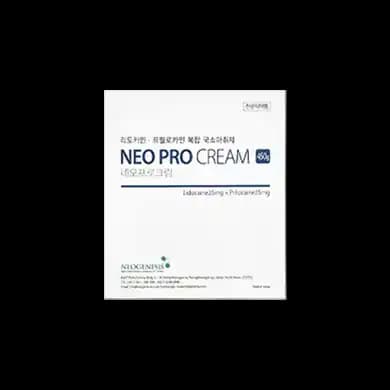
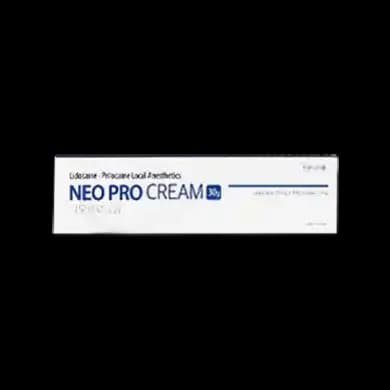
NEO PRO CREAM is a South Korean topical anesthetic cream marketed by NEOGENESIS Co., Ltd. Formulated with 2.5% lidocaine and 2.5% prilocaine, it combines two amide-type local anesthetics to temporarily reduce skin sensitivity and discomfort. NEO PRO CREAM is available in two packaging sizes: a 450g professional-size jar and a 30g tube.
The formulation contains 25 mg of lidocaine and 25 mg of prilocaine per gram of cream, providing a combined local anesthetic concentration of 5% (50 mg/g).
NEO PRO CREAM is commercially positioned for professional dermatological and medical aesthetic settings where topical anesthesia may be appropriate. The combination of lidocaine and prilocaine is associated with the temporary inhibition of sensory nerve signaling through voltage-gated sodium channel blockade.
NEOGENESIS describes NEO PRO CREAM as a fine, white, water-soluble cream emulsion. The manufacturer emphasizes its smooth texture and formulation stability as distinguishing product characteristics.
The 450g jar provides a larger packaging format for professional inventory, while the 30g tube offers a compact alternative. Both presentations contain the same declared active ingredient concentrations.
This TEOSQUARE product page covers NEO PRO CREAM 450g and NEO PRO CREAM 30g, providing professional buyers with information about composition, formulation characteristics, packaging, storage, and safety considerations.
Key Features
- 5% Dual-Anesthetic Formula: Contains 2.5% lidocaine and 2.5% prilocaine, equivalent to 25 mg of each active ingredient per gram of cream.
- Temporary Local Anesthesia: Both active ingredients inhibit voltage-gated sodium channels in sensory nerves, temporarily reducing the transmission of pain signals.
- Fine Cream Emulsion: Manufactured as a white, water-soluble cream with a smooth texture, according to NEOGENESIS product documentation.
- Two Packaging Options: Available in a 450g jar and a 30g tube, allowing professional buyers to select a suitable package size.
- South Korean Product: Marketed by NEOGENESIS, with South Korea identified as the manufacturing origin in the company's product materials.
Composition & Specifications
NEO PRO CREAM contains two principal active ingredients: lidocaine and prilocaine. Both are amide-type local anesthetics that temporarily inhibit sensory nerve conduction.
The manufacturer's product catalogue identifies 25 mg/g lidocaine and 25 mg/g prilocaine, corresponding to a combined anesthetic concentration of 5%.
The two commercial presentations share the same active ingredient composition and differ primarily in net weight and container type.
| Specification | Details |
|---|---|
| Product Name | NEO PRO CREAM |
| Alternative Name | NEO-PRO CREAM / Neo Pro Numbing Cream |
| Brand Company | NEOGENESIS Co., Ltd. |
| Product Category | Topical Local Anesthetic Cream |
| Active Ingredients | Lidocaine and Prilocaine |
| Lidocaine Concentration | 2.5% w/w |
| Prilocaine Concentration | 2.5% w/w |
| Combined Anesthetic Concentration | 5% w/w |
| Lidocaine Content | 25 mg/g |
| Prilocaine Content | 25 mg/g |
| Total Active Ingredient Content | 50 mg/g |
| Reported Preservative | Methyl Hydroxybenzoate (Distributor-Reported; Verify Original Label) |
| Dosage Form | Topical Cream |
| Appearance | White Cream |
| Formulation Characteristics | Fine, Water-Soluble Cream Emulsion |
| Available Sizes | 450g / 30g |
| 450g Presentation | Jar / Container |
| 30g Presentation | Tube |
| Country of Origin | South Korea |
| Reported Storage Conditions | 1–30°C, Tightly Closed Container |
| Administration Route | Topical / External Use |
| Intended Buyer Category | Qualified Healthcare Professionals and Professional Distributors |
Lidocaine — 2.5%
Lidocaine is an amide-type local anesthetic widely used in medical and pharmaceutical preparations to temporarily reduce sensory nerve conduction.
It acts primarily by blocking voltage-gated sodium channels in nerve cell membranes, interfering with the electrical impulses responsible for transmitting sensory information.
When present at an appropriate concentration and used under authorized conditions, lidocaine can temporarily reduce sensitivity to painful stimuli.
NEO PRO CREAM contains 25 mg of lidocaine per gram of cream, equivalent to 2.5% by weight.
In combination with prilocaine, lidocaine forms part of a dual-anesthetic formulation rather than functioning as the product's only active ingredient.
Prilocaine — 2.5%
Prilocaine is another amide-type local anesthetic that temporarily inhibits nerve impulse transmission through voltage-gated sodium channel blockade.
Like lidocaine, prilocaine interferes with the electrical signaling processes involved in the perception of pain.
NEO PRO CREAM contains 25 mg of prilocaine per gram of cream, equivalent to 2.5% by weight.
The combination of lidocaine and prilocaine is well established in topical anesthetic pharmacology.
However, prilocaine has an important safety consideration: its metabolism can contribute to methemoglobin formation, particularly under conditions of excessive exposure or in susceptible individuals.
Combined Lidocaine and Prilocaine Formulation
Lidocaine and prilocaine are frequently combined in topical anesthetic preparations because their physicochemical properties allow them to form a eutectic mixture.
A eutectic mixture has a lower melting point than the individual components under certain conditions, which can facilitate incorporation of the anesthetics into an oil-in-water cream emulsion.
NEO PRO CREAM is described by NEOGENESIS as a fine cream emulsion containing a combined 5% lidocaine-prilocaine formulation.
The manufacturer's commercial materials emphasize the cream's smooth texture and formulation stability.
Although the pharmacological properties of lidocaine-prilocaine combinations are well established, the exact duration and depth of anesthesia depend on the finished formulation, application conditions, and individual patient characteristics.
Supporting Formulation Ingredients
Topical anesthetic creams typically contain supporting ingredients that contribute to emulsion stability, texture, preservation, and other physicochemical characteristics.
Certain NEO PRO CREAM distributor specifications identify methyl hydroxybenzoate, also known as methylparaben, as a preservative.
The complete excipient composition and quantitative preservative content should be verified against the original manufacturer-issued ingredient declaration.
The manufacturer's confirmed principal active ingredients are lidocaine 2.5% and prilocaine 2.5%. The combined 5% concentration must not be misinterpreted as 5% lidocaine plus 5% prilocaine.
How NEO PRO CREAM Works
NEO PRO CREAM temporarily reduces sensory nerve conduction through the combined pharmacological actions of lidocaine and prilocaine.
Sensory Nerve Transmission
Sensory nerves transmit electrical impulses through a process involving the movement of sodium ions across nerve cell membranes.
Voltage-gated sodium channels are essential for generating and propagating these electrical signals.
Voltage-Gated Sodium Channel Blockade
Lidocaine and prilocaine inhibit voltage-gated sodium channels, reducing the movement of sodium ions required for normal nerve impulse propagation.
This temporarily interrupts the transmission of sensory signals, including those associated with painful stimuli.
Temporary Local Anesthetic Effect
The resulting reduction in sensory nerve signaling can produce temporary local anesthesia in the affected area.
Normal sensation gradually returns as the concentrations of the anesthetic agents decrease within the relevant tissues.
The onset, magnitude, and duration of topical anesthesia depend on multiple factors, including skin condition, exposure area, contact time, formulation properties, and individual physiology.
These mechanisms describe established lidocaine and prilocaine pharmacology. They do not guarantee a specific onset time, duration of anesthesia, or absence of discomfort for every individual using NEO PRO CREAM.
Available NEO PRO CREAM Variants
NEO PRO CREAM is available in two manufacturer-documented packaging sizes: 450g and 30g.
Both contain the same combination of lidocaine 2.5% and prilocaine 2.5%. Their primary differences are net weight and packaging format.
| Specification | NEO PRO CREAM 450g | NEO PRO CREAM 30g |
|---|---|---|
| Product Name | NEO PRO CREAM 450g | NEO PRO CREAM 30g |
| Lidocaine | 2.5% (25 mg/g) | 2.5% (25 mg/g) |
| Prilocaine | 2.5% (25 mg/g) | 2.5% (25 mg/g) |
| Combined Anesthetic Concentration | 5% | 5% |
| Dosage Form | Topical Cream | Topical Cream |
| Net Weight | 450g | 30g |
| Container Type | Jar | Tube |
| Product Appearance | White Cream | White Cream |
| Brand Company | NEOGENESIS | NEOGENESIS |
| Country of Origin | South Korea | South Korea |
NEO PRO CREAM 450g
NEO PRO CREAM 450g is the larger packaging presentation within the product range.
It contains 450g of topical anesthetic cream formulated with 2.5% lidocaine and 2.5% prilocaine.
The product is supplied in a wide-mouth jar intended for professional supply environments where larger inventory quantities may be required.
Its larger package size does not alter the active ingredient concentrations or permit greater patient exposure than the applicable product instructions allow.
NEO PRO CREAM 30g
NEO PRO CREAM 30g is the compact tube presentation of the same dual-anesthetic formulation.
Each tube contains 30g of cream with 2.5% lidocaine and 2.5% prilocaine.
The tube format provides a smaller packaging option for professional inventory and distribution.
Its declared active ingredient composition is the same as that of the 450g jar.
The 450g and 30g presentations differ in package weight and container type, not anesthetic concentration. Package size must not be interpreted as an appropriate application quantity.
NEO PRO CREAM vs. NEO-CAIN CREAM
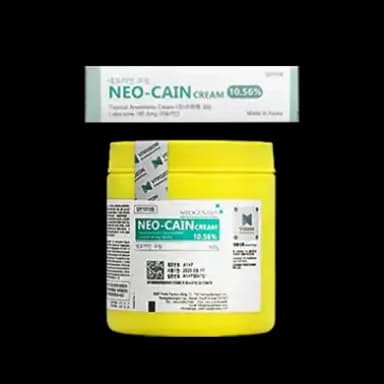
NEOGENESIS markets two distinct topical anesthetic products: NEO PRO CREAM and NEO-CAIN CREAM.
Although both contain lidocaine, their active ingredient compositions and packaging specifications differ.
| Specification | NEO PRO CREAM | NEO-CAIN CREAM |
|---|---|---|
| Active Ingredients | Lidocaine + Prilocaine | Lidocaine |
| Lidocaine Concentration | 2.5% | 10.56% |
| Prilocaine Concentration | 2.5% | Not Included |
| Total Anesthetic Concentration | 5% | 10.56% |
| Large Packaging | 450g Jar | 500g Jar |
| Small Packaging | 30g Tube | 30g Tube |
| Country of Origin | South Korea | South Korea |
NEO PRO CREAM: Dual-Anesthetic Formulation
NEO PRO CREAM combines lidocaine and prilocaine at equal concentrations of 2.5%.
Its formulation is based on the established pharmacological properties of these two amide-type local anesthetics.
NEO-CAIN CREAM: Lidocaine-Only Formulation
NEO-CAIN CREAM contains 10.56% lidocaine without prilocaine as a declared active ingredient.
It is supplied in 500g and 30g packaging presentations.
The higher numerical concentration of lidocaine in NEO-CAIN does not independently establish superior clinical effectiveness or longer anesthetic duration compared with the dual-anesthetic NEO PRO formulation.
NEO PRO CREAM and NEO-CAIN CREAM are different products. Their concentrations cannot be directly compared to predict clinical effectiveness, duration of action, or safety without relevant product-specific evidence.
Packaging & Product Presentation
NEO PRO CREAM is supplied in two manufacturer-documented packaging formats: a 450g jar and a 30g tube.
Both presentations contain a white topical cream with the same declared active ingredient concentrations.
| Packaging Component | 450g Presentation | 30g Presentation |
|---|---|---|
| Net Weight | 450g | 30g |
| Container Type | Jar | Tube |
| Product Form | White Cream | White Cream |
| Lidocaine | 25 mg/g | 25 mg/g |
| Prilocaine | 25 mg/g | 25 mg/g |
| Combined Concentration | 5% | 5% |
| Country of Origin | South Korea | South Korea |
Buyers should verify the original manufacturer packaging, net weight, active ingredient concentrations, batch number, expiration date, and applicable market-specific labeling.
Commercial packaging appearance and labeling may vary according to the supplied manufacturing batch or destination market.
The 450g and 30g values represent total package weight, not the amount intended for a single application. Product quantities and labeling should be confirmed before professional procurement.
Storage & Handling
Published NEO PRO CREAM distributor specifications recommend storage in a tightly closed container at room temperature between 1°C and 30°C.
The original manufacturer labeling should be used to confirm the validated storage conditions for the supplied product.
- Reported Storage Temperature: Store between 1°C and 30°C according to published commercial specifications.
- Container Closure: Keep the jar or tube securely closed when not in use.
- Original Packaging: Maintain the product in its original manufacturer-labeled container.
- Environmental Protection: Avoid conditions that may compromise the cream's physical stability or container integrity.
- Product Traceability: Confirm the product name, active ingredient concentrations, lot number, and expiration date.
- Child Safety: Store securely and keep the product out of the reach of children.
NEOGENESIS describes formulation stability as a feature of NEO PRO CREAM. However, this does not eliminate the need to follow validated storage conditions.
The exact shelf life should be verified from the supplied product's original labeling rather than assumed from third-party commercial descriptions.
The 1–30°C range is reported in commercial product specifications. Manufacturer-issued labeling takes precedence for definitive storage, shelf-life, and handling requirements.
Safety & Regulatory Considerations
NEO PRO CREAM contains two pharmacologically active local anesthetics. Although lidocaine-prilocaine combinations are widely used in topical anesthetic medicine, safe use depends on the formulation, patient characteristics, treated area, and total exposure.
Systemic Absorption and Local Anesthetic Toxicity
Lidocaine and prilocaine may be absorbed into the bloodstream following topical application.
Excessive systemic exposure can produce serious adverse reactions involving the central nervous and cardiovascular systems.
Symptoms associated with systemic local anesthetic toxicity may include dizziness, confusion, tremors, seizures, abnormal heart rhythms, and breathing difficulties.
Systemic absorption may increase when topical anesthetics are applied over large skin areas, used for prolonged periods, applied to damaged skin, or covered with occlusive dressings.
Prilocaine and Methemoglobinemia
Prilocaine has an important safety consideration related to methemoglobinemia.
Methemoglobinemia occurs when an excessive proportion of hemoglobin is converted into methemoglobin, reducing the blood's ability to transport oxygen effectively.
Certain prilocaine metabolites can promote methemoglobin formation.
Individuals with congenital or acquired susceptibility to methemoglobinemia, glucose-6-phosphate dehydrogenase deficiency, or exposure to other methemoglobin-inducing medications may require additional precautions.
Symptoms can include bluish or grayish skin discoloration, headache, dizziness, fatigue, shortness of breath, and other signs of impaired oxygen delivery.
Suspected methemoglobinemia requires urgent medical evaluation.
Potential Local Adverse Reactions
Topical lidocaine-prilocaine preparations may cause localized redness, temporary skin blanching, irritation, burning sensations, itching, or swelling.
Hypersensitivity reactions may also occur in individuals sensitive to the active ingredients or formulation excipients.
The presence of two local anesthetics does not guarantee that the formulation is non-irritating or suitable for every skin type.
Contraindications and Precautions
Individuals with known hypersensitivity to lidocaine, prilocaine, other amide-type local anesthetics, or relevant excipients may have contraindications to use.
Patients with certain cardiovascular, hepatic, or hematological conditions may require additional medical assessment.
Particular caution is necessary in infants and children because systemic absorption and methemoglobinemia risk can be influenced by age, body weight, and physiological maturity.
NEO PRO CREAM should not be assumed appropriate for pediatric use without product-specific authorization and qualified medical supervision.
Contact with the eyes and unauthorized application to damaged skin or mucous membranes should be avoided.
Concurrent Local Anesthetic Exposure
The use of multiple local anesthetic products may increase total systemic exposure.
Professional assessment should account for other medications containing lidocaine, prilocaine, or related local anesthetic agents.
A lower percentage of one individual anesthetic does not necessarily mean a combination product has a lower overall toxicity risk.
Regulatory Authorization
NEO PRO CREAM is commercially marketed by NEOGENESIS as a South Korean topical anesthetic product.
Lidocaine 2.5% and prilocaine 2.5% combinations are established pharmaceutical formulations, and certain products containing these ingredients are authorized in several countries.
However, the regulatory approval of another lidocaine-prilocaine cream does not automatically establish approval for NEO PRO CREAM.
US FDA approval for NEO PRO CREAM under this specific brand name has not been established.
Professional buyers should verify the product's legal classification, current authorization status, approved indications, import eligibility, and distribution restrictions applicable to their destination country.
This information is intended for professional product identification and commercial evaluation. It does not provide application quantities, anesthetic protocols, or patient-specific medical instructions. The official product labeling and applicable regulations determine permitted use.
Frequently Asked Questions
What are the active ingredients in NEO PRO CREAM?
NEO PRO CREAM contains two active local anesthetics: lidocaine 2.5% and prilocaine 2.5%. Each gram contains 25 mg of lidocaine and 25 mg of prilocaine, providing a combined anesthetic concentration of 5%.
What is the difference between NEO PRO CREAM 450g and 30g?
The two products have the same declared active ingredient concentrations. NEO PRO CREAM 450g is supplied in a larger jar, while the 30g version is packaged in a compact tube. The difference is package weight and container format rather than anesthetic composition.
Is NEO PRO CREAM 5% lidocaine?
No. NEO PRO CREAM contains 2.5% lidocaine and 2.5% prilocaine. The 5% designation represents the combined concentration of both active anesthetics, not a 5% concentration of lidocaine alone.
What is the difference between NEO PRO CREAM and NEO-CAIN CREAM?
NEO PRO CREAM contains 2.5% lidocaine and 2.5% prilocaine, while NEO-CAIN CREAM contains 10.56% lidocaine without prilocaine as a declared active ingredient. The two products also have different large-package sizes: 450g for NEO PRO and 500g for NEO-CAIN.
How should NEO PRO CREAM be stored?
Published commercial specifications recommend storage between 1°C and 30°C in a tightly closed container. Buyers should follow the original manufacturer labeling for the supplied product's definitive storage conditions and expiration date.
Is NEO PRO CREAM FDA approved?
US FDA approval for NEO PRO CREAM under this specific brand name has not been established. Although other lidocaine 2.5% and prilocaine 2.5% creams have received regulatory authorization, approval is product-specific. Buyers should verify the legal status of NEO PRO CREAM in their destination market.