
 Cart
 Orders

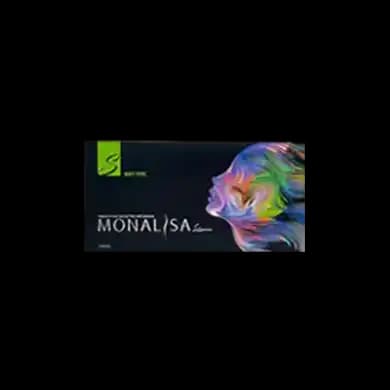
 Not available here

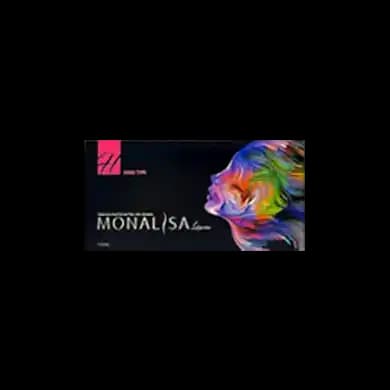

Product Overview
MONALISA is a South Korean cross-linked hyaluronic acid (HA) dermal filler manufactured by GENOSS Co., Ltd. The MONALISA Lidocaine range includes four formulations: SOFT TYPE, MILD TYPE, HARD TYPE, and ULTRA TYPE. Each contains 24 mg/mL cross-linked hyaluronic acid and 0.3% lidocaine and is supplied in a 1.0 mL pre-filled syringe. The four formulations feature different HA gel particle sizes, providing a selection of material characteristics for professional facial wrinkle correction and soft-tissue augmentation.
MONALISA is developed using GENOSS's Hy-BRID Technology, which is designed to produce highly dense, uniform cross-linked hyaluronic acid particles. The manufacturer associates this technology with gel cohesivity, viscoelasticity, and the maintenance of temporary soft-tissue volume.
The MONALISA range is differentiated by its reported gel particle sizes. SOFT contains 200 μm particles, MILD contains 400 μm particles, HARD contains 600 μm particles, and ULTRA contains 900 μm particles. These specifications distinguish the four formulations while maintaining the same nominal HA and lidocaine concentrations.
The included lidocaine is a local anesthetic intended to reduce discomfort associated with professional filler procedures. Its presence differentiates this four-product range from the separate MONALISA formulations without lidocaine, which have different product specifications.
This TEOSQUARE product page covers MONALISA SOFT, MILD, HARD, and ULTRA with lidocaine. It provides professional buyers with manufacturer-verified information about composition, variant differences, gel characteristics, packaging, storage, and regulatory considerations.
Key Features
- 24 mg/mL Cross-Linked Hyaluronic Acid: All four formulations contain 24 mg/mL stabilized HA gel designed for temporary physical volume augmentation and facial wrinkle correction.
- 0.3% Lidocaine: Contains lidocaine, a local anesthetic included to help reduce discomfort associated with filler administration.
- Four Specialized Formulations: Available in SOFT, MILD, HARD, and ULTRA, with different particle sizes and intended gel characteristics.
- Hy-BRID Technology: Incorporates GENOSS's proprietary HA processing technology, designed to produce dense and uniform cross-linked HA particles.
- Non-Animal-Origin Hyaluronic Acid: Manufactured using hyaluronic acid obtained through microbial fermentation rather than animal tissue extraction.
- Ergonomic Syringe Design: Features a specially designed push rod and grip intended to support comfortable, controlled handling by healthcare professionals.
- 1.0 mL Pre-Filled Syringe: Each formulation is supplied in a 1.0 mL syringe with sterile needles specified according to the selected product type.
Composition & Specifications
MONALISA Lidocaine contains cross-linked hyaluronic acid and lidocaine as its principal functional ingredients. The HA gel provides temporary physical volume and structural support, while lidocaine contributes local anesthetic activity.
GENOSS manufactures the MONALISA range using stabilized HA particles with different reported sizes. These differences contribute to the formulations' distinct material characteristics and commercial positioning.
| Specification | Details |
|---|---|
| Brand | MONALISA |
| Product Name | MONALISA Lidocaine Filler |
| Product Category | Cross-Linked Hyaluronic Acid Dermal Filler |
| Principal Material | Cross-Linked Hyaluronic Acid |
| Hyaluronic Acid Concentration | 24 mg/mL |
| Lidocaine Concentration | 0.3% |
| HA Origin | Non-Animal-Origin Hyaluronic Acid |
| Cross-Linking Agent | BDDE (1,4-Butanediol Diglycidyl Ether) |
| Formulation Technology | Hy-BRID Technology |
| Available Formulations | SOFT / MILD / HARD / ULTRA |
| Reported Particle Sizes | 200 / 400 / 600 / 900 μm |
| Appearance | Transparent, Colorless Gel Without Visible Impurities |
| Container | Pre-Filled Syringe |
| Volume per Syringe | 1.0 mL |
| Standard Packaging | 1 × 1.0 mL Pre-Filled Syringe with Sterile Needles |
| Storage Temperature | 2–25°C |
| Manufacturer | GENOSS Co., Ltd. |
| Country of Manufacture | South Korea |
| Product Classification | Injectable Medical Device |
| Intended Users | Qualified Healthcare Professionals |
Cross-Linked Hyaluronic Acid
Hyaluronic acid is a naturally occurring glycosaminoglycan found in the extracellular matrix of connective tissues, including the skin.
Its molecular structure contains repeating disaccharide units and has a strong affinity for water. These characteristics contribute to the hydration and viscoelastic properties of biological tissues.
In dermal filler formulations, HA undergoes chemical cross-linking to create a stabilized polymer network. Cross-linking modifies the material's physical properties and increases its resistance to degradation compared with non-cross-linked HA.
MONALISA contains cross-linked HA at a concentration of 24 mg/mL across the four lidocaine-containing formulations.
The hydrated HA gel provides temporary physical volume within soft tissue. Its clinical behavior depends on the finished formulation, surrounding tissue environment, and individual biological factors.
BDDE Cross-Linking
BDDE, or 1,4-butanediol diglycidyl ether, is a chemical cross-linking agent commonly used in hyaluronic acid dermal filler manufacturing.
During production, BDDE creates chemical connections between HA polymer chains, forming a stabilized gel network.
The degree and organization of cross-linking influence several material properties, including resistance to deformation, viscosity, and biodegradation.
GENOSS reports a residual BDDE specification below 2 ppm for MONALISA and states that BDDE was not detected in its published product-quality evaluation.
These results describe the manufacturer's reported quality assessment. They should not be interpreted as proof that every batch has identical analytical results or that the product carries no risk of adverse reactions.
Lidocaine 0.3%
Lidocaine is a local anesthetic belonging to the amide class of anesthetic compounds.
It works by blocking voltage-gated sodium channels in nerve membranes, reducing the generation and transmission of electrical signals associated with pain.
MONALISA contains 0.3% lidocaine in all four formulations.
Its inclusion is intended to reduce discomfort during professional filler procedures. However, the presence of lidocaine does not eliminate procedural pain or prevent other complications associated with injectable fillers.
Patients with relevant allergies or medical contraindications require appropriate professional assessment before exposure to lidocaine-containing products.
Non-Animal-Origin Hyaluronic Acid
MONALISA uses hyaluronic acid produced through microbial fermentation.
Fermentation-derived HA is widely used in pharmaceutical and medical device applications because it can be produced without extracting hyaluronic acid from animal tissues.
The non-animal origin of the HA material is a manufacturing characteristic and does not independently establish freedom from hypersensitivity, inflammatory reactions, or other clinical complications.
The specifications above apply to the four MONALISA Lidocaine formulations. GENOSS also offers MONALISA products without lidocaine, which are separately documented at 20 mg/mL HA and must not be confused with this 24 mg/mL range.
How MONALISA Hyaluronic Acid Filler Works
MONALISA uses the physical properties of stabilized hyaluronic acid to provide temporary soft-tissue volume and support.
The four formulations share the same principal material but differ in particle size, contributing to their distinct commercial positioning for different aesthetic correction requirements.
Physical Volume Augmentation
Cross-linked hyaluronic acid forms a hydrated gel network capable of occupying space within soft tissue.
This physical volume can contribute to the temporary correction of selected facial wrinkles, folds, and soft-tissue depressions when used within the product's authorized indications.
The resulting appearance depends on the physical characteristics of the gel, the anatomical environment, and the individual's tissue properties.
Hy-BRID Technology
GENOSS describes Hy-BRID Technology as a proprietary manufacturing approach designed to produce highly dense and uniformly sized HA particles.
The manufacturer associates this technology with the gel's viscoelastic properties and its ability to maintain temporary soft-tissue volume.
Particle uniformity and gel structure are relevant to filler rheology, but they do not independently establish a particular clinical duration or superiority over another HA filler.
Viscoelasticity and Mechanical Support
Viscoelasticity describes how a material responds to mechanical forces through a combination of elastic and viscous behavior.
Elasticity is associated with the ability of a gel to resist deformation and recover its shape, while viscosity describes resistance to flow.
These characteristics are important in dermal filler design because different soft-tissue environments place different mechanical demands on implanted materials.
MONALISA SOFT, MILD, HARD, and ULTRA contain HA gel particles with different reported sizes.
Particle size is one factor contributing to formulation behavior. However, particle size alone cannot establish the complete rheological profile, lifting capacity, or clinical suitability of a dermal filler.
Temporary Biodegradation
Hyaluronic acid is biodegradable and gradually undergoes enzymatic and non-enzymatic breakdown.
Cross-linking modifies the polymer network and generally increases resistance to degradation compared with non-cross-linked HA.
The persistence of an HA filler depends on its formulation, tissue environment, and patient-specific factors.
Although MONALISA is marketed for volume retention, a specific duration of clinical effect should not be assumed for every formulation or individual patient without corresponding product-specific evidence.
These mechanisms describe established properties of HA dermal fillers and the manufacturer's formulation technology. They do not establish guaranteed lifting, permanent volume restoration, or identical clinical outcomes across all four MONALISA types.
Available MONALISA Variants
MONALISA Lidocaine is available in four formulations: SOFT TYPE, MILD TYPE, HARD TYPE, and ULTRA TYPE.
All four contain 24 mg/mL cross-linked HA and 0.3% lidocaine. The main manufacturer-documented differences are their particle sizes and associated gel characteristics.
| Product | Model / REF | HA Concentration | Lidocaine | Particle Size | Volume |
|---|---|---|---|---|---|
| MONALISA SOFT TYPE | MPF10S | 24 mg/mL | 0.3% | 200 μm | 1.0 mL |
| MONALISA MILD TYPE | MPF10M | 24 mg/mL | 0.3% | 400 μm | 1.0 mL |
| MONALISA HARD TYPE | MPF10H | 24 mg/mL | 0.3% | 600 μm | 1.0 mL |
| MONALISA ULTRA TYPE | MPF10U | 24 mg/mL | 0.3% | 900 μm | 1.0 mL |
MONALISA SOFT TYPE
MONALISA SOFT TYPE is the finest-particle formulation within the four-product range.
It contains 24 mg/mL cross-linked hyaluronic acid and 0.3% lidocaine, with a manufacturer-reported particle size of 200 μm.
SOFT is commercially positioned for finer facial wrinkles and relatively subtle soft-tissue correction requirements.
Its smaller reported particle size distinguishes it from the MILD, HARD, and ULTRA formulations.
The product is identified by manufacturer reference MPF10S and is supplied in a 1.0 mL pre-filled syringe.
MONALISA MILD TYPE
MONALISA MILD TYPE is an intermediate formulation containing 24 mg/mL cross-linked HA and 0.3% lidocaine.
It has a manufacturer-reported particle size of 400 μm, placing it between SOFT and HARD in the product range.
MILD is commercially positioned for moderate facial wrinkles and folds where a different balance of gel flexibility and structural support may be required.
The product is identified by manufacturer reference MPF10M and is supplied in a 1.0 mL pre-filled syringe.
MONALISA HARD TYPE
MONALISA HARD TYPE contains 24 mg/mL cross-linked hyaluronic acid and 0.3% lidocaine.
Its manufacturer-reported particle size is 600 μm.
HARD is commercially positioned for more pronounced facial folds and structural contouring requirements.
Its formulation is distinguished from SOFT and MILD by its larger reported particle size and intended mechanical characteristics.
The product is identified by manufacturer reference MPF10H and is supplied in a 1.0 mL pre-filled syringe.
MONALISA ULTRA TYPE
MONALISA ULTRA TYPE is the largest-particle formulation within the standard four-product MONALISA Lidocaine range.
It contains 24 mg/mL cross-linked hyaluronic acid and 0.3% lidocaine, with a manufacturer-reported particle size of 900 μm.
ULTRA is commercially positioned for applications requiring relatively greater structural volume and projection.
Its larger particle size differentiates it from the other three formulations, although this characteristic alone does not establish greater durability or lifting capacity.
The product is identified by manufacturer reference MPF10U and is supplied in a 1.0 mL pre-filled syringe.
The descriptions above summarize the manufacturer's commercial positioning for each gel formulation. They do not constitute anatomical injection guidance or establish approval for every facial area. The applicable instructions for use and regulatory authorization determine permitted clinical applications.
Formulation Technology & Quality Characteristics
GENOSS manufactures MONALISA using cross-linked hyaluronic acid and a proprietary particle-processing approach described as Hy-BRID Technology.
The manufacturer emphasizes particle uniformity, gel consistency, and quality-control testing as characteristics of the product family.
Hy-BRID Particle Technology
Hy-BRID Technology is designed to create dense HA gel particles with relatively uniform dimensions.
GENOSS associates this manufacturing approach with the physical stability and viscoelastic behavior of MONALISA.
The four formulations are differentiated by nominal particle size rather than by different HA or lidocaine concentrations.
Manufacturer-Reported Quality Testing
GENOSS publishes product-quality specifications addressing HA concentration, pH, residual cross-linking agent, endotoxin content, appearance, and syringe fill volume.
Its published MONALISA Lidocaine quality evaluation reports an HA concentration of 24.1 mg/mL against a specification range of 21.6–26.4 mg/mL.
The same evaluation reports a pH of 7.10, residual BDDE below the assay's detection limit, and endotoxin content below 0.1 EU/mL.
These findings provide information about the manufacturer's quality-control framework. They should not be interpreted as universal analytical results for every manufactured batch.
Ergonomic Pre-Filled Syringe
MONALISA is supplied in a pre-filled syringe featuring a manufacturer-developed grip and push-rod design.
According to GENOSS, the design is intended to support stable handling and reduce the physical effort required during professional administration.
These features relate to device ergonomics and do not independently establish superior treatment safety or clinical performance.
Manufacturer-reported analytical values and technological advantages should be distinguished from independently established clinical outcomes. Product-specific certificates and technical documentation remain important for professional procurement.
Packaging & Product Presentation
MONALISA SOFT, MILD, HARD, and ULTRA are supplied as transparent cross-linked HA gels in individual 1.0 mL pre-filled syringes.
The manufacturer documents sterile thin-wall needles with sizes that vary according to the selected formulation.
| Product | Syringe Volume | Manufacturer-Documented Needles | Container |
|---|---|---|---|
| MONALISA SOFT TYPE | 1.0 mL | 30G TW × 2 | Pre-Filled Syringe |
| MONALISA MILD TYPE | 1.0 mL | 27G TW × 2 | Pre-Filled Syringe |
| MONALISA HARD TYPE | 1.0 mL | 25G TW × 1 / 27G TW × 1 | Pre-Filled Syringe |
| MONALISA ULTRA TYPE | 1.0 mL | 25G TW × 1 / 27G TW × 1 | Pre-Filled Syringe |
The standard commercial presentation contains one pre-filled syringe with the corresponding sterile needles.
GENOSS states that needle specifications may change without prior notice. Buyers should therefore verify the accessories included with the exact supplied product.
Manufacturer identification, model reference, HA concentration, lidocaine content, batch number, expiration date, and applicable market-specific labeling should be checked before procurement.
Needle specifications are provided for product identification and packaging comparison only. They do not constitute instructions regarding injection technique or anatomical placement.
Storage & Handling
GENOSS specifies storage at 2°C to 25°C for MONALISA Lidocaine SOFT, MILD, HARD, and ULTRA.
The product should be maintained under the conditions stated in the original manufacturer labeling and instructions for use.
- Storage Temperature: Store between 2°C and 25°C.
- Original Packaging: Keep the pre-filled syringe in its original packaging until required for authorized professional use.
- Temperature Protection: Avoid environmental conditions outside the manufacturer-specified storage range.
- Sterile Barrier Integrity: Inspect the packaging and syringe for damage or evidence of compromised sterility.
- Product Traceability: Confirm the exact formulation, model reference, batch number, and expiration date.
- Handling After Opening: Follow the manufacturer's instructions regarding single-use handling and disposal.
The applicable shelf life should be confirmed from the supplied product's labeling. Storage conditions for other MONALISA products or hyaluronic acid fillers should not automatically be applied to this four-formulation range.
Manufacturer-validated instructions take precedence over generalized distributor storage recommendations. Product integrity and traceability are particularly important for sterile injectable medical devices.
Safety & Regulatory Considerations
MONALISA is an injectable medical device intended for use by appropriately qualified healthcare professionals. Product selection and clinical use require knowledge of relevant anatomy, patient-specific conditions, contraindications, and the risks associated with soft-tissue filler procedures.
Potential Adverse Reactions
Adverse reactions associated with injectable HA fillers may include pain, redness, swelling, bruising, tenderness, itching, and localized inflammation.
Other potential complications include infection, inflammatory nodules, granulomatous reactions, delayed swelling, and filler migration.
The frequency and severity of adverse reactions depend on multiple factors, including the finished product, individual patient characteristics, and the circumstances of administration.
Vascular Complications
Accidental introduction of dermal filler into a blood vessel can result in vascular occlusion and impaired tissue perfusion.
Serious complications may include tissue ischemia, necrosis, visual impairment, blindness, and stroke.
These risks are not eliminated by the presence of lidocaine, the use of non-animal-origin HA, or the manufacturer's reported gel-quality characteristics.
Lidocaine-Related Precautions
All four MONALISA formulations covered on this page contain 0.3% lidocaine.
Patients with known hypersensitivity to lidocaine or other relevant formulation components may have contraindications to treatment.
A complete medical assessment should consider applicable warnings, concomitant medications, and other factors relevant to local anesthetic exposure.
Hyaluronic Acid and Reversibility
Hyaluronic acid is biodegradable, and certain HA filler complications may be managed using hyaluronidase under appropriate medical supervision.
However, the potential use of hyaluronidase does not guarantee that every complication can be reversed or that serious tissue injury can always be prevented.
Regulatory Authorization
MONALISA Lidocaine is manufactured by GENOSS and has a documented history of medical device registration in South Korea and selected international markets.
GENOSS reports historical CE certification and regulatory approvals in several countries. These records do not independently establish that every formulation has current authorization for every market or anatomical indication.
US FDA approval for the four MONALISA formulations covered on this page has not been established.
Professional buyers should confirm the current regulatory classification, applicable device certification, product-specific indications, import eligibility, and lawful distribution requirements in the destination country.
This information is intended for professional product identification and commercial evaluation. It does not provide injection instructions, establish patient suitability, or authorize any use beyond the applicable product labeling.
Frequently Asked Questions
What is MONALISA dermal filler?
MONALISA is a South Korean cross-linked hyaluronic acid dermal filler manufactured by GENOSS Co., Ltd. The four MONALISA Lidocaine formulations—SOFT, MILD, HARD, and ULTRA—contain 24 mg/mL HA and 0.3% lidocaine and are supplied in 1.0 mL pre-filled syringes.
What is the difference between MONALISA SOFT, MILD, HARD, and ULTRA?
The four formulations differ primarily in their manufacturer-reported HA particle sizes. SOFT contains 200 μm particles, MILD contains 400 μm, HARD contains 600 μm, and ULTRA contains 900 μm. All four share the same nominal HA concentration, lidocaine concentration, and syringe volume.
How much hyaluronic acid does MONALISA contain?
MONALISA Lidocaine SOFT, MILD, HARD, and ULTRA contain 24 mg/mL cross-linked hyaluronic acid. GENOSS also manufactures a separate MONALISA range without lidocaine, documented at 20 mg/mL HA. The two product families should not be confused.
Does MONALISA contain lidocaine?
Yes. The four MONALISA Lidocaine formulations covered on this page contain 0.3% lidocaine, a local anesthetic included to help reduce procedural discomfort. Non-lidocaine MONALISA products are separate formulations with different manufacturer references.
What is Hy-BRID Technology?
Hy-BRID Technology is GENOSS's proprietary hyaluronic acid processing technology. The manufacturer describes it as a method for producing dense and uniform cross-linked HA particles associated with the gel's viscoelastic properties and temporary volume retention.
Who manufactures MONALISA?
MONALISA is manufactured by GENOSS Co., Ltd., a South Korean medical device company specializing in biomaterials and medical aesthetics products.
What are the manufacturer reference codes for MONALISA?
The manufacturer reference codes are MPF10S for SOFT, MPF10M for MILD, MPF10H for HARD, and MPF10U for ULTRA. These codes identify the corresponding 1.0 mL lidocaine-containing formulations.
How many syringes are included in one box of MONALISA?
The standard commercial presentation contains one 1.0 mL pre-filled syringe with sterile needles. The documented needle specifications vary by formulation and may change according to the manufacturer's packaging configuration.
Is MONALISA made with animal-derived hyaluronic acid?
No. MONALISA uses non-animal-origin hyaluronic acid obtained through microbial fermentation. This is a manufacturing characteristic and does not eliminate the possibility of adverse reactions.
How should MONALISA be stored?
GENOSS specifies storage between 2°C and 25°C for MONALISA Lidocaine SOFT, MILD, HARD, and ULTRA. The original manufacturer packaging and instructions for use should be followed.
Is MONALISA FDA approved?
US FDA approval for the four MONALISA formulations covered on this page has not been established. Although GENOSS reports medical device certifications and registrations in selected markets, buyers must verify the current authorization status and permitted indications in their destination country.