
 Cart
 Orders

 Not available here

Product Overview
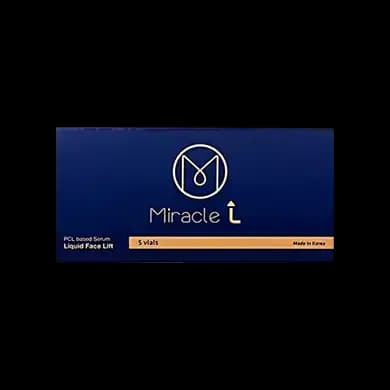
Miracle L is a South Korean polycaprolactone (PCL)-based skin booster developed by DEXLEVO Co., Ltd. Formulated with solubilized PCL, commonly specified at a concentration of 20%, Miracle L is commercially positioned for professional aesthetic applications involving collagen stimulation, skin firmness, elasticity, and the appearance of fine lines. The product is supplied as a liquid formulation in 2 mL vials, with five vials per standard box.
Miracle L belongs to the DEXLEVO Miracle series of collagen-stimulating aesthetic formulations. It incorporates the company's proprietary solubilized PCL technology, which is designed to provide a different physical formulation from conventional particulate PCL dermal fillers.
Polycaprolactone is a biodegradable synthetic polyester investigated for its ability to support collagen-related tissue responses. Its biomedical applications include absorbable surgical materials, tissue-engineering scaffolds, and selected injectable collagen-stimulating products.
Unlike Miracle H, which combines solubilized PCL with hyaluronic acid (HA), Miracle L is identified in the original product comparison materials as a PCL-based formulation without added HA. This distinction makes the two products different in composition and commercial positioning.
Miracle L is supplied as a ready-to-use liquid rather than a lyophilized powder. Its standard commercial presentation contains five 2 mL vials, providing a total nominal volume of 10 mL per box.
This TEOSQUARE product page provides professional buyers with information about Miracle L's PCL composition, solubilized polymer technology, packaging specifications, storage requirements, and regulatory considerations.
Key Features
- 20% PCL Formulation: Commercially specified with 20% polycaprolactone, a biodegradable polymer investigated for collagen-stimulating applications.
- Solubilized PCL Technology: Developed using DEXLEVO's proprietary polymer formulation technology, which differs from the conventional microparticle-based approach used in certain PCL fillers.
- Collagen-Stimulation Positioning: Marketed for professional aesthetic applications focused on skin firmness, elasticity, and collagen-related tissue remodeling.
- No Added Hyaluronic Acid: Unlike Miracle H, Miracle L is identified in the original product comparison materials as a PCL formulation without added HA.
- Ready-to-Use Liquid Presentation: Supplied as a liquid formulation rather than a freeze-dried powder requiring reconstitution.
- 2 mL Vial Packaging: Available in individual 2 mL vials, with five vials per standard commercial box.
- South Korean Product Development: Developed by DEXLEVO, a South Korean medical aesthetics company specializing in biodegradable polymer technology.
Composition & Specifications
Miracle L is formulated around polycaprolactone as its principal functional ingredient. Published commercial specifications identify a 20% PCL concentration and describe the finished product as a solubilized PCL or PCL colloidal formulation.
Supporting ingredients reported in commercial product information include polyethylene glycol, water, glycerin, sodium carboxymethylcellulose, sodium lactate, and sodium pyroglutamic acid.
The original Miracle series comparison distinguishes Miracle L from Miracle H by identifying added hyaluronic acid in Miracle H but not in Miracle L.
| Specification | Details |
|---|---|
| Product Name | Miracle L |
| Product Family | DEXLEVO Miracle Series |
| Product Category | PCL-Based Collagen-Stimulating Skin Booster |
| Principal Ingredient | Polycaprolactone (PCL) |
| Reported PCL Concentration | 20% |
| PCL Formulation | Solubilized PCL / PCL Colloidal Solution |
| Hyaluronic Acid | Not Added, According to Original Product Comparison Materials |
| Additional Reported Ingredients | Polyethylene Glycol, Water, Glycerin, Sodium Carboxymethylcellulose, Sodium Lactate, and Sodium Pyroglutamic Acid |
| Formulation | Liquid PCL-Based Solution |
| Container Type | Vial |
| Volume per Vial | 2 mL |
| Standard Packaging | 5 × 2 mL Vials |
| Total Nominal Volume per Box | 10 mL |
| Product Developer | DEXLEVO Co., Ltd. |
| Country of Origin | South Korea |
| Reported Storage Temperature | 1–30°C |
| Intended Buyer Category | Qualified Healthcare Professionals and Professional Distributors |
Polycaprolactone (PCL)
Polycaprolactone is a synthetic aliphatic polyester composed of repeating caprolactone units connected by ester bonds.
PCL is biodegradable and has been investigated extensively in biomedical applications, including tissue-engineering scaffolds, absorbable medical materials, and injectable aesthetic formulations.
Its degradation occurs primarily through the hydrolysis of ester bonds, with the rate of breakdown influenced by polymer molecular weight, structure, physical form, and surrounding biological conditions.
In aesthetic medicine, certain PCL-based dermal fillers have been studied for their ability to stimulate collagen formation within surrounding tissue.
Miracle L incorporates PCL through a solubilized formulation concept rather than the conventional polymer microparticles used in some established collagen-stimulating fillers.
Published Miracle L commercial specifications identify a PCL concentration of 20%. However, the exact analytical basis for this percentage, polymer molecular-weight distribution, and other quantitative characteristics should be confirmed using current manufacturer-issued technical documentation.
Solubilized PCL Technology
DEXLEVO describes its proprietary technology as CESABP, an abbreviation for Collagenesis-Enabled Solubilized Active Biodegradable Polymer.
The technology is designed to incorporate biodegradable PCL into a solubilized formulation with different physical characteristics from conventional polymer microparticle suspensions.
According to the developer's technical concept, the solubilized polymer is intended to distribute within tissue and participate in collagen-related biological responses.
DEXLEVO describes a mechanism involving the formation of a three-dimensional polymer matrix associated with fibroblast activity and collagen production.
These descriptions reflect the developer's proposed formulation mechanism. Quantitative tissue distribution, particle characteristics, and collagen-stimulating performance require validation using product-specific analytical and clinical evidence.
Polyethylene Glycol (PEG)
Polyethylene glycol is a hydrophilic polymer widely used in pharmaceutical and biomedical formulations.
Depending on its molecular weight, chemical structure, and concentration, PEG may contribute to solubilization, formulation stability, and other physicochemical properties.
PEG is identified among the supporting components in published Miracle L ingredient information. Its exact concentration and functional role within the finished product have not been independently verified.
Glycerin
Glycerin is a water-soluble polyol commonly used as a humectant and formulation component in cosmetic and pharmaceutical products.
It interacts with water and can contribute to the moisture-retaining characteristics of certain formulations.
Although glycerin is reported in Miracle L, its inclusion does not independently establish clinically measurable skin hydration or barrier improvement following administration.
Sodium Carboxymethylcellulose
Sodium carboxymethylcellulose is a water-soluble cellulose derivative used in various pharmaceutical and cosmetic formulations.
It can influence viscosity, dispersion, and formulation stability, depending on its concentration and the surrounding ingredients.
Sodium carboxymethylcellulose is reported among the formulation components of Miracle L, although its exact quantitative concentration has not been established from available manufacturer documentation.
Sodium Lactate and Sodium Pyroglutamic Acid
Sodium lactate and sodium pyroglutamic acid, also known as sodium PCA, are water-soluble ingredients associated with moisture management and skin-conditioning formulations.
These substances are related to components of the skin's natural moisturizing environment.
Their presence in a formulation does not independently demonstrate clinically proven hydration, improved elasticity, or enhanced skin barrier function.
The 20% PCL concentration and supporting ingredient list are reported in commercial product documentation. Some third-party descriptions incorrectly attribute the HA-containing Miracle H composition to Miracle L. Original Miracle series comparison materials identify Miracle L as the PCL formulation without added HA. The complete quantitative ingredient declaration should be confirmed against the supplied manufacturer's documentation.
How Miracle L Is Formulated to Work
Miracle L is based on the biological and physicochemical characteristics of polycaprolactone. Its formulation concept involves the use of solubilized PCL as a biodegradable polymer intended to support collagen-related tissue responses.
PCL and Collagen-Related Tissue Remodeling
Collagen is a structural protein found in the extracellular matrix of connective tissues. Within the skin, collagen contributes to mechanical strength and tissue organization.
Fibroblasts are connective tissue cells responsible for producing collagen and other extracellular matrix components.
Research involving selected injectable PCL biomaterials has demonstrated collagen formation around implanted polymer structures.
This process, commonly called neocollagenesis, involves biological responses that may include fibroblast activity, extracellular matrix remodeling, and the deposition of newly synthesized collagen.
However, these findings have primarily been established for specific PCL-based formulations, including particulate dermal fillers. They do not automatically establish equivalent clinical effects for Miracle L.
Solubilized Polymer Distribution
Conventional PCL collagen-stimulating fillers may contain solid polymer microparticles dispersed within a carrier gel.
Miracle L is developed around a different formulation concept using solubilized PCL.
DEXLEVO describes this technology as a means of distributing PCL within tissue without relying on the conventional large microparticles found in certain collagen-stimulating fillers.
The developer also proposes that the polymer can form a three-dimensional matrix associated with collagen-related biological activity.
Product-specific clinical evidence is required to establish the extent of polymer distribution, collagen formation, and measurable improvement in skin characteristics.
Skin Elasticity and Structural Support
Collagen contributes to the structural integrity of the dermal extracellular matrix. Changes in collagen organization and quantity can influence the mechanical characteristics of the skin.
Miracle L is commercially positioned for applications involving skin elasticity, firmness, and the appearance of age-related changes.
Its collagen-stimulation concept provides a scientific rationale for this positioning, but ingredient-level mechanisms should not be interpreted as proof of a particular clinical improvement.
Biodegradation of PCL
Polycaprolactone undergoes gradual biodegradation through hydrolysis of its ester bonds.
The degradation rate depends on several factors, including polymer molecular weight, physical structure, formulation, and the surrounding biological environment.
Commercial Miracle L descriptions frequently report aesthetic effects lasting approximately 12 months or longer.
However, the duration of biodegradation of a polymer is not necessarily equivalent to the duration of a clinically measurable aesthetic result. A definitive duration of effect for Miracle L requires adequate finished-product clinical evidence.
These mechanisms reflect established PCL biomaterial research and the developer's proposed solubilized PCL technology. They do not establish guaranteed collagen regeneration, predictable lifting, superior clinical performance, or a specific duration of aesthetic improvement for Miracle L.
Miracle L Formulation Characteristics
Miracle L is commercially distinguished by its PCL-based composition and liquid formulation.
Unlike conventional HA-based skin boosters, its principal ingredient is a biodegradable synthetic polyester rather than hyaluronic acid.
- PCL-Focused Composition: Uses polycaprolactone as the principal functional ingredient, without added hyaluronic acid according to the original product comparison materials.
- Collagen-Stimulation Concept: Developed around PCL-associated biological responses rather than the immediate volumizing properties of conventional cross-linked HA gels.
- Solubilized Liquid Formulation: Incorporates DEXLEVO's proprietary PCL formulation concept instead of a conventional particulate filler presentation.
- No Reconstitution Requirement: Commercially supplied as a liquid rather than a freeze-dried formulation.
- Professional Skin-Conditioning Positioning: Marketed for aesthetic applications involving the appearance of fine lines, skin texture, firmness, and elasticity.
Miracle L should not be confused with permanent tissue fillers or conventional cross-linked HA volumizing products.
Its proposed collagen-stimulating effects, material characteristics, and potential complications must be evaluated independently of those associated with other injectable biomaterials.
Commercial positioning does not establish regulatory approval for particular anatomical areas or guarantee specific cosmetic outcomes.
Miracle L vs. Miracle H
Miracle L and Miracle H are two related products within the DEXLEVO Miracle series.
Both incorporate solubilized PCL technology, but their compositions differ because Miracle H contains additional hyaluronic acid.
| Specification | Miracle L | Miracle H |
|---|---|---|
| Principal Ingredient | Polycaprolactone | Polycaprolactone + Hyaluronic Acid |
| Reported PCL Concentration | 20% | 20% |
| Hyaluronic Acid | No Added HA | 1% HA, Commercially Reported |
| Polymer Technology | Solubilized PCL | Solubilized PCL |
| Primary Commercial Positioning | Collagen Stimulation and Skin Firmness | Collagen Stimulation and Hydration-Oriented Skin Conditioning |
| Formulation | Liquid | Liquid |
| Volume per Vial | 2 mL | 2 mL |
| Standard Packaging | 5 Vials | 5 Vials |
| Developer | DEXLEVO | DEXLEVO |
Miracle L: PCL-Focused Formulation
Miracle L is the PCL-focused formulation within the Miracle series.
It is commercially positioned around collagen-related tissue responses and improvements in the appearance of skin firmness and elasticity.
Although it does not contain added hyaluronic acid, Miracle L is not composed exclusively of PCL. Supporting formulation ingredients are also present.
Miracle H: PCL with Hyaluronic Acid
Miracle H combines solubilized PCL with an additional hyaluronic acid component.
The commercially reported composition includes 20% PCL and 1% HA.
Hyaluronic acid is a hydrophilic glycosaminoglycan with water-binding properties, providing a formulation characteristic that differentiates Miracle H from Miracle L.
The inclusion of HA supports Miracle H's commercial positioning for hydration-oriented skin conditioning alongside its PCL-based formulation concept.
Miracle L and Miracle H are distinct commercial formulations. Neither product should be assumed clinically interchangeable with the other. The absence of added HA in Miracle L does not guarantee suitability for individuals with allergies or sensitivities to other formulation components.
Packaging & Product Presentation
Miracle L is supplied as a liquid PCL-based formulation in individual glass vials containing 2 mL each.
The standard commercial box contains five vials, providing a total nominal volume of 10 mL.
| Packaging Component | Specification |
|---|---|
| Product | Miracle L |
| Container Type | Glass Vial |
| Volume per Vial | 2 mL |
| Standard Box Configuration | 5 Vials |
| Total Nominal Volume per Box | 10 mL |
| Product Form | Liquid PCL-Based Solution |
| Principal Ingredient | Polycaprolactone (PCL) |
| Reported PCL Concentration | 20% |
| Country of Origin | South Korea |
Some professional distributors offer individual 2 mL vials separately from complete five-vial boxes.
Buyers should therefore verify whether the selected commercial option refers to one vial or a complete manufacturer-style package.
The original product label should be inspected to confirm the product name, fill volume, batch number, expiration date, manufacturer information, and applicable regulatory documentation.
The 2 mL vial volume is a commercial packaging specification, not a recommended administration quantity. Packaging configurations from third-party sellers should not automatically be treated as original manufacturer box quantities.
Storage & Handling
DEXLEVO's Miracle series materials specify storage at room temperature, not exceeding 30°C, for unopened products.
Published professional distribution information commonly recommends a storage temperature between 1°C and 30°C, with protection from direct sunlight, excessive heat, and freezing.
- Manufacturer-Documented Storage: Store at room temperature, not exceeding 30°C.
- Reported Storage Range: 1°C to 30°C, according to professional commercial specifications.
- Environmental Protection: Protect the product from direct sunlight, excessive heat, and freezing.
- Original Packaging: Keep the product in its original sealed vial and manufacturer packaging until required for authorized professional use.
- Container Integrity: Inspect the vial and closure for visible damage, leakage, or other indications of compromised integrity.
- Handling After Opening: Follow the manufacturer's instructions. DEXLEVO's Miracle series materials recommend using the contents on the day of opening and disposing of any remaining material.
- Product Traceability: Confirm the product identity, batch number, expiration date, and manufacturer documentation before professional handling.
Certain distributors report a shelf life of 24 months. However, the applicable expiration period should be confirmed using the original manufacturer labeling.
Manufacturer-issued storage and handling instructions take precedence over third-party recommendations. Do not assume that the product remains suitable for reuse after opening or that conditions applicable to other PCL formulations also apply to Miracle L.
Safety & Regulatory Considerations
Miracle L is commercially marketed as a PCL-based aesthetic skin booster. Its legal product classification, permitted administration route, and approved applications must be verified through the original manufacturer documentation and applicable national regulations.
Potential Adverse Reactions
Potential adverse reactions associated with injectable aesthetic biomaterials include localized pain, swelling, redness, bruising, tenderness, infection, and hypersensitivity reactions.
PCL-based injectable materials may also be associated with delayed inflammatory reactions, persistent nodules, granulomatous inflammation, and other tissue responses.
Serious injection-related complications can occur if an injected material enters or obstructs a blood vessel. These may include vascular occlusion, tissue ischemia, necrosis, and other severe injuries.
The developer's solubilized PCL formulation concept does not independently establish that Miracle L is free from these complications.
Polymer Biodegradation and Reversibility
Polycaprolactone is biodegradable, but its degradation characteristics depend on the finished formulation and biological environment.
Biodegradability does not mean that an injected polymer is immediately removable or that complications can necessarily be reversed.
PCL is chemically different from hyaluronic acid. An enzyme used to degrade HA should not be assumed capable of dissolving PCL.
Clinical Evidence Limitations
Published research involving selected PCL dermal fillers has documented collagen formation and tissue-remodeling responses.
However, these findings involve specific finished formulations and cannot automatically establish the efficacy or safety of Miracle L.
Claims of guaranteed lifting, immediate collagen regeneration, absence of nodules, zero downtime, or clinical results lasting more than one year require adequate product-specific evidence.
Hyaluronic Acid-Free Formulation
Miracle L is distinguished from Miracle H by the absence of added hyaluronic acid in the original product comparison materials.
This distinction is relevant for product identification, but it should not be interpreted as a guarantee of safety for individuals with allergies or sensitivities.
Other formulation ingredients may cause hypersensitivity or adverse reactions, and patient suitability requires individual medical assessment.
Regulatory Authorization
Miracle L is associated with DEXLEVO's proprietary PCL-based aesthetic technology.
However, regulatory authorization of PCL as a biomaterial or approval of another PCL-containing medical device does not establish authorization for Miracle L.
US FDA approval for Miracle L has not been established. The product is also identified by a Japanese professional importer as lacking pharmaceutical or medical device approval in Japan.
Professional buyers should verify the legal product classification, current registration status, manufacturing documentation, import eligibility, permitted uses, and professional-use restrictions applicable to their destination country.
This information is intended for professional product identification and commercial evaluation. It does not provide injection instructions, establish individual patient suitability, or authorize administration of an unapproved product.
Frequently Asked Questions
What is Miracle L?
Miracle L is a South Korean PCL-based skin booster developed by DEXLEVO. It contains solubilized polycaprolactone, commercially specified at 20%, and is supplied as a liquid formulation in 2 mL vials.
What is the main ingredient in Miracle L?
The principal ingredient is polycaprolactone (PCL), a biodegradable synthetic polyester investigated for collagen-related tissue responses. Published commercial specifications identify a 20% PCL formulation, although the complete quantitative composition should be verified against current manufacturer documentation.
Does Miracle L contain hyaluronic acid?
According to the original Miracle series comparison materials, Miracle L does not contain added hyaluronic acid. Miracle H is the related formulation that combines solubilized PCL with HA. Some third-party product descriptions incorrectly apply the Miracle H ingredient list to Miracle L.
What is the difference between Miracle L and Miracle H?
Both products use DEXLEVO's solubilized PCL formulation technology. Miracle L is commercially positioned around PCL-associated collagen stimulation and skin firmness, while Miracle H includes additional hyaluronic acid for hydration-oriented skin conditioning. Both are commonly supplied in 2 mL vials, with five vials per box.
How much PCL does Miracle L contain?
Miracle L is commercially specified as containing 20% polycaprolactone. The exact concentration calculation method and polymer specifications should be confirmed using manufacturer-issued technical documentation.
What is solubilized PCL technology?
Solubilized PCL technology refers to DEXLEVO's approach to incorporating polycaprolactone into a liquid formulation rather than relying on conventional large polymer microparticles. The developer associates this technology with polymer distribution and collagen-related tissue responses, although product-specific clinical validation is required to establish the resulting effects.
Who manufactures Miracle L?
Miracle L is developed by DEXLEVO Co., Ltd., a South Korean medical aesthetics company specializing in biodegradable polymer technology. The precise legal manufacturing entity for a supplied batch should be confirmed from its original labeling and manufacturer documentation.
How many vials are included in one box of Miracle L?
The standard commercial package contains five 2 mL vials, providing a total nominal volume of 10 mL per box. Some distributors also offer individual vials, so buyers should confirm the selected selling unit.
Does Miracle L require reconstitution?
Miracle L is supplied as a liquid formulation rather than a lyophilized powder. Any handling or preparation must follow the original manufacturer's instructions for the specific supplied product.
How should Miracle L be stored?
DEXLEVO's Miracle series materials specify room-temperature storage not exceeding 30°C. Professional distribution information commonly identifies a range of 1–30°C, with protection from direct sunlight, excessive heat, and freezing. The supplied product's original labeling should take precedence.
Is Miracle L FDA approved?
US FDA approval for Miracle L has not been established. Approval of another PCL-based product or the use of PCL in regulated biomedical materials does not establish FDA approval for Miracle L. Buyers must verify its regulatory status and lawful distribution requirements in their destination country.