
 Cart
 Orders

 Not available here
Product Overview
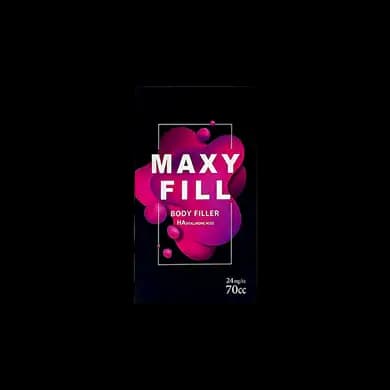
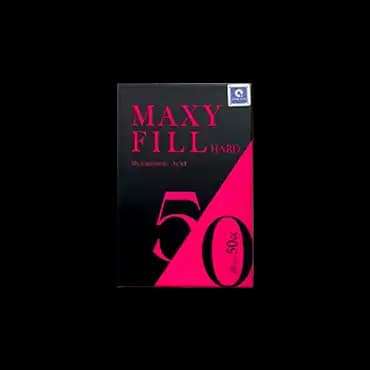
MAXYFILL, also known as MAXY FILL, is a South Korean cross-linked hyaluronic acid (HA) body filler product family developed by Quiver Medic Co., Ltd. Designed for professional soft-tissue augmentation and body-contouring applications, the range includes MAXYFILL 70cc, MAXYFILL Hard 50cc, MAXYFILL Soft 50cc, and MAXYFILL 110cc. These formulations are commercially distinguished by their nominal volume, gel characteristics, and container presentation.
MAXYFILL uses cross-linked hyaluronic acid to provide temporary physical volume and structural support within soft tissue. Unlike conventional facial fillers commonly supplied in small syringes, the MAXYFILL range includes larger-volume vial and pre-filled syringe presentations developed for body-contouring requirements.
The MAXYFILL Hard and Soft formulations offer different gel characteristics, while the 70cc and 110cc products provide larger vial-based presentations. Published HA concentrations range from 20 mg/mL to 24 mg/mL depending on the product version and commercial documentation.
This TEOSQUARE product page brings together the MAXYFILL body filler range for professional buyers comparing hyaluronic acid concentration, gel type, packaging, and product specifications. Clinical use and distribution must comply with product-specific regulatory authorization and applicable medical device requirements.
Key Features
- Cross-Linked Hyaluronic Acid: Formulated with cross-linked HA, a hydrophilic biomaterial used in injectable soft-tissue fillers for temporary physical volume augmentation.
- Multiple Volume Presentations: The product family includes 50cc pre-filled syringe formulations and larger 70cc and 110cc vial presentations.
- Hard and Soft Gel Types: MAXYFILL Hard and Soft are commercially differentiated by their gel consistency and intended structural characteristics.
- 20–24 mg/mL Reported HA Concentrations: The 50cc Hard and Soft formulations are commonly documented at 20 mg/mL, while the larger vial formulations are frequently listed at 24 mg/mL. Exact concentrations should be verified for each SKU.
- South Korean Product Development: MAXYFILL is part of the body filler portfolio of Quiver Medic Co., Ltd., a South Korean medical aesthetics company.
Composition & Specifications
The primary material in MAXYFILL is cross-linked hyaluronic acid. HA is a naturally occurring glycosaminoglycan that contributes to tissue hydration and the viscoelastic properties of the extracellular matrix.
MAXYFILL formulations are presented as hydrated HA gels designed for temporary soft-tissue augmentation. Product-specific concentrations, gel properties, and container formats differ across the commercial range.
| Specification | Details |
|---|---|
| Brand | MAXYFILL / MAXY FILL |
| Product Category | Cross-Linked Hyaluronic Acid Body Filler |
| Primary Material | Hyaluronic Acid (HA) |
| HA Structure | Cross-Linked Hyaluronic Acid |
| Reported HA Concentrations | 20 mg/mL and 24 mg/mL, Depending on Product Presentation |
| Formulation | Viscoelastic HA Gel |
| Gel Types | Hard / Soft / Standard Vial Formulation |
| Cross-Linking Information | BDDE Cross-Linking Is Described in Manufacturer Information for the Hard and Soft Range |
| Documented Volume Presentations | 50cc / 70cc / 110cc |
| Additional Manufacturer-Documented Presentation | 55 mL Hard and Soft Pre-Filled Syringes |
| Container Types | Pre-Filled Syringe / Vial |
| Lidocaine Content | Not Consistently Verified Across Product Versions |
| Brand Company | Quiver Medic Co., Ltd. |
| Country of Origin | South Korea |
| Intended Users | Appropriately Trained and Authorized Healthcare Professionals |
Cross-Linked Hyaluronic Acid
Hyaluronic acid is a naturally occurring glycosaminoglycan found in connective tissues, including the skin. Its hydrophilic molecular structure allows it to associate with water and contribute to tissue hydration and mechanical properties.
In injectable fillers, HA is chemically cross-linked to form a more stable gel network. Cross-linking modifies the physical characteristics of the material and generally increases resistance to degradation compared with non-cross-linked HA.
The resulting gel can provide temporary physical volume within soft tissue. Its behavior depends on several formulation characteristics, including polymer concentration, cross-linking, cohesivity, viscosity, and elasticity.
Hyaluronic Acid Concentration
Published specifications for MAXYFILL Hard and Soft pre-filled syringes commonly identify an HA concentration of 20 mg/mL.
MAXYFILL 70cc is frequently documented at 24 mg/mL, including in Korean professional distribution materials. MAXYFILL 110cc is also listed at 24 mg/mL by certain Korean exporters.
However, some commercial listings report 20 mg/mL for the larger vial formulations. These discrepancies may reflect different product generations, documentation versions, or commercial presentations.
The HA concentration of each MAXYFILL variant should be confirmed against the original manufacturer-issued specifications. Concentration values from different product presentations should not be treated as interchangeable.
Hard and Soft Gel Characteristics
MAXYFILL Hard and Soft represent two gel categories within the manufacturer's body filler range.
MAXYFILL Hard: Marketed as a higher-viscosity formulation intended for body-contouring requirements involving relatively greater structural support.
MAXYFILL Soft: Marketed as a softer gel formulation with characteristics intended for more flexible contour correction.
Although these descriptions distinguish the products commercially, quantitative rheological properties such as storage modulus (G'), complex viscosity, cohesivity, and cross-link density have not been consistently established in publicly available primary documentation.
Hard and Soft designations do not independently establish numerical differences in firmness, lifting capacity, durability, or clinical performance.
How MAXYFILL Hyaluronic Acid Works
MAXYFILL is based on the physical volume-augmenting properties of cross-linked hyaluronic acid. Unlike collagen biostimulators or adipose tissue therapies, the principal function of an HA filler is to provide temporary volume through the presence of a hydrated gel within soft tissue.
Physical Volume Augmentation
Cross-linked HA forms a hydrated, viscoelastic gel that can occupy space and provide mechanical support within the surrounding tissue.
The degree of structural support depends on the finished formulation's physical properties and its interaction with the surrounding tissue environment.
Viscoelasticity and Gel Behavior
Viscoelasticity describes a material's combined elastic and viscous responses to mechanical forces. In HA fillers, these properties influence how the gel behaves during compression, deformation, and movement.
MAXYFILL Hard and Soft are developed with different intended material characteristics. However, HA concentration alone cannot establish their relative firmness or suitability for a specific anatomical application.
Biodegradation of Cross-Linked HA
Hyaluronic acid is biodegradable and undergoes enzymatic and non-enzymatic breakdown over time. Chemical cross-linking generally increases resistance to degradation by modifying the polymer network.
The persistence of an implanted HA gel depends on its formulation, tissue environment, and individual biological factors. A specific duration of clinical effect cannot be established solely from the general properties of cross-linked hyaluronic acid.
These mechanisms describe the established material properties of cross-linked HA. They do not establish product-specific clinical efficacy, treatment durability, or safety for every MAXYFILL presentation.
Available MAXYFILL Variants
The MAXYFILL product family includes large-volume vial formulations and pre-filled syringe formulations identified by Hard and Soft gel types.
The following comparison covers MAXYFILL Hard 50cc, Soft 50cc, 70cc, and 110cc. The 50cc Hard and Soft products are documented in international distribution channels, while more recent manufacturer listings also identify corresponding 55 mL syringe presentations.
| Product | Nominal Volume | Reported HA Concentration | Gel Type | Container |
|---|---|---|---|---|
| MAXYFILL Hard 50cc | 50 mL | 20 mg/mL | Hard | Pre-Filled Syringe |
| MAXYFILL Soft 50cc | 50 mL | 20 mg/mL | Soft | Pre-Filled Syringe |
| MAXYFILL 70cc | 70 mL | 24 mg/mL Commonly Reported | Standard Vial Formulation | Vial |
| MAXYFILL 110cc | 110 mL | 24 mg/mL Reported; Verification Required | Standard Vial Formulation | Vial |
MAXYFILL Hard 50cc
MAXYFILL Hard 50cc is a cross-linked hyaluronic acid body filler commercially supplied in a 50 mL pre-filled syringe.
The formulation is commonly specified at 20 mg/mL HA and is marketed with a relatively firm gel profile for structural body-contouring requirements.
The Hard designation refers to its intended gel characteristics. Detailed rheological measurements and clinical performance specifications should be verified using manufacturer-issued technical documentation.
MAXYFILL Soft 50cc
MAXYFILL Soft 50cc is a pre-filled syringe formulation containing cross-linked hyaluronic acid at a commonly reported concentration of 20 mg/mL.
It is commercially differentiated from MAXYFILL Hard by its softer gel positioning and intended flexibility during contour correction.
The Soft formulation should not be considered clinically interchangeable with Hard solely because they share a reported HA concentration and container volume.
MAXYFILL 70cc
MAXYFILL 70cc is a large-volume cross-linked HA body filler supplied in a single 70 mL vial.
Korean professional distributors commonly identify an HA concentration of 24 mg/mL for this presentation. Other published specifications report 20 mg/mL, making confirmation of the exact supplied formulation important.
The 70cc presentation is part of Quiver Medic's larger-volume body filler range and is commercially positioned for soft-tissue volume correction and body contouring.
MAXYFILL 110cc
MAXYFILL 110cc is a high-volume cross-linked hyaluronic acid body filler supplied in a single 110 mL vial.
The 110cc presentation is listed in Quiver Medic's official product portfolio and by Korean professional exporters.
Certain Korean distributor specifications report 24 mg/mL cross-linked HA for MAXYFILL 110cc. However, conflicting concentration information appears in other commercial descriptions, and the exact quantitative composition should be confirmed using current manufacturer documentation.
The larger container volume distinguishes MAXYFILL 110cc from the 70cc vial and 50cc syringe presentations. It does not establish a different approved indication or greater clinical effectiveness.
Important Note on 50cc and 55 mL Presentations
MAXYFILL Hard and Soft are also documented by Quiver Medic in 55 mL pre-filled syringe presentations containing 20 mg/mL HA.
Some distributors describe these products as 50cc, while manufacturer-associated listings identify 55 mL syringes. The available documentation does not conclusively establish whether these represent different filling volumes, updated product generations, or market-specific commercial configurations.
Buyers should confirm the actual fill volume and product identity on the supplied manufacturer's label. The 50cc and 55 mL designations should not automatically be treated as equivalent SKUs.
Packaging & Product Presentation
MAXYFILL is commercially available in two principal container formats: large-volume pre-filled syringes and vials.
Hard and Soft formulations are commonly supplied in pre-filled syringes, while MAXYFILL 70cc and 110cc are documented as individual vial presentations.
| Product | Container Volume | Documented Presentation |
|---|---|---|
| MAXYFILL Hard 50cc | 50 mL | 1 Pre-Filled Syringe |
| MAXYFILL Soft 50cc | 50 mL | 1 Pre-Filled Syringe |
| MAXYFILL 70cc | 70 mL | 1 Vial |
| MAXYFILL 110cc | 110 mL | 1 Vial |
Quiver Medic also documents Hard and Soft pre-filled syringes containing 55 mL of HA gel. The manufacturer's published 55 mL presentation contains 20 mg/mL hyaluronic acid.
Commercial packaging, labeling, supplied accessories, and exact selling units may differ between product versions and destination markets.
Container volume is a commercial product specification and does not indicate a recommended treatment quantity. Verify the actual package contents and manufacturer labeling before procurement.
Storage & Handling
MAXYFILL products must be stored according to the original manufacturer-issued instructions for the specific formulation and commercial presentation.
Some Korean distributor documentation specifies storage at 2°C to 25°C for MAXYFILL 70cc, protected from direct sunlight and freezing. These conditions should not automatically be applied to every MAXYFILL formulation.
- Original Packaging: Keep the product in its original manufacturer packaging until required for authorized professional use.
- Temperature Requirements: Follow the temperature range specified on the original product label and applicable instructions for use.
- Environmental Protection: Avoid exposure to conditions that may compromise the HA gel or violate labeled storage requirements.
- Container Integrity: Inspect the vial or pre-filled syringe and its original packaging for visible damage or signs of compromised integrity.
- Product Traceability: Confirm the product name, nominal volume, HA concentration, batch number, expiration date, and manufacturer information.
Storage conditions, shelf life, and handling requirements may vary by formulation or market. Manufacturer-validated product labeling takes precedence over general distributor descriptions.
Safety & Regulatory Considerations
MAXYFILL is an injectable hyaluronic acid body filler product family. Professional evaluation requires careful consideration of the product's regulatory status, material characteristics, intended applications, and potential complications.
Potential Adverse Reactions
Adverse reactions associated with injectable HA fillers may include pain, swelling, bruising, tenderness, redness, infection, nodules, and inflammatory reactions.
Serious complications can include vascular occlusion, tissue ischemia, necrosis, filler migration, and other soft-tissue injuries.
Large-volume body augmentation may involve additional anatomical and procedural risks compared with conventional small-volume facial filler applications.
Body Augmentation and Regulatory Restrictions
MAXYFILL is commercially marketed for body-contouring applications. However, manufacturer or distributor marketing claims do not independently establish approval for specific anatomical areas.
The United States Food and Drug Administration has not approved injectable dermal fillers for large-scale body contouring or augmentation, including procedures intended to increase breast or buttock size.
US FDA approval for MAXYFILL has not been established. Regulatory authorization, permitted indications, and professional-use requirements must be verified separately for each destination country.
Product-Specific Safety
The use of cross-linked hyaluronic acid does not guarantee safety or clinical suitability. The ability of certain HA materials to undergo enzymatic degradation should not be interpreted as a guarantee that all complications can be reversed.
Differences between MAXYFILL Hard, Soft, 70cc, and 110cc must be assessed using the relevant manufacturer-issued technical information and labeling.
This description is intended for professional product identification and comparison. It does not constitute treatment guidance, establish patient suitability, or authorize any injection procedure beyond the applicable regulatory approval.
Frequently Asked Questions
What MAXYFILL body filler variants are available?
The MAXYFILL range includes Hard 50cc, Soft 50cc, 70cc, and 110cc presentations. Quiver Medic also documents Hard and Soft pre-filled syringes in 55 mL presentations. Exact product volumes and specifications should be verified against the supplied manufacturer packaging.
What is the difference between MAXYFILL Hard and Soft?
MAXYFILL Hard is commercially positioned as a relatively firmer HA gel for structural contouring requirements. MAXYFILL Soft is marketed with a softer, more flexible gel profile. Both are commonly documented at 20 mg/mL HA, but their exact rheological differences require manufacturer-issued technical data.
How much hyaluronic acid does MAXYFILL contain?
MAXYFILL Hard and Soft syringe formulations are commonly specified at 20 mg/mL HA. The 70cc and 110cc vial formulations are frequently listed at 24 mg/mL, although some distributors report different concentrations. Buyers should confirm the HA concentration of the exact supplied product.
Is MAXYFILL 50cc the same as MAXYFILL 55 mL?
Both 50cc and 55 mL Hard and Soft syringe presentations appear in commercial documentation. Quiver Medic directly documents 55 mL syringes, while other distributors identify 50cc products. Their equivalence has not been conclusively established, so the actual fill volume and product version should be confirmed on the original packaging.
What is the difference between MAXYFILL 70cc and 110cc?
MAXYFILL 70cc contains a nominal 70 mL of HA gel, while MAXYFILL 110cc contains 110 mL. Both are documented as vial-based body filler presentations. A larger container volume does not automatically indicate a different gel composition or approved clinical application.
Who manufactures MAXYFILL?
MAXYFILL is developed and marketed by Quiver Medic Co., Ltd., a South Korean medical aesthetics company. The company identifies MAXY FILL and MAXY FILL Hard and Soft in its official product portfolio. The legal manufacturing entity for a specific batch should be confirmed from its original labeling.