
 Cart
 Orders

 Not available here
Product Overview
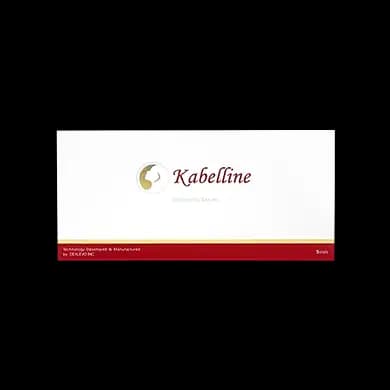
Kabelline is a South Korean injectable lipolytic solution formulated with deoxycholic acid (DCA), a bile acid associated with the breakdown of adipocyte cell membranes. Developed for the medical aesthetics market, Kabelline is presented as a localized fat-contouring solution and is commonly supplied in boxes containing five 8 mL vials, providing 40 mL of solution per box.
The formulation is marketed for professional body-contouring applications involving localized subcutaneous fat. Its principal ingredient, deoxycholic acid, has established cytolytic properties that provide the scientific basis for certain injectable fat-reduction treatments.
Kabelline is associated with the DEXLEVO Aesthetic product portfolio. However, published supplier information differs regarding its legal manufacturer, and the exact manufacturing entity should be verified against the supplied product labeling.
This product page provides professional buyers with information about Kabelline's composition, available concentration data, packaging, pharmacological characteristics, and important regulatory considerations. Kabelline's commercial positioning should not be interpreted as evidence of approval for particular facial or body treatment areas.
Key Features
- Deoxycholic Acid Formulation: Contains deoxycholic acid, a bile acid with membrane-disrupting properties that are relevant to injectable adipocytolytic treatments.
- Localized Fat-Contouring Category: Marketed as an injectable lipolytic solution for professional aesthetic applications involving localized subcutaneous fat.
- 8 mL Vial Presentation: Supplied in individual 8 mL vials, allowing buyers to identify the product by its standard commercial container volume.
- Five Vials per Box: Standard packaging contains 5 × 8 mL vials, equivalent to 40 mL of solution per box.
- Korean Aesthetic Product: Kabelline is distributed internationally as a South Korean lipolytic product associated with the DEXLEVO Aesthetic portfolio.
Composition & Specifications
Kabelline is identified primarily by its deoxycholic acid content. Certain Korean supplier specifications report a DCA concentration of 5 mg/mL, equivalent to 0.5% w/v. However, this concentration should be confirmed against the original manufacturer's documentation for the supplied batch.
| Specification | Details |
|---|---|
| Product Name | Kabelline |
| Product Category | Injectable Lipolytic / Fat-Contouring Solution |
| Principal Ingredient | Deoxycholic Acid (DCA) |
| Reported DCA Concentration | 5 mg/mL (0.5% w/v); Supplier-Reported |
| Formulation | Liquid Solution |
| Volume per Vial | 8 mL |
| Standard Packaging | 5 Vials × 8 mL |
| Total Volume per Box | 40 mL |
| Associated Product Portfolio | DEXLEVO Aesthetic |
| Legal Manufacturer | Not Conclusively Verified from Public Product Documentation |
| Country of Origin | South Korea |
| Intended Buyer Category | Qualified Medical Aesthetics Professionals and Distributors, Subject to Local Regulations |
Deoxycholic Acid
Deoxycholic acid is a secondary bile acid naturally present in the human body. Bile acids are amphipathic molecules, meaning they contain both hydrophilic and hydrophobic regions. This chemical structure contributes to their ability to interact with lipids and biological membranes.
In normal physiology, bile acids participate in the emulsification and intestinal absorption of dietary fats. At appropriate concentrations, deoxycholic acid can also disrupt cellular membranes, resulting in cell damage and lysis.
Additional Formulation Components
Some commercial descriptions of Kabelline additionally identify L-carnitine hydrochloride and artichoke extract among its formulation components. However, a complete, consistently documented quantitative ingredient list has not been established across the available product information.
L-carnitine is physiologically involved in the transport of long-chain fatty acids into mitochondria for beta-oxidation. Artichoke extract contains various plant-derived compounds, including phenolic constituents. These general ingredient properties do not establish additional clinical fat-reduction effects for the finished Kabelline formulation.
The DCA concentration and supplementary ingredient information should be verified against the original product label, full composition document, or manufacturer-issued technical specifications. Ingredient descriptions from different commercial sources are not necessarily interchangeable.
How Deoxycholic Acid Works
The scientific basis of deoxycholic acid-based lipolytic treatments involves the compound's ability to disrupt cellular membranes. This action differs from simply accelerating the body's normal metabolism of stored fat.
Adipocyte Membrane Disruption
Deoxycholic acid is a detergent-like molecule that interacts with lipid components of biological membranes. Under appropriate conditions, this interaction can compromise membrane integrity and cause adipocyte destruction.
Adipocytes are specialized cells responsible for storing energy as triglycerides. Disruption of their membranes causes cellular injury and releases intracellular components into the surrounding tissue.
Inflammatory Response and Tissue Remodeling
Following adipocyte injury, the body initiates a localized inflammatory response. Immune cells, including macrophages, participate in processing cellular debris and supporting subsequent tissue remodeling.
These mechanisms have been investigated in the context of deoxycholic acid-based injectable treatments. However, clinical findings from other DCA formulations cannot automatically be applied to Kabelline because concentration, composition, manufacturing characteristics, and approved indications may differ.
Understanding the Evidence
Deoxycholic acid has established pharmacological activity, and specific prescription DCA formulations have undergone clinical evaluation for submental fat reduction.
This evidence supports the general mechanism of adipocytolysis but does not independently establish the clinical effectiveness, safety, treatment duration, or approved applications of Kabelline.
Kabelline should not be considered clinically equivalent to other deoxycholic acid products solely because they contain the same principal ingredient.
Packaging & Product Presentation
Kabelline is commonly distributed in a five-vial commercial package. Each vial contains 8 mL of solution, giving a total nominal product volume of 40 mL per box.
| Packaging Component | Specification |
|---|---|
| Product | Kabelline |
| Container Type | Vial |
| Nominal Vial Volume | 8 mL |
| Vials per Standard Box | 5 |
| Total Nominal Volume | 40 mL |
| Product Form | Liquid Solution |
| Available Variants | No Additional Manufacturer-Verified Variants Established |
The commercial packaging format is consistent across multiple Korean product listings. However, the precise supplied configuration, labeling language, and accompanying documentation should be confirmed for the applicable market.
The volume per vial is a packaging specification and does not represent a recommended administration quantity. Product dosing and treatment protocols are outside the scope of this commercial product description.
Storage & Handling
Korean supplier documentation describes storage of Kabelline in a cool, dry environment at temperatures between 1°C and 30°C, protected from direct sunlight. These conditions should be verified against the manufacturer's original labeling for the supplied product.
- Reported Storage Temperature: 1°C to 30°C, according to published Korean supplier information.
- Light Protection: Protect the product from direct sunlight.
- Packaging Integrity: Inspect the original container and packaging for damage before professional handling.
- Product Identification: Verify the product name, declared ingredients, batch information, and expiration date.
- Handling Requirements: Follow the specific instructions and restrictions supplied with the product.
Storage conditions and shelf life should be confirmed from the product's original manufacturer-issued documentation. The information above does not establish validated storage stability for every commercial presentation.
Safety & Regulatory Considerations
Deoxycholic acid is a cytolytic substance capable of damaging cellular membranes. Its effects are not inherently restricted to adipocytes, and unintended tissue exposure may cause injury to surrounding anatomical structures.
Serious adverse events associated with injectable fat-dissolving products may include infection, substantial inflammation, tissue necrosis, ulceration, scarring, nerve injury, and other complications.
The US Food and Drug Administration has approved specific deoxycholic acid drug products for defined indications involving submental fat. Such approvals apply to the individually authorized products and must not be interpreted as FDA approval of Kabelline.
Kabelline's FDA approval status has not been established, and authorization in one jurisdiction does not demonstrate approval in another. Claims regarding facial or body treatment areas must be evaluated against the product's own regulatory authorization and approved labeling.
Kabelline should be evaluated only by appropriately qualified healthcare professionals and procurement personnel familiar with the regulatory requirements governing injectable lipolytic products in their destination markets.
This information supports professional product identification and commercial evaluation. It does not constitute clinical guidance, establish patient suitability, or authorize treatment of any anatomical area.
Frequently Asked Questions
What is Kabelline?
Kabelline is a South Korean injectable lipolytic solution formulated with deoxycholic acid. It is marketed within the medical aesthetics industry for localized fat-contouring applications and is commonly supplied in 8 mL vials.
What is the main ingredient in Kabelline?
The principal ingredient is deoxycholic acid (DCA), a bile acid with membrane-disrupting properties. Some commercial product descriptions also list L-carnitine hydrochloride and artichoke extract, but the full quantitative composition requires confirmation from the original manufacturer documentation.
What is the deoxycholic acid concentration in Kabelline?
Certain Korean supplier specifications report 5 mg/mL deoxycholic acid, equivalent to 0.5% w/v. Because a definitive manufacturer-issued quantitative composition document was not established, buyers should verify the concentration on the supplied product's original technical documentation.
How many vials are included in one box of Kabelline?
The standard commercial presentation contains five vials of 8 mL each, providing 40 mL of Kabelline solution per box. The exact selling unit should be confirmed for the individual product listing.
Is Kabelline the same as KYBELLA?
No. Kabelline and KYBELLA are different commercial products. Although both are associated with deoxycholic acid, they have distinct product identities, formulation specifications, and regulatory documentation. Approval granted to KYBELLA does not establish approval, safety, or clinical equivalence for Kabelline.
Is Kabelline FDA approved?
US FDA approval for Kabelline has not been established. FDA authorization of other deoxycholic acid products does not extend automatically to Kabelline. Buyers must verify the product's legal status and permitted indications in their destination country.